Historical Migration of Sikhs to South Korea: Pioneers in a New Frontier
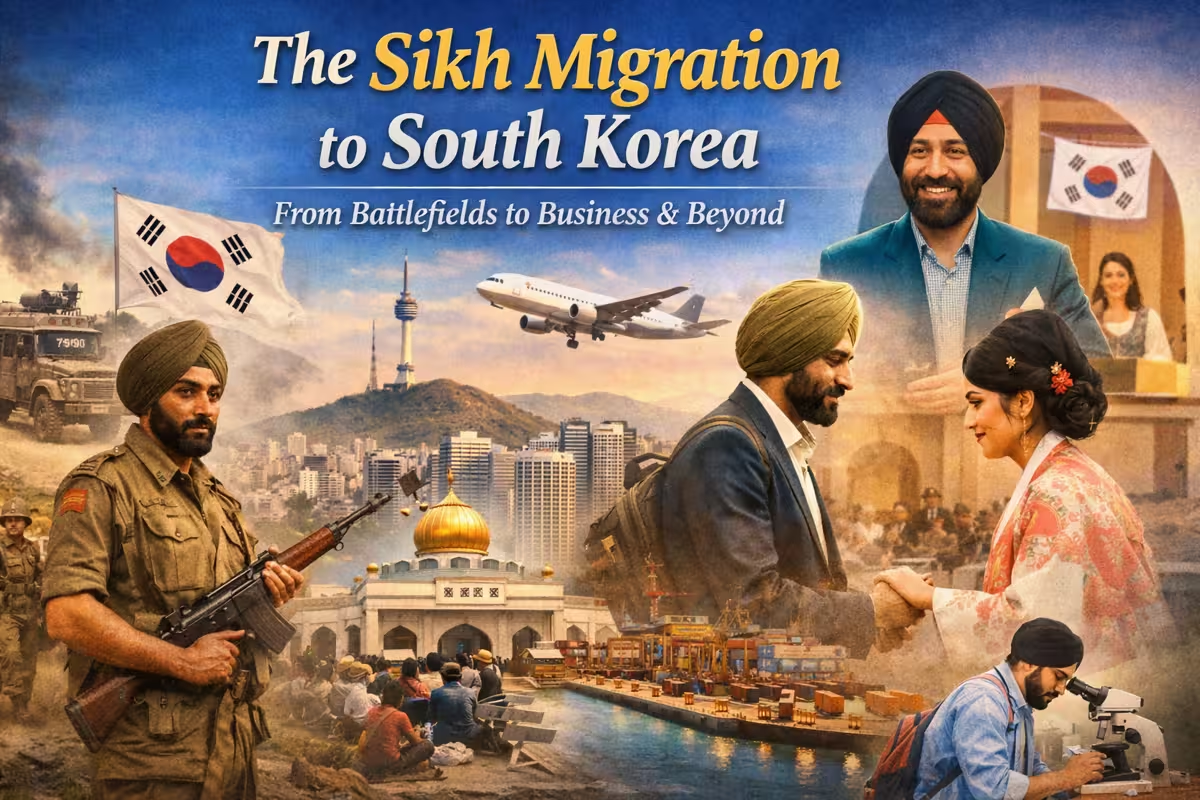
In the expansive chronicle of Sikh migration, which has seen Punjab’s resilient sons and daughters establish communities across every continent—from the railway lines of East Africa to the farms of Canada—the story of Sikhs in South Korea emerges as a lesser-known yet compelling chapter. For globalsikhiwiki.com, dedicated to documenting the historical movements, settlement patterns, occupations, and cultural transformations of Sikhs worldwide, this post delves deeply into the migration history of Sikhs to South Korea. From tentative post-colonial beginnings to the economic booms of the late 20th century, we trace how a small diaspora took root in the “Land of the Morning Calm,” embodying the Sikh principles of chardi kala (eternal optimism) and seva (selfless service). This narrative not only highlights the push-pull factors of migration but also connects to broader themes of Sikh achievements, Gurdwaras as anchors, difficulties faced, and famous figures who have shaped this journey. As South Korea transformed from a war-torn nation to a global tech leader, Sikhs contributed quietly, adapting their Punjabi heritage to Korean innovation.
Early Traces: Post-Independence Pioneers (1945-1970s)
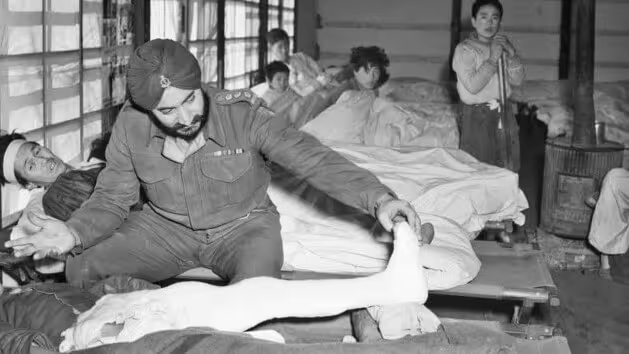
The first whispers of Sikh presence in South Korea date to the immediate aftermath of World War II and the country’s liberation from Japanese colonial rule in 1945. During this period, global Sikh migration was already in motion, driven by British colonial networks and post-war economic opportunities. A handful of Punjabi Sikhs, often traders from families with experience in international commerce, ventured to Korea as part of broader Asian trade routes. They focused on exporting Korean textiles—silks, cottons, and synthetics—to markets in India, the Middle East, and beyond. These early migrants were not settlers but sojourners, navigating a Korea divided by the Korean War (1950-1953) and its reconstruction.
Historical records from sources like Swarn Singh Kahlon’s Sikhs in Asia Pacific (2016) indicate that these pioneers faced immense barriers: South Korea’s strict immigration policies, designed to protect a nascent economy, limited long-term stays. Visas were short-term, and citizenship was nearly impossible for foreigners under the jus sanguinis (blood-based) system. Many Sikhs returned to Punjab after brief stints, but their ventures laid informal networks. This era mirrors Sikh migrations elsewhere, such as to Southeast Asia, where trade preceded permanent communities. By the 1970s, as Korea stabilized under President Park Chung-hee’s industrialization drive, a few Sikhs remained, marrying locally or extending visas through business ties. Their stories, though sparse, highlight early cultural exchanges—Punjabi merchants introducing spices to Korean markets, foreshadowing future hybrid cuisines
The 1980s Boom: Labor Migration and Economic Opportunities
The pivotal wave of Sikh migration crested in the 1980s, aligning with South Korea’s “Miracle on the Han River”—a period of explosive economic growth averaging 10% annually. Facing acute labor shortages in agriculture, manufacturing, and construction, Korea opened doors to foreign workers, albeit temporarily. Punjabi Sikhs, drawn by word-of-mouth from diaspora networks in India and the Middle East, arrived in growing numbers. Many entered on tourist or business visas, often overstaying to secure jobs, a risky strategy that underscored the pull of higher wages compared to Punjab’s agrarian economy.
Push factors from India included the turbulent 1980s—economic liberalization stirrings amid political unrest like Operation Blue Star (1984)—prompting young men to seek stability abroad. In Korea, they found roles in rural farming, where Punjab’s expertise in irrigation and crop management proved invaluable. Others joined factories producing electronics and automobiles, contributing to brands like Samsung and Hyundai. Estimates suggest dozens of families settled during this decade, with the Sikh population reaching a few hundred by the 1990s. This migration pattern differs from larger communities in Western nations; it was male-dominated, leading to intercultural marriages for residency. As detailed in The Korea Herald articles from the era, these Sikhs formed the backbone of early Punjabi associations, organizing informal gatherings that evolved into formal community structures.
The 2000s and Beyond: Modern Influx and Integration
Entering the 21st century, Sikh migration to South Korea diversified. With Korea’s entry into the OECD (1996) and its tech-driven economy, opportunities shifted toward skilled professions. Sikhs arrived via student visas for universities like Seoul National or KAIST, or through business investments in IT and import-export. The 2000s saw a rise in family reunifications, as earlier migrants gained permanent residency through marriage or long-term contributions.
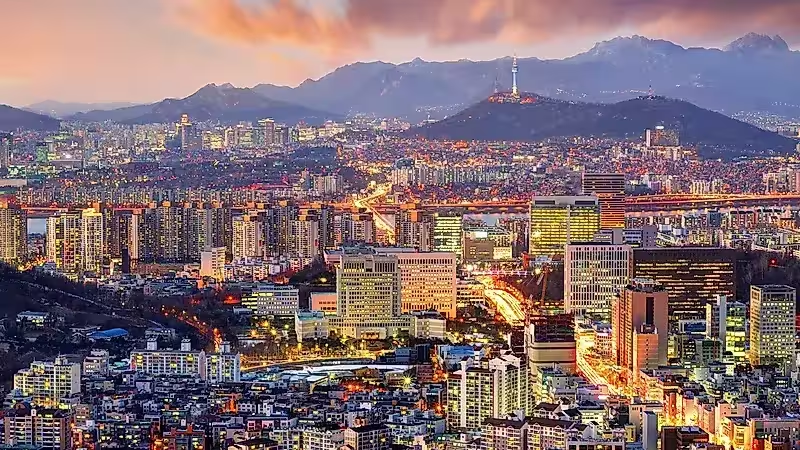
Key milestones include the establishment of the Punjabi Association of Korea (PAK) around 2001, which advocated for religious rights and community support. By 2020, the population stabilized at 550-600, per Korea IT Times reports, with concentrations in Seoul (for urban jobs) and Gyeonggi Province (for farming remnants). Recent trends reflect global Sikh patterns: Younger generations pursue education in STEM, while entrepreneurs leverage Korea’s free trade agreements with India (2009) for businesses in pharmaceuticals and machinery.


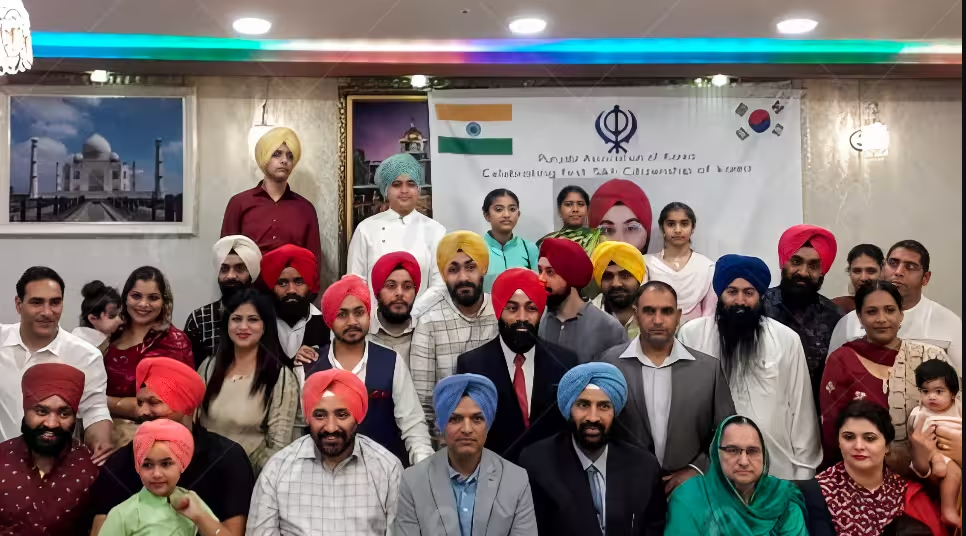
This evolution ties to cultural transformations—Sikhs adopting Korean language and customs while preserving turbans and the Five Ks. Achievements abound: Economic integration has led to Sikh-owned firms boosting bilateral trade, valued at $23 billion in 2023. Famous figures like Daljinder Singh, who achieved citizenship in 2020 without compromising faith, symbolize progress.
Difficulties Amid Migration: Barriers and Resilience
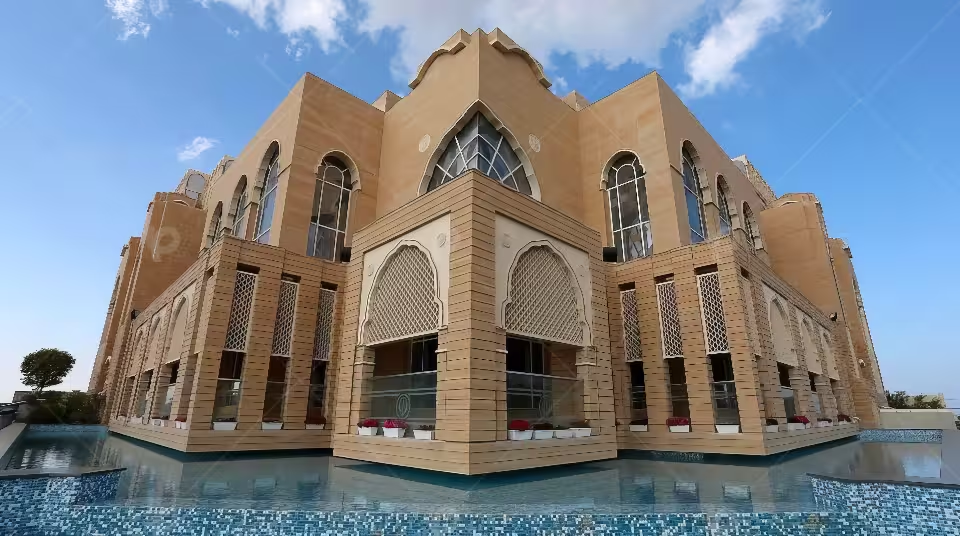
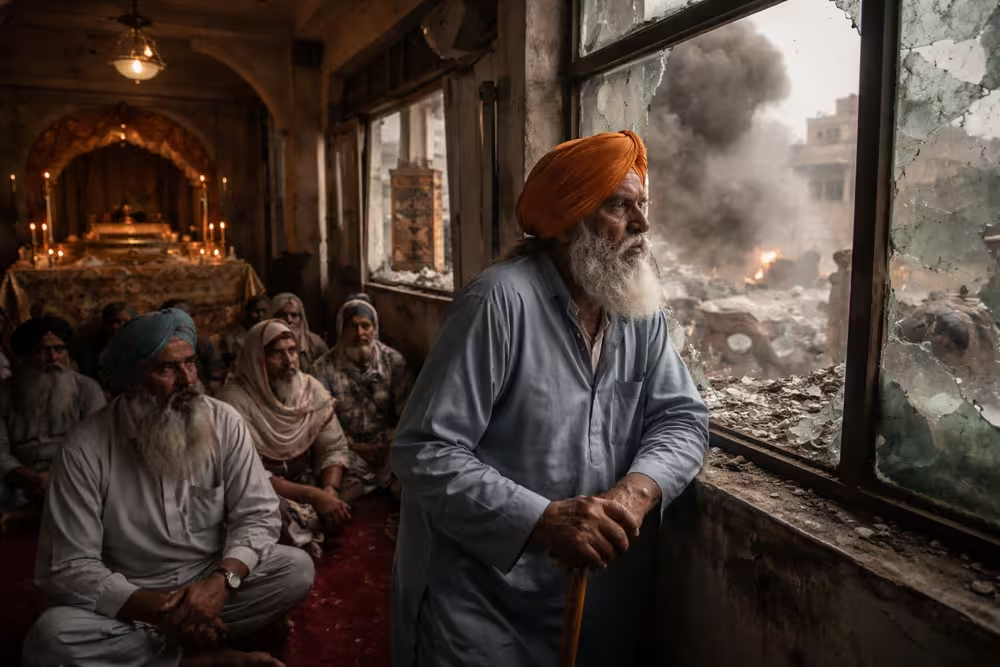
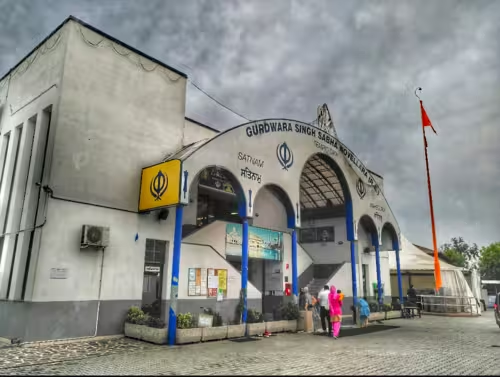
No migration story is without hurdles. Early Sikhs grappled with language barriers, cultural shock, and xenophobia in a mono-ethnic society. Visa overstays risked deportation, and pre-2020 citizenship demanded faith compromises, clashing with Sikh identity. Isolation was acute—limited Gurdwaras meant home-based worship until the 1998 Sungri site (later burned) and 2004 Pocheon reconstruction.
Yet, resilience prevailed: Communities rebuilt, much like after historical Sikh trials. Intermarriages, while fostering bonds, brought family oppositions and societal stigma. Today, difficulties persist in education for children—bullying over patkas—and economic competition, but advocacy through PAK has eased paths.
Famous Sikhs and Their Impact on Migration
Migration histories are enlivened by individuals. Dr. Lakhvinder Singh, PAK President, has been instrumental in post-migration support, organizing seva during COVID-19. Taz Singh’s 2024 K-pop appearance in RM’s “Lost!” video highlights cultural bridges, inspiring migrant youth.
Gurdwaras as Migration Milestones
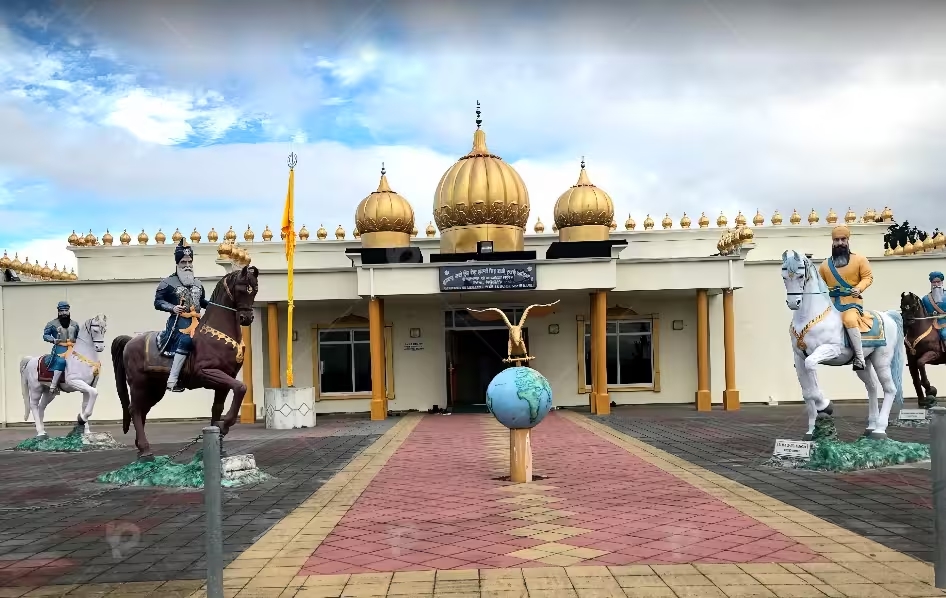
Gurdwaras mark settlement: The 1998 fire tested early migrants, but the 2004 Pocheon site became a hub for integration, hosting events that draw locals.
Conclusion: A Legacy in Motion
The historical migration of Sikhs to South Korea—from traders to tech entrepreneurs—illustrates adaptability and contribution. As globalsikhiwiki.com documents, this journey enriches the global Sikh tapestry. For more on settlements or achievements, explore our hub on Sikhs in South Korea. Share your stories—we’re building this legacy together!