Sikhs in Shamshabad: How a Tribal Village in Telangana, India Turned to Sikhism
Welcome to Global Sikhi Wiki, your comprehensive resource for exploring Sikh history, culture, and communities. Today, we delve into the vibrant story of Sikhs in Shamshabad a small tribal villege in Telangana.
Nestled in the Ranga Reddy district near Shamshabad, Telangana, India—just a short drive from Hyderabad—lies an extraordinary story of faith, identity, and cultural transformation. A small tribal hamlet historically known as Gachubhai Thanda has, over the past two decades, embraced Sikhism so deeply that its residents now proudly call their home Guru Gobind Singh Nagar. Asia Samachar
This blog explores how this transformation occurred, what it means for the community, and the unique blend of tribal traditions and Sikh religious life that defines this village today

The Gachubhai Thanda Village & Its People
Gachubhai Thanda is a small tribal settlement inhabited mainly by Lambadas—also known as Lambadis—a Scheduled Tribe community in Telangana. Traditionally, the Lambadas followed folk beliefs intertwined with Hindu practices, speaking their native Lambadi language, with Hindi and Telugu as secondary languages. Asia Samachar
Despite being in a region where Sikhs are a minuscule religious minority, this village now has around 500 residents, with nearly 90 % identifying as Sikhs as of recent reports. Asia Samachar Their decision to embrace Sikhism over the past 20 years marks one of the most remarkable tribal religious transformations in South India.
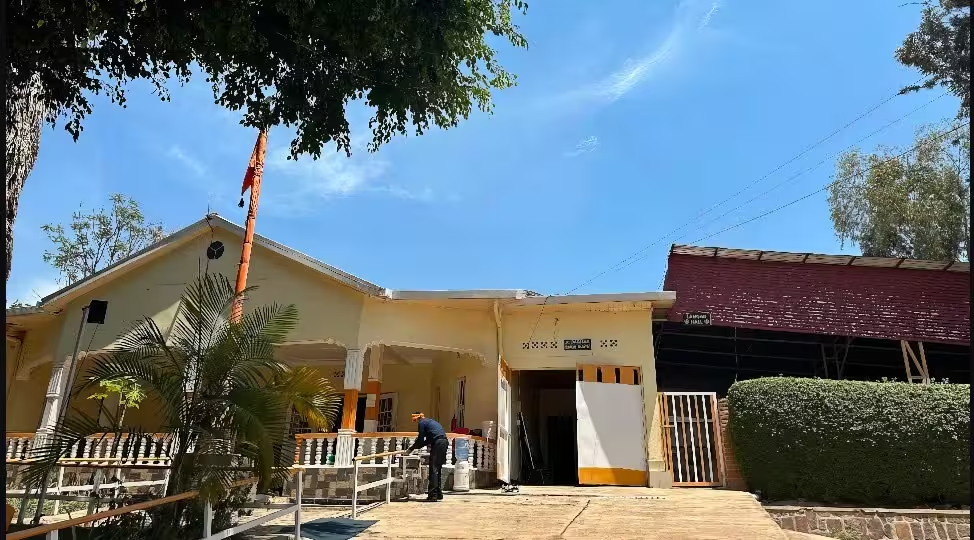
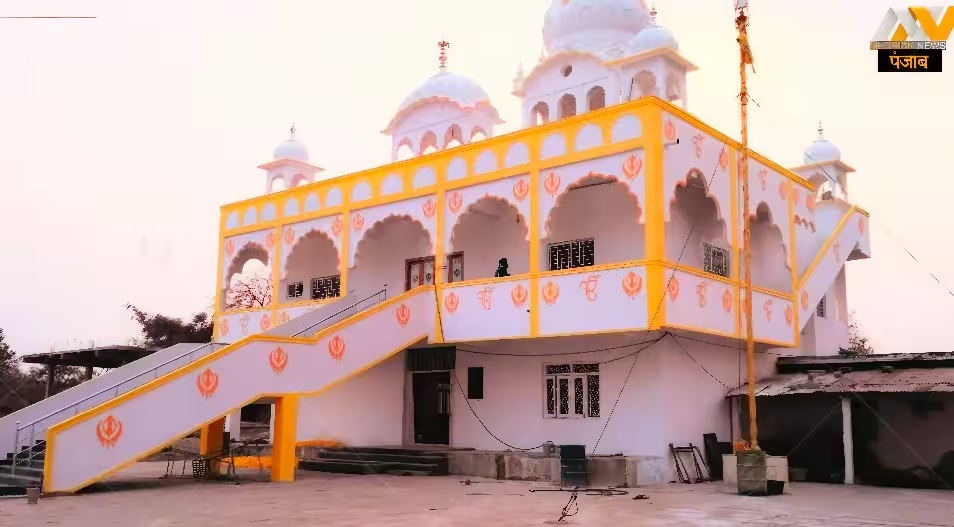
The village has an estimated population of approximately 500 individuals, predominantly belonging to the Lambada community, which is classified under India’s Scheduled Tribes. The adoption of Sikhism has occurred gradually over the past two decades. Linguistically, residents primarily use Lambadi, with limited use of Hindi and Telugu; Punjabi is not spoken within the community. The settlement contains a dedicated place of Sikh worship, Gurdwara Sahib Dashmesh Darbar, a two-storeyed structure situated at the periphery of the village and surrounded by agricultural land
Origins of the Gurdwara: From Ancestral Memory to Sikh Sacred Space
Inside what is now an unused room in the village stands a modest yet symbolically powerful structure—a two-feet-high tomb. This unassuming marker represents the earliest physical link between the Lambada tribal community of Gachubhai Thanda and Sikh sacred tradition.
According to Lakhvinder, a resident of the village, the story dates back nearly five decades. The villagers’ ancestors had long maintained a spiritual connection with Sachkhand Sri Hazur Sahib, Nanded, which they visited occasionally as part of their devotional journeys. These pilgrimages gradually introduced Sikh figures and narratives into the community’s religious imagination.
Around fifty years ago, in an act rooted in both tribal custom and emerging Sikh reverence, the elders of the village set a bull free while chanting the name of Guru Gobind Singh. In many tribal traditions, the ritual release of an animal carries deep spiritual meaning, symbolising surrender, sacrifice, and divine invocation. When the bull later died, it was buried with reverence, and a tomb was constructed at the site.
Over time, the space acquired greater religious significance. The village elders placed a picture of Guru Nanak Dev Ji above the tomb, and the site became a place of regular worship and puja. For many years, devotional practices continued in this form, blending tribal ritual traditions with emerging Sikh symbolism. At this stage, the space was not identified as a gurdwara but functioned as a local sacred shrine, reflecting a transitional phase in the community’s religious life.
A significant transformation occurred in 1996, when the villagers constructed a roof over the site, formalising the structure and converting it into a small temple-like space. This architectural change marked an important shift—from informal worship to an organised religious centre. In subsequent years, as the community’s engagement with Sikh teachings deepened, the shrine evolved further, eventually taking the form of a gurdwara.
Thus, what began as a ritual act rooted in ancestral memory gradually developed into Gurdwara Sahib Dashmesh Darbar—the spiritual nucleus of the village today. The gurdwara’s origins reflect a slow, organic transition rather than a sudden conversion, illustrating how Sikh faith was absorbed, interpreted, and institutionalised within a tribal cultural framework.
Formal Establishment of the Gurdwara and Community Initiation
A decisive phase in the religious transformation of the village occurred under the leadership of Bhagat Singh, a village elder who played a central role in formalising Sikh religious practice within the community. During the late 1990s, Bhagat Singh undertook extensive exposure to Sikh religious life by visiting several major Sikh sacred sites, including historical gurdwaras located in present-day Pakistan. In addition, he spent nearly five years residing at a gurdwara in Hyderabad, where he acquired a sustained and practical understanding of Sikh doctrine, rituals, and institutional norms.
By 2001, following consultations with Sikh religious authorities, the community took a collective decision to transition the existing shrine into a formal gurdwara. Sikh religious leaders advised that the conduct of Sikh rituals within a gurdwara setting required formal adherence to Sikh religious identity and discipline. Acting upon this guidance, approximately seventy villagers underwent initiation into Sikhism during this period.
These newly initiated members adopted the Five Ks (Panj Kakaar), marking their formal incorporation into the Sikh faith. This event represents the first documented instance of organised Sikh initiation within the village and laid the institutional foundation for what would later become Gurdwara Sahib Dashmesh Darbar. The initiation also signified a shift from syncretic devotional practices to structured Sikh religious observance, thereby establishing Sikhism as a distinct and organised religious identity within the community. asiasamachar.com
Life & Faith in Guru Gobind Singh Nagar
Today, the village has completely reimagined its cultural and social life around Sikh principles:
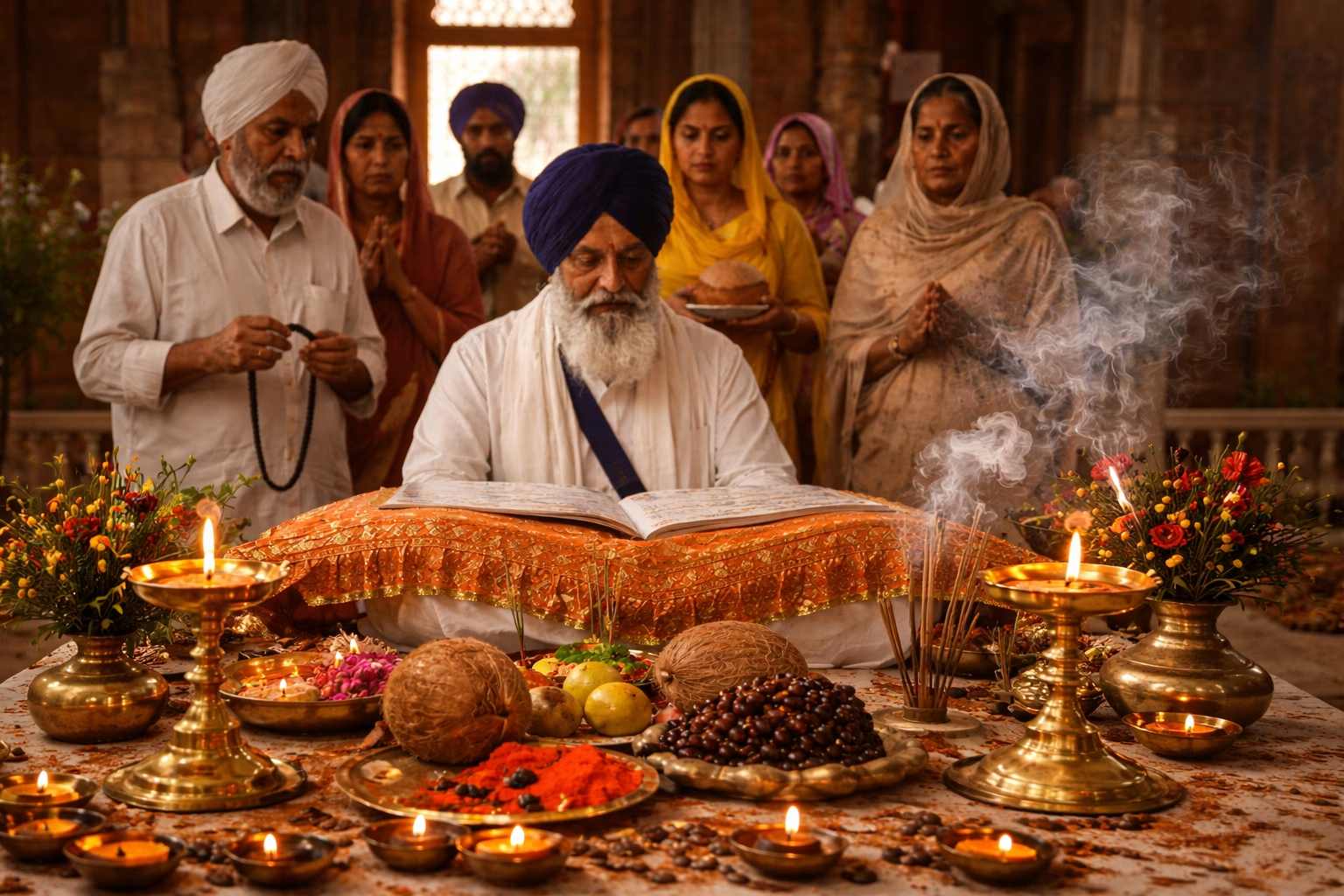
Religious Life: The gurdwara is the centre of daily life. Prayers, nitnem, and weekly langar bring villagers together from dawn to dusk.
Identity: Most villagers have adopted Sikh names upon conversion, a visible sign of their adopted identity.
Social Practices: Tobacco, alcohol, and toddy are banned. Meat consumption follows the jhatka practice, aligning with Sikh dietary norms.
Youth & Education: The village now promotes religious education, including Gurmukhi and Gurbani teachings. Leaders have sought support from broader Sikh institutions to ensure that children learn Sikh scripture and languages.
Importantly, despite strong cultural changes, the village is known for communal harmony—non-converted families coexist peacefully, reinforcing mutual respect across faiths.
Cultural & Religious Significance
The story of this village stands out for several reasons:
Organic Religious Adoption: Unlike cases where conversion is solely influenced by external factors, this shift grew from the community’s own spiritual experiences and long-standing pilgrimages. jflcc.thebrpi.org
Hybrid Identity: The Lambadi tribal culture blends with Sikh rituals, showing a unique regional adaptation of Sikh identity without losing their linguistic and cultural roots. Asia Samachar
Expansion of Sikh Presence: It highlights how Sikhism, though numerically small in South India, resonates beyond its traditional strongholds in Punjab, spreading through personal faith and community life. Asia Samachar