Sikhs in Greenland: A Glimpse into the Frozen Diaspora
Welcome to Global Sikhi Wiki, your comprehensive resource for exploring Sikh history, culture, and global communities. Today, we delve into the story of Sikhs in Greenland
Greenland, the world’s largest island, is a land of vast ice sheets, rugged fjords, and a sparse population of around 56,000 people, predominantly Inuit with strong ties to Danish culture. Located in the Arctic, it’s known for its harsh climate and stunning natural beauty. While Christianity, particularly Lutheranism affiliated with the Church of Denmark, dominates the religious landscape—accounting for over 95% of the population—other faiths have minimal presence. Sikhism, with its global diaspora of over 25 million followers, has yet to establish a significant community here. However, isolated instances of Sikh exploration and symbolism highlight the faith’s enduring spirit of adventure and universality.
newsweek.com
Greenland: The Island Continent of Ice and Light
"first, it's not really green. second, it's more than just land." 🥀
To understand any story set in Greenland, one must first grasp the sheer, monumental scale and nature of the place. It is a land of superlatives and profound contradictions.
The World’s Largest Island
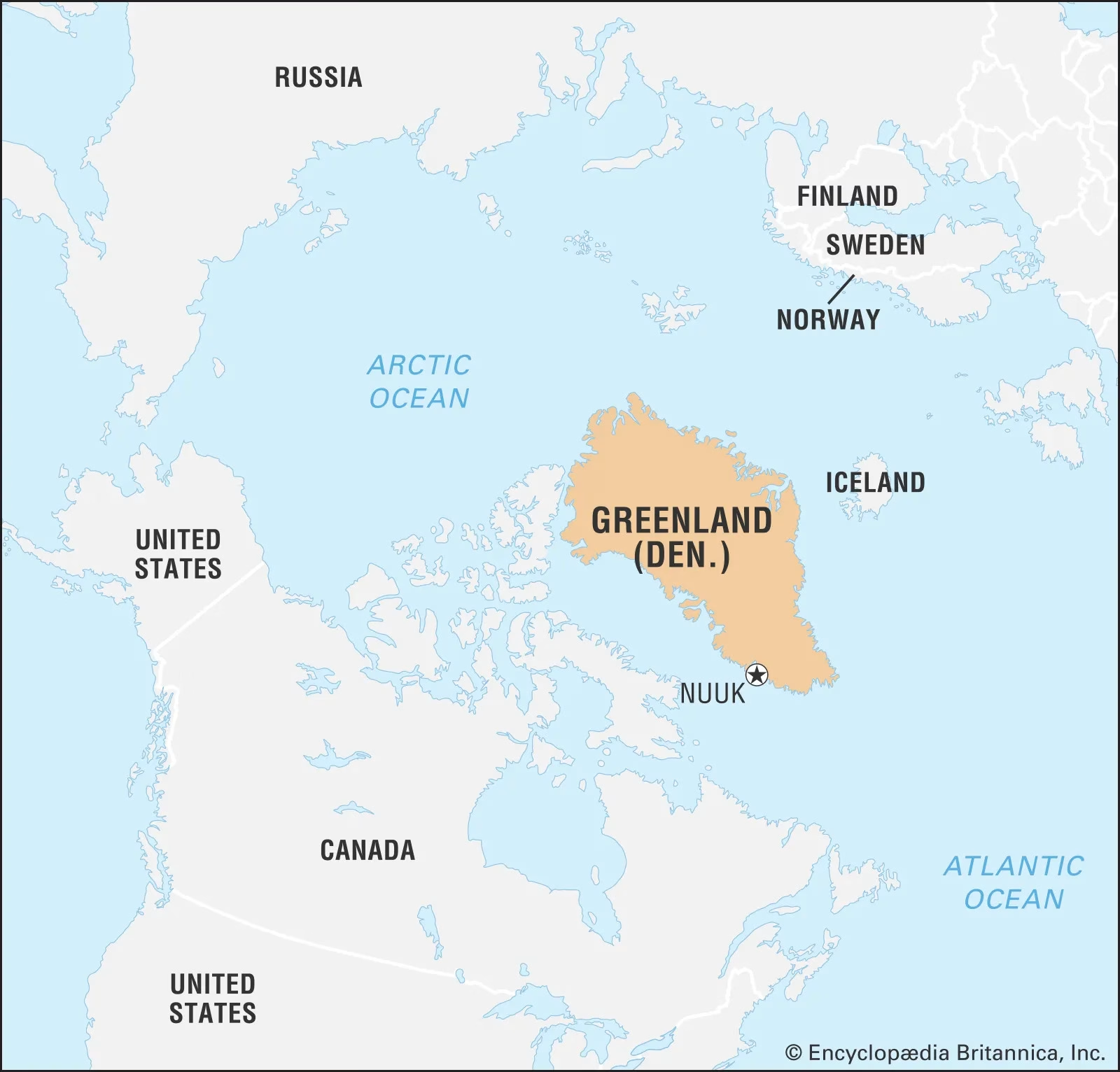
Greenland is officially the world’s largest non-continental island. It spans over 2.1 million square kilometers (836,000 square miles). To put that in perspective, it is larger than Mexico, yet its population is less than that of a small city—roughly 56,000 people. This results in one of the lowest population densities on Earth. The vast majority of this population lives along the ice-free, rugged coastline, as the interior is uninhabitable.
Geographical Boundaries and Sovereignty
Location: Greenland is geographically part of the North American continent, nestled between the Arctic and Atlantic Oceans.
Political Status: It is an autonomous territory within the Kingdom of Denmark. While it moved from colonial status to a Danish county in 1953, it achieved full self-governance in 2009. Today, Greenland controls most of its internal affairs (police, judiciary, education, health), while foreign and defense policy remains largely with Denmark. Its capital and largest city is Nuuk.
The Ice Sheet: The defining feature of Greenland is the Greenland Ice Sheet (Sermersuaq). This permanent blanket of ice covers about 80% of the landmass, is up to 3 kilometers thick in places, and holds about 8% of the world’s freshwater. If it were to melt entirely, global sea levels would rise by over 7 meters. The ice sheet is not a static monument; it is a dynamic, flowing entity, calving massive icebergs into the sea through powerful outlet glaciers.
Historical Context and Demographics: A Recent Phenomenon
Unlike Sikh diasporas in the UK, Canada, or even Norway, which have century-old roots, the Sikh presence in Greenland is a 21st-century narrative. There is no record of Sikhs in the Danish colonial administration or the early fishing and mining industries. The community began to form in the late 2000s and 2010s, primarily driven by two factors:
Specialized Professional Migration: Greenland’s small population (just 56,000) faces significant shortages in highly specialized fields. Sikhs have arrived as individuals or small families to fill critical roles, particularly in aviation (pilots and engineers with Air Greenland), healthcare (doctors and nurses in Nuuk’s Queen Ingrid’s Hospital), engineering (civil and mining engineers), and education.
The Danish Connection: As an autonomous territory within the Kingdom of Denmark, Greenland’s immigration pathways are often linked to Denmark. Some Sikh professionals initially settled in Denmark before securing contracts in Greenland, utilizing the freedom of movement within the Realm.
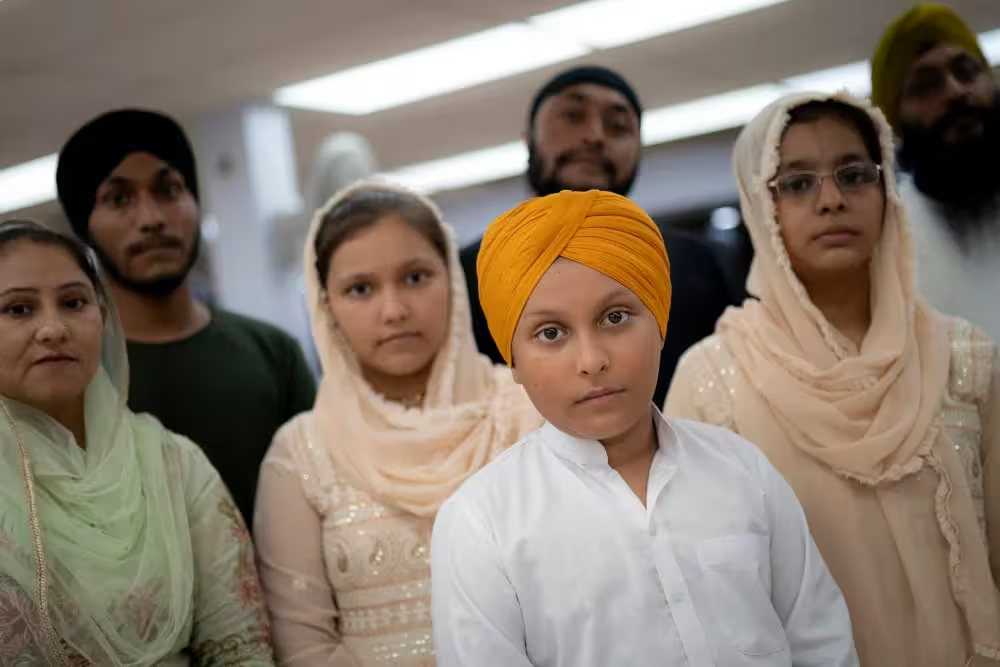
The community is minuscule, estimated at no more than 25-50 individuals at any given time, concentrated almost entirely in the capital, Nuuk (population 19,000), with perhaps a single professional or family in smaller towns like Sisimiut or Ilulissat. This is not a community of laborers or refugees, but one of highly educated, transient professionals on fixed-term contracts.
The Practice of Faith: Solitude and Adaptation
Practicing Sikhism in Greenland presents unique challenges. The core tenets of Sikhism—Naam Japna (meditating on God), Kirat Karni (earning an honest living), and Vand Chakna (sharing with others)—are portable. However, the institutional and communal pillars of the faith are absent.
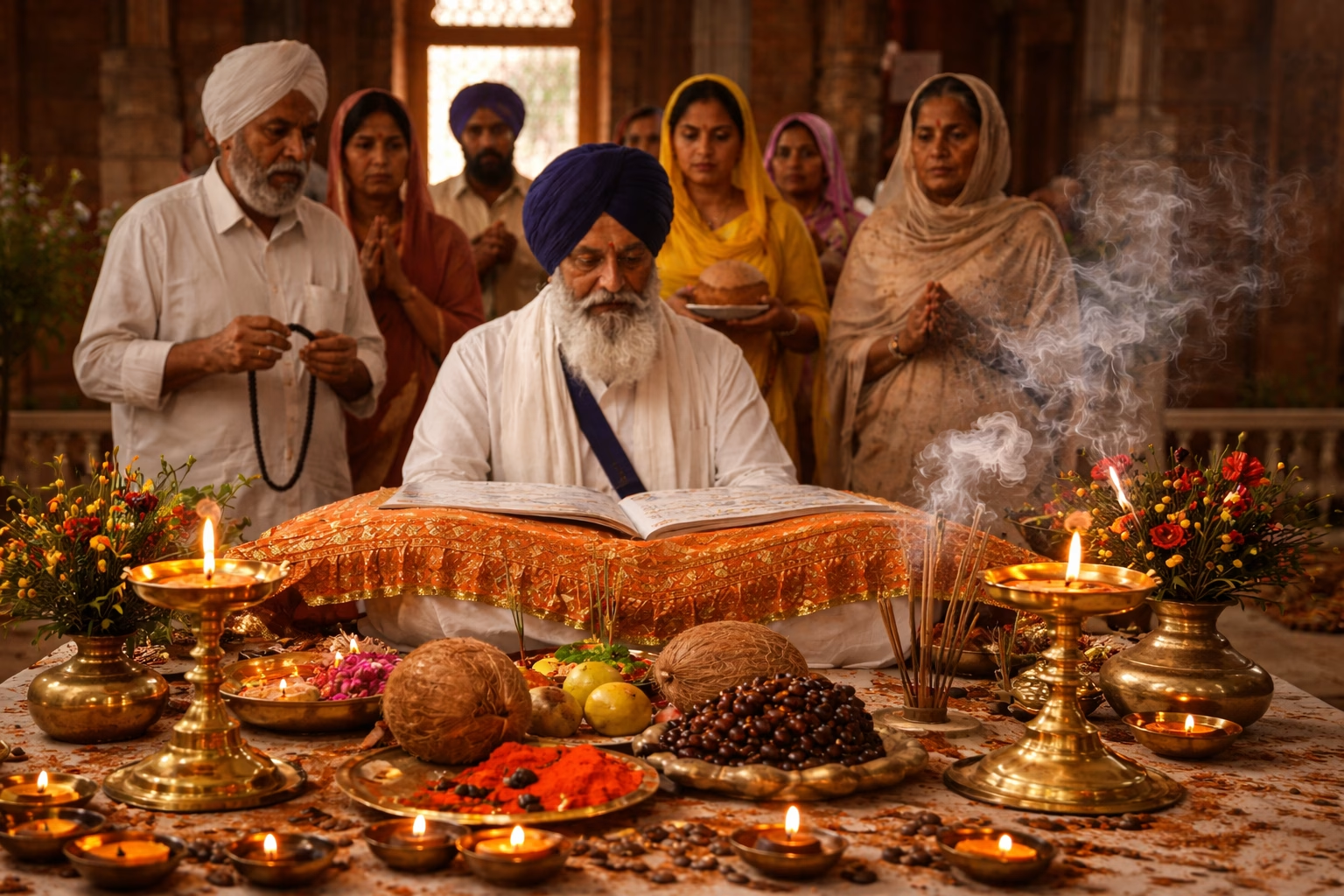
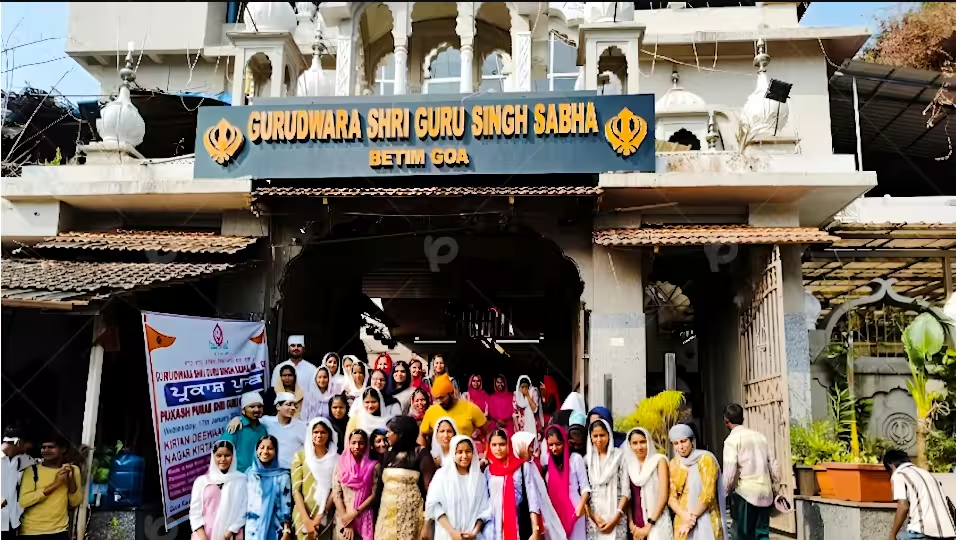
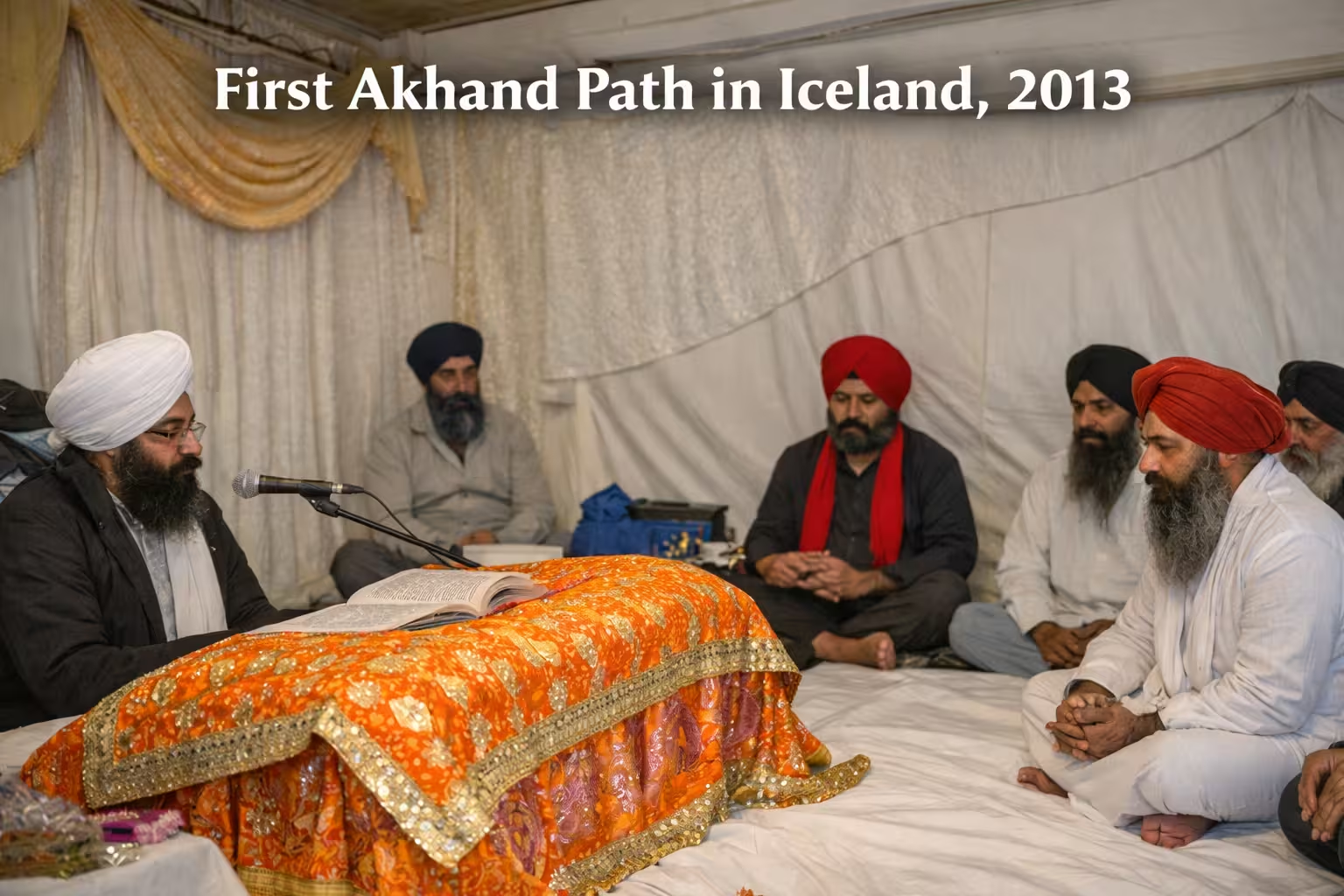
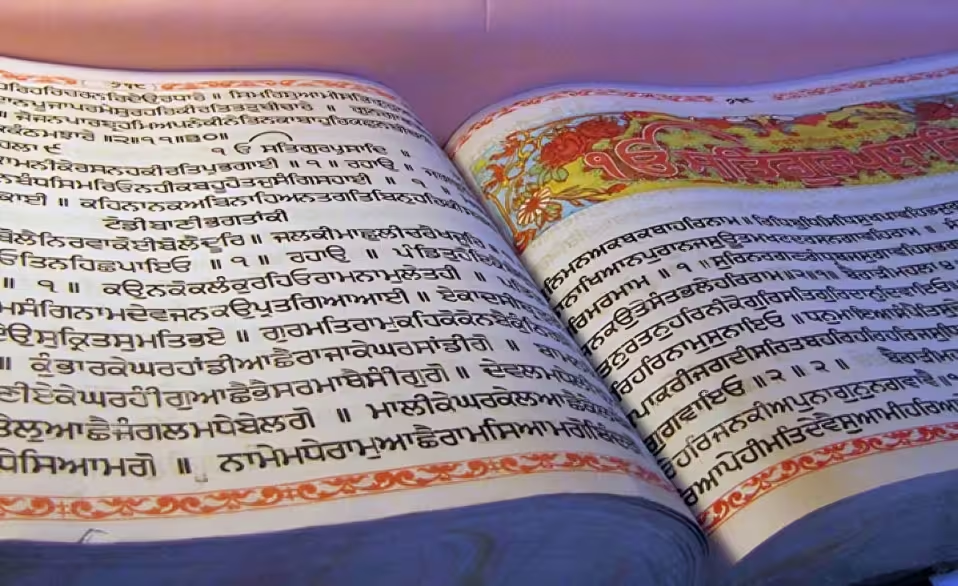
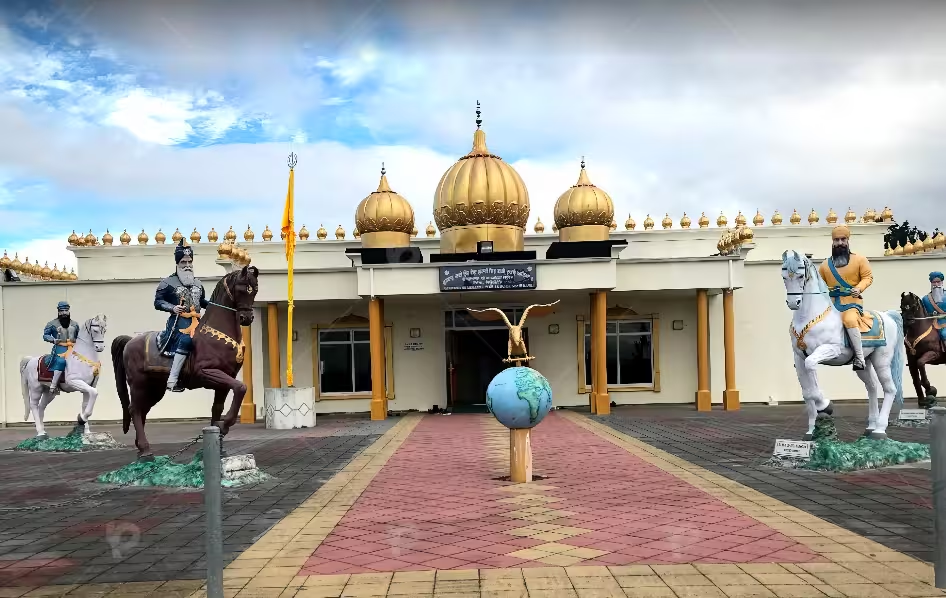
No Gurdwara: There is no Gurdwara (Sikh place of worship) in Greenland. The closest might be in Reykjavik or Copenhagen, both a costly flight away. Therefore, Sangat (holy fellowship) is virtual or familial. Worship occurs in the home. A spare room becomes a makeshift meditation space where the Guru Granth Sahib, if a family has a personal copy, is respectfully installed. Daily prayers (Nitnem) are recited privately.
The 5Ks (Kakar): Maintaining the physical articles of faith is a daily act of resilience. The Kesh (uncut hair) and Kangha (comb) are managed privately. The Kara (steel bracelet) is worn constantly. The Kirpan (ceremonial sword), a deeply misunderstood article in many Western societies, requires careful navigation. In Greenland’s tight-knit, pragmatic communities, personal explanation and dialogue are key. There are no known legal conflicts over the Kirpan, partly due to the community’s professional stature and the informal nature of Greenlandic society.
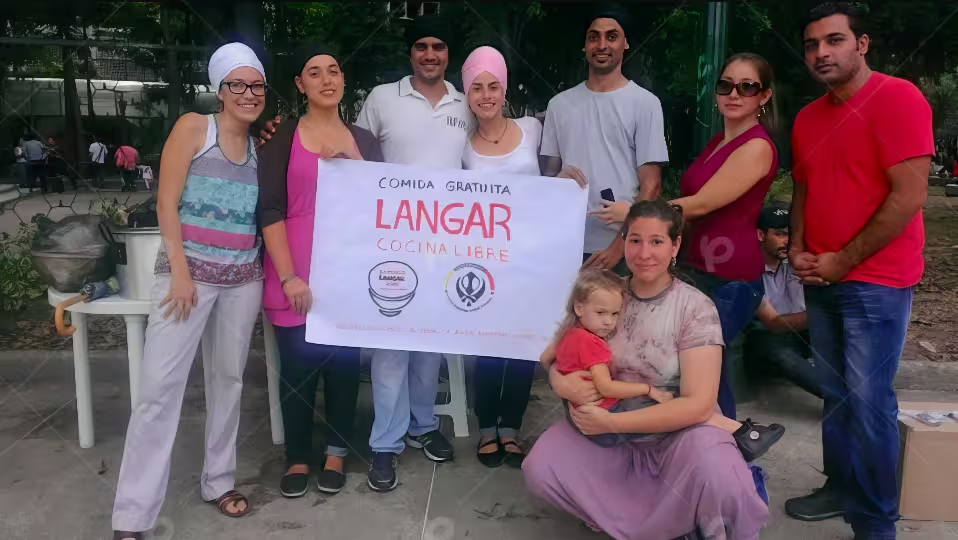
Langar and Community: The principle of Langar (free communal kitchen) is nearly impossible to practice in its traditional form due to the lack of a Gurdwara and a large, visible community. However, the spirit of Langar—selfless service and sharing—manifests differently. Sikh professionals contribute to Greenlandic society through their skilled work. Sharing homemade Punjabi food with curious Greenlandic or Danish colleagues becomes a modern, micro-scale form of cultural and spiritual exchange.
Cultural Integration and Identity: The "Quiet Diplomats"
Sikhs in Greenland exist at a fascinating intersection. They are neither part of a historic minority (like the Danish) nor the majority Inuit population. They are temporary residents who must engage deeply with both.
Interaction with Inuit Culture: There are surprising, albeit superficial, resonances. Both Sikh and Inuit cultures possess a strong oral tradition, emphasis on community wellbeing, and a history of resilience in harsh environments. Sikhs often express deep respect for Inuit closeness to nature and subsistence traditions. The Arctic climate necessitates adaptation: the turban (Dastar) is sometimes supplemented with woolen hats in extreme cold, a practical adaptation seen in Sikh communities in other cold climates.
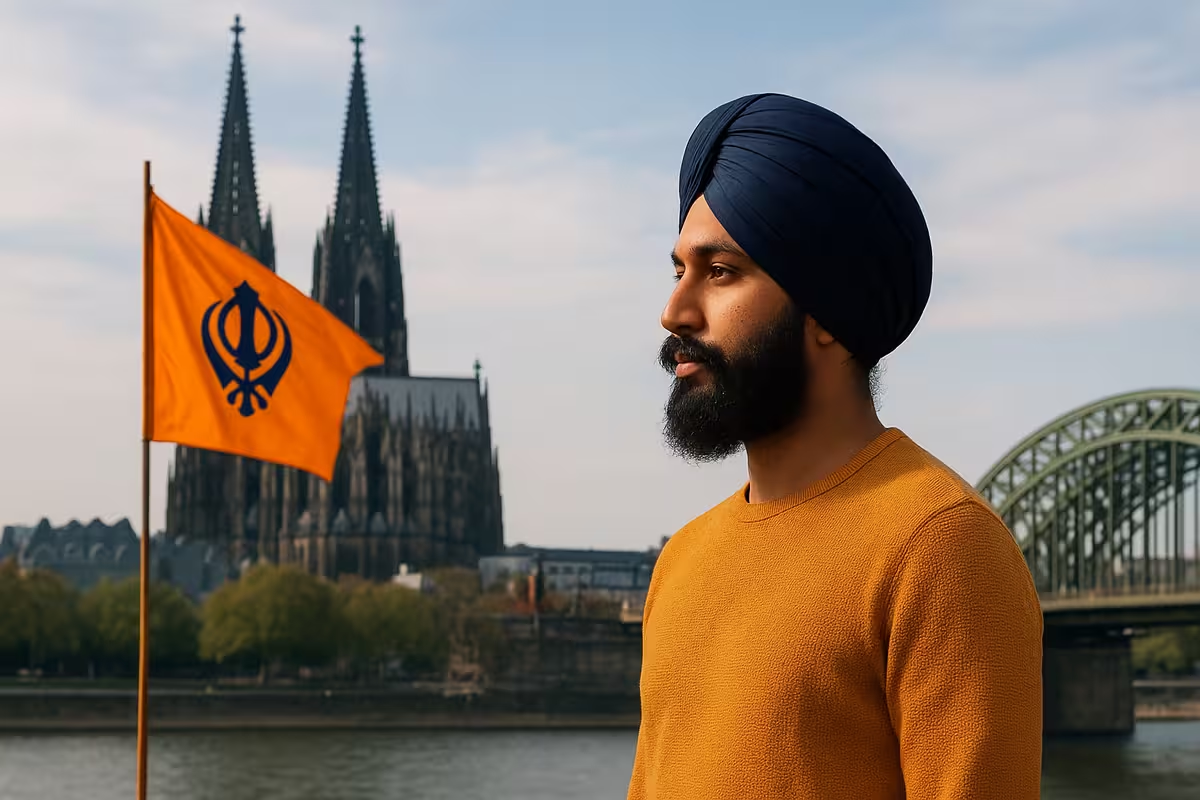
Visibility and Education: A Sikh in a turban is a rare sight in Nuuk, attracting quiet curiosity rather than overt hostility. Sikhs become, by default, cultural ambassadors. Questions about the turban, their origins, and their faith are answered individually, fostering person-to-person understanding. This “quiet diplomacy” in supermarkets, workplaces, and schools is a crucial part of their experience.
Challenges of Isolation: The greatest challenge is spiritual and cultural loneliness. The absence of a Gurdwara, Punjabi markets, or religious festivals celebrated in a crowd can lead to a sense of disconnect. Major events like Vaisakhi or Gurpurabs are observed privately or via live streams from Gurdwaras in Canada or India. The long, dark winters test mental fortitude, making the inward focus of Sikh meditation both a challenge and a solace.
Conclusion: A Microcosm of Globalized Faith
The story of Sikhs in Greenland is not one of mass migration or the establishment of a permanent ethnic enclave. It is a story of precise, individual journeys—a pilot from Vancouver, a surgeon from Delhi, an engineer from Birmingham—each bringing their faith to one of the planet’s most remote frontiers.
Their existence underscores several broader truths: that modern migration flows reach every corner of the globe; that professional expertise can create diasporas in the unlikeliest places; and that faith, for the devout, is not bound by latitude. They practice a 500-year-old Punjabi faith under the glow of the Northern Lights, maintaining their identity through personal discipline, virtual community, and a professional commitment to a land and people far from their ancestral home.
In Greenland, Sikhs are more than a demographic footnote. They are a living example of how ancient traditions navigate the modern world’s edges, weaving a few, faint but resilient threads of Ik Onkar (the belief in one God) into the immense and rugged tapestry of the Arctic. Their presence, though small, is a powerful symbol of a interconnected world, proving that even on the world’s largest island of ice, the human spirit—and its diverse expressions of faith—can find a home.
If you’re a Sikh in Greenland or have stories to share, contribute to GlobalSikhiWiki to enrich our collective knowledge!