Sikhs in Austria: A Flourishing Community in the Heart of Europe
Welcome to Global Sikhi Wiki, your comprehensive resource for exploring Sikh history, culture, and global communities. Today, we delve into the vibrant story of Sikhs in Austria.
Austria, land locked country, known for its stunning Alpine landscapes and vibrant cultural heritage, is also home to a small yet significant Sikh community that reflects the global spread of Sikhi and the resilience of its followers. While Sikhs remain a religious minority in Austria, their history, contributions, and recent milestones show an inspiring journey of identity, community building, and recognition.
Austria is a home to a vibrant, growing, and deeply respected Sikh community. This blog explores the journey, contributions, and spiritual life of Sikhs in the Republic of Austria.
Early Presence and Demographics
The Sikh community in Austria began establishing itself in the late 20th century, primarily through economic migration and educational opportunities. Estimates vary: some official Austrian sources list around 10,000 Sikhs, while community records and Sikh-specific encyclopedias note figures closer to 2,700–3,000 people — with many settling in urban centers like Vienna, Salzburg, Graz, Klagenfurt and Linz. Wikipedia , sikh.at
Though small in numbers compared to Sikh populations in countries like the UK or Canada, Austria’s Sikh community plays an active role in promoting Sikh values, culture and faith in their adopted homeland.
Timeline: The Arrival and Growth of Sikhs in Austria
1970s – The Pioneers: The first Sikhs arrived in Austria in the 1970s. They were primarily businessmen from Punjab who saw economic opportunities in trade and manufacturing.
1980s – Family Settlement & Early Organization: As these pioneers established themselves, they brought their families. The need for a religious and cultural centre became apparent, leading to the first collective prayers in private homes.
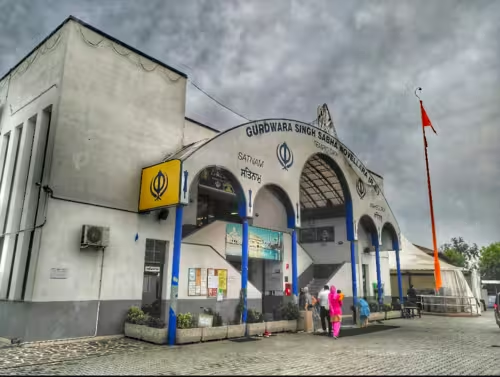
1990s – Institutional Foundation: This decade saw the formal establishment of the first Gurdwara, Gurdwara Singh Sabha Wien (1995), marking a turning point for community cohesion.
2000s – Growth and Recognition: The community grew in numbers and visibility. More Gurdwaras were established in other states. Dialogue with Austrian authorities on issues like the turban began to take shape.
2010s-Present – Integration and Advocacy: The community is now well-integrated, with second and third-generation Austrian-Sikhs fluent in German. They actively participate in interfaith dialogues and work to educate the broader public about Sikhism.
Sikhs in Austrian Business and Profession
The Sikh community is known for its strong work ethic and entrepreneurial spirit in Austria.
Business & Trade: Many early Sikh immigrants are successful in import-export, particularly in the textile industry. Others run thriving businesses in wholesale distribution, retail (especially textiles and fabrics), and hospitality (restaurants, hotels).
Professional Sector: A significant number of Sikhs are highly educated professionals working in information technology, engineering, finance, and healthcare as doctors and specialists.
Agriculture & Farming: While smaller in scale than in some other countries, some Sikh families are involved in agricultural ventures.
Taxi & Transport: A visible presence in the service sector, with many Sikhs operating taxi services and transport companies.
The Right to Wear the Turban (Dastar)
Austria has generally been respectful of religious attire. The turban is widely accepted in Austrian society and in most professional settings. There is no national law specifically banning religious headgear.
However, as in many countries, challenges can arise in specific contexts:
Private Employment: Individual employers may have dress codes, but discrimination based on religion is illegal under Austrian law.
Official Documents: Photographs for driver’s licenses and passports generally allow the turban as long as the face is fully visible.
Security Checks: The community has worked constructively with authorities to ensure respectful security screening at airports and public events.
The Austrian Sikh community has been proactive in engaging with authorities and the public to explain the religious significance of the Dastar, fostering understanding and respect.
Sikhs in the Austrian Armed Forces (Österreichisches Bundesheer)
Austria is among the few European nations that maintain mandatory military service for citizens after the age of 18. Service may be completed either through the Österreichisches Bundesheer (Austrian Armed Forces) or through approved civil service alternatives. For Sikhs, whose faith mandates unshorn hair and the wearing of a turban, military regulations historically posed challenges.
Landmark Accommodation for Sikh Identity (2016)
In 2016, the Österreichisches Bundesheer formally permitted initiated and practising Sikhs to serve while:
Wearing a Sikh turban (in regulation-compatible colours)
Maintaining unshorn hair and a full beard as articles of faith
This decision acknowledged that the turban and kesh are religious obligations, not cultural preferences, and brought Austria into a small group of European states offering such accommodation within their armed forces.
Sikh Participation in the Bundesheer
Since the policy change, Sikh men have served in the Austrian Armed Forces, primarily through compulsory national service, though professional military pathways also remain open. Due to strict privacy protections within the Austrian military system, individual Sikh soldiers’ names are generally not disclosed publicly.
Community confirmations indicate Sikh participation in:
Basic military training units
Logistical and support services
Disaster relief and civil protection roles under the Bundesheer
These Sikh servicemen embody the Sikh principle of seva (selfless service) while upholding both religious discipline and national responsibility.
European Significance
Austria’s accommodation of Sikh articles of faith within its armed forces has been widely cited in European Sikh discourse. It demonstrates that religious freedom, military discipline, and national security are compatible, and it has encouraged similar discussions in other European defence institutions.
For the Sikh community in Austria, service in the Österreichisches Bundesheer represents not only compliance with civic duty, but also recognition, inclusion, and equal citizenship. sikhsangat.com

Official Recognition of Sikhs : A Historic Achievement
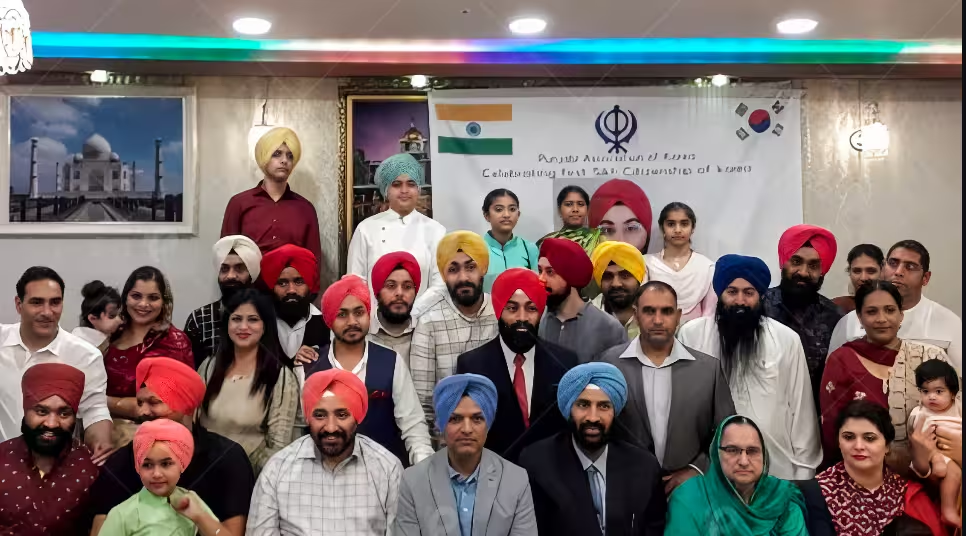
One of the landmark achievements for Sikhs in Austria came in December 2020, when Sikhism was officially recognised as a registered religion by the Austrian government. This formal recognition was the result of persistent efforts by Sikh organizations and youth committees who engaged with authorities and submitted detailed applications. Sikh+1
What does this mean in practice?
Sikhs can officially register their religious identity in government documents.
Believers can now use “Singh” and “Kaur” as part of their legal names rather than listing them as additional or unofficial names. The Times of India
This milestone not only strengthens the legal presence of Sikhs in Austria but also enhances awareness of Sikh identity and helps counter misunderstandings about the faith. timesofindia.indiatimes.com
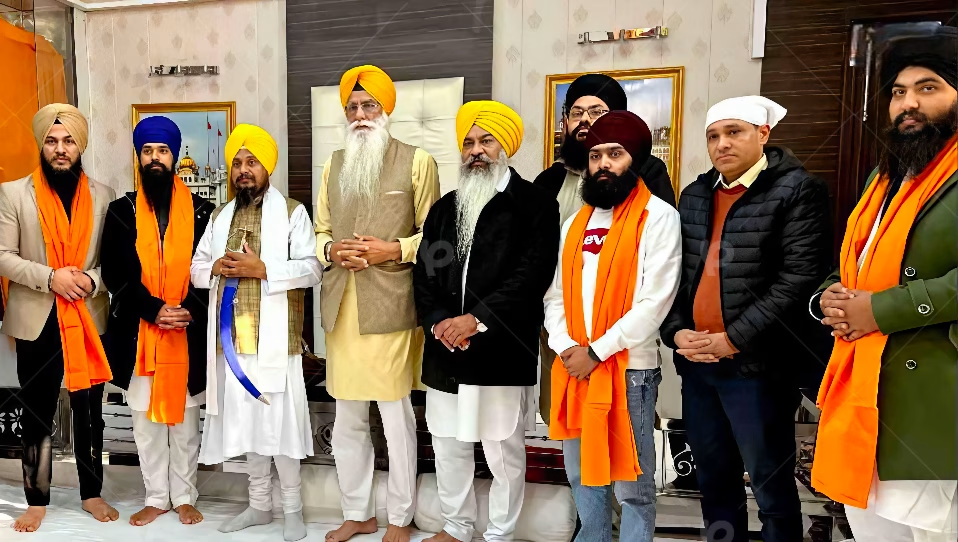
Famous Sikhs of Austria
While maintaining a humble presence, some Sikhs have gained recognition:
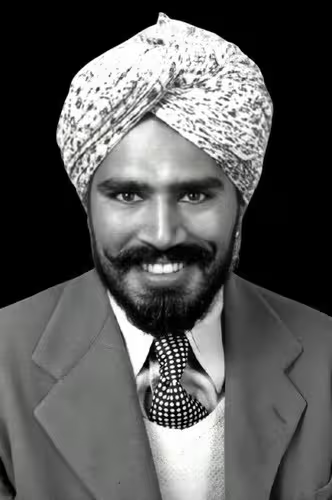
Sardar Harbans Singh: A respected founding member and elder of the Vienna community, instrumental in establishing the first Gurdwara.
Dr. Inderjit Singh: (Representative name) Several Sikh doctors and academics have achieved prominence in their specialized fields, contributing to Austrian society.
Austrian-Sikh Entrepreneurs: Successful business leaders who have created jobs and contributed to the economy, often recognized within their local chambers of commerce.
Community Spokespersons: Individuals who actively represent the community in interfaith forums and media, promoting understanding of Sikhism.
Manprit Sarkaria — Professional Footballer
Born in Vienna to Sikh parents, Manprit Sarkaria is one of the most recognized Sikhs in Austria. A professional footballer who has played for Austria Wien and Sturm Graz, he has also represented the Austrian national team. Sarkaria stands as a symbol of Sikh presence in Austrian sports and inspires young Sikh athletes.
Gursharan Mangat Singh — Sikh Community Representative
Gursharan Mangat Singh is known for advocating Sikh identity and religious rights in Austria. He has actively represented Sikh concerns in Austrian public debates, including discussions around wearing turbans and patkas in educational institutions.
Founders of Sikh Glaubensgemeinschaft Österreich (SGÖ)
The leadership team behind SGÖ played a crucial role in the historic 2020 government recognition of Sikhism as an official religion in Austria. Their administrative and community efforts strengthened Sikh identity and legal standing in the country.
Sant Ramanand Dass — Historical Figure Connected to Austria
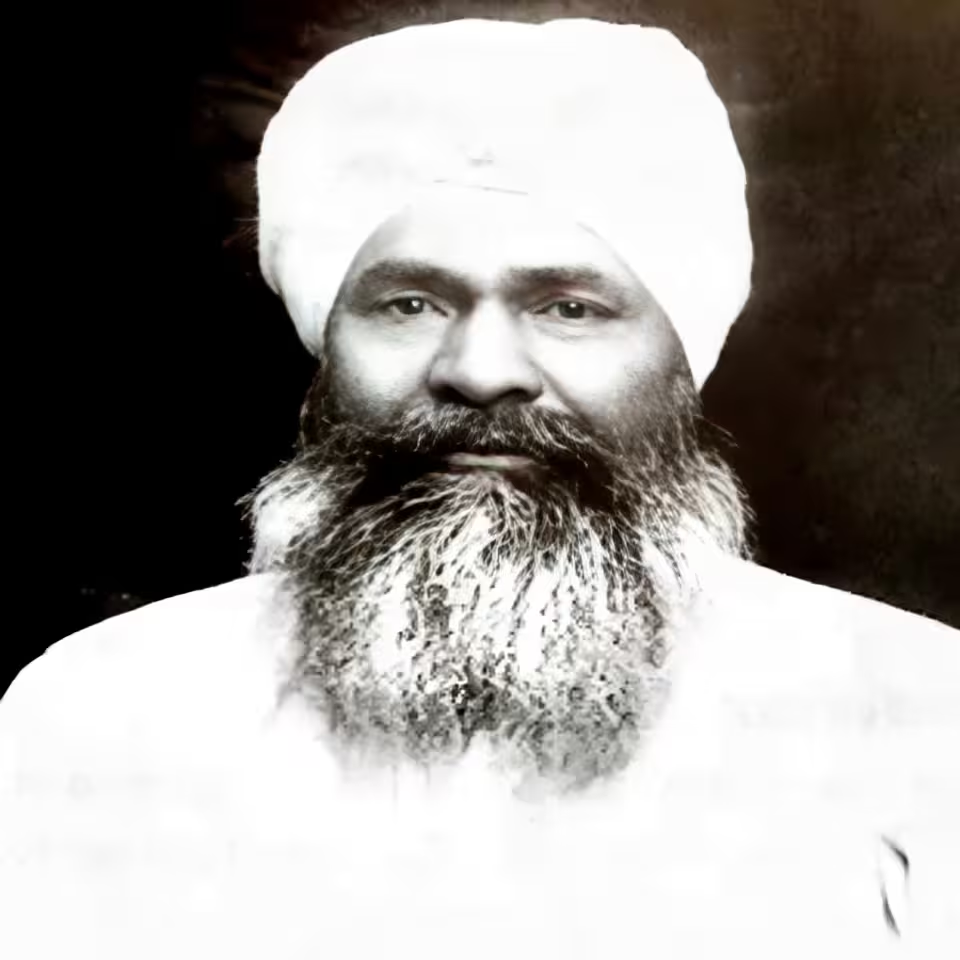
Sant Ramanand Dass, a spiritual leader of the Ravidassia community, became part of Austria’s Sikh-related history due to the 2009 Vienna incident. His legacy continues to influence community dialogue and interfaith sensitivity.
Gurdwaras in Austria: Pillars of the Community
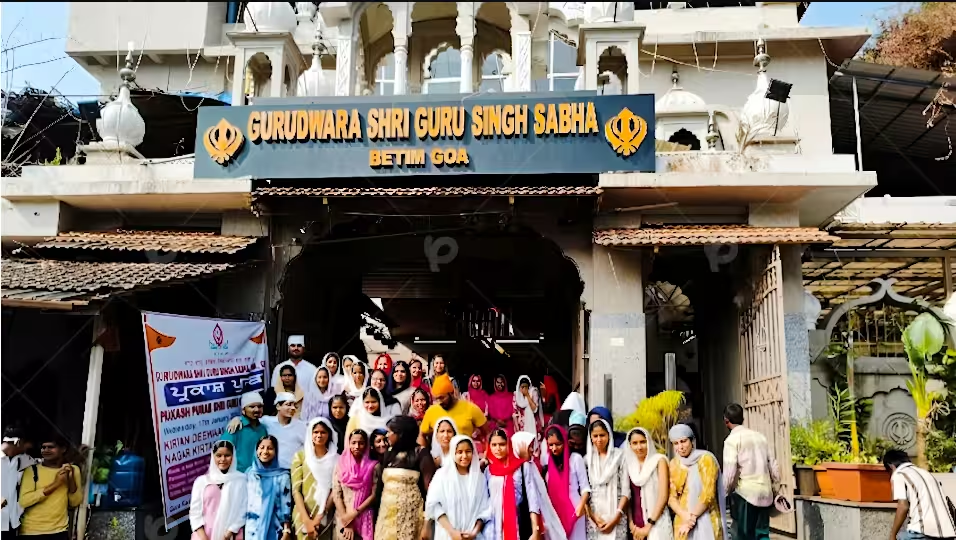
Gurdwaras are not just places of worship; they are community hubs that preserve culture and provide support.
1. Gurdwara Singh Sabha Wien (Vienna)
Location: Vienna (the capital city).
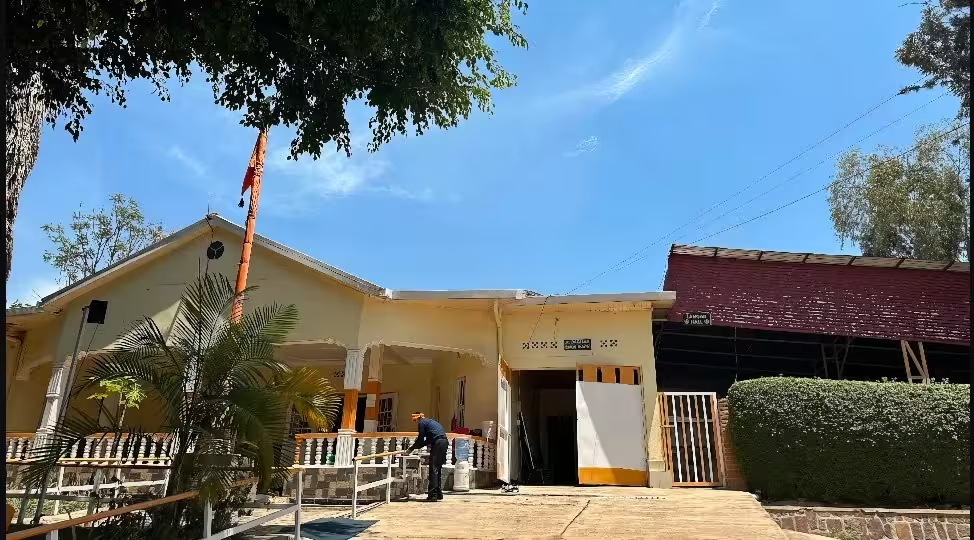
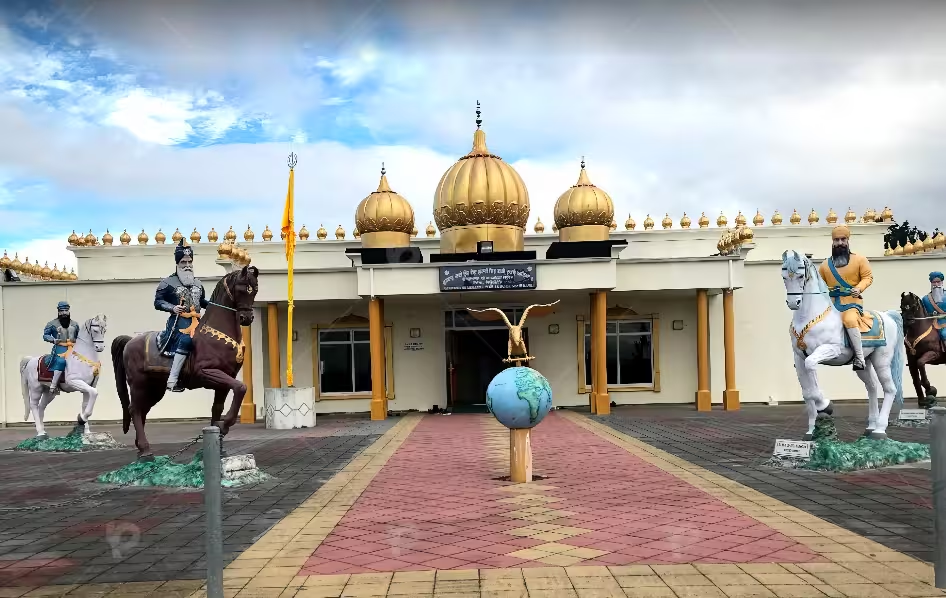
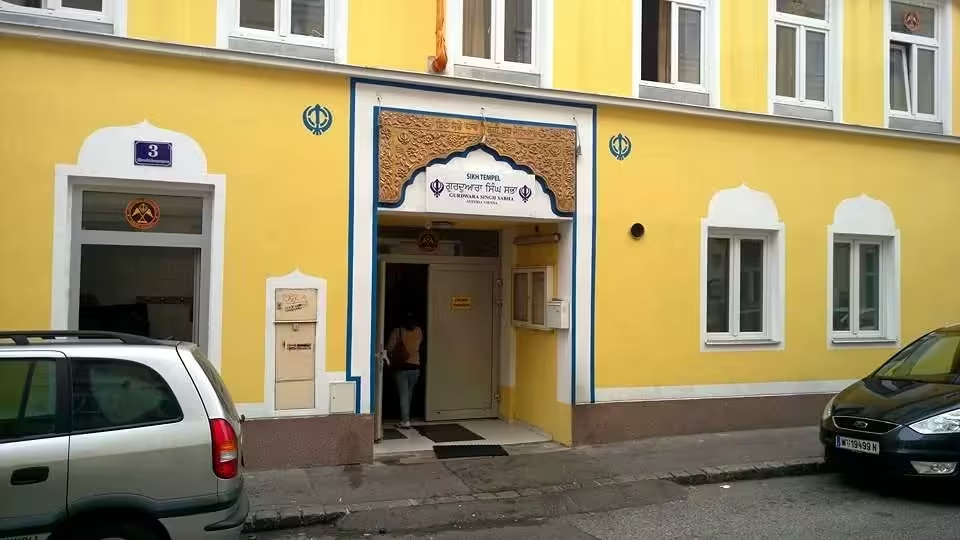
History: Established in 1995, it is the oldest and largest Gurdwara in Austria. It plays a key role in interfaith activities in Vienna. Gurdwara Singh Sabha Wien, located at Albrechtsbergergasse 3, 1120 Vienna (Meidling district), is one of the primary Sikh places of worship in Austria’s capital. It serves as a spiritual and community hub for the local Sikh Sangat (congregation), offering daily prayers, kirtan (devotional singing), and langar (free community kitchen open to all). The Gurdwara follows traditional Sikh practices and welcomes visitors of all backgrounds
2. Gurdwara Graz
Location: Graz, Styria.
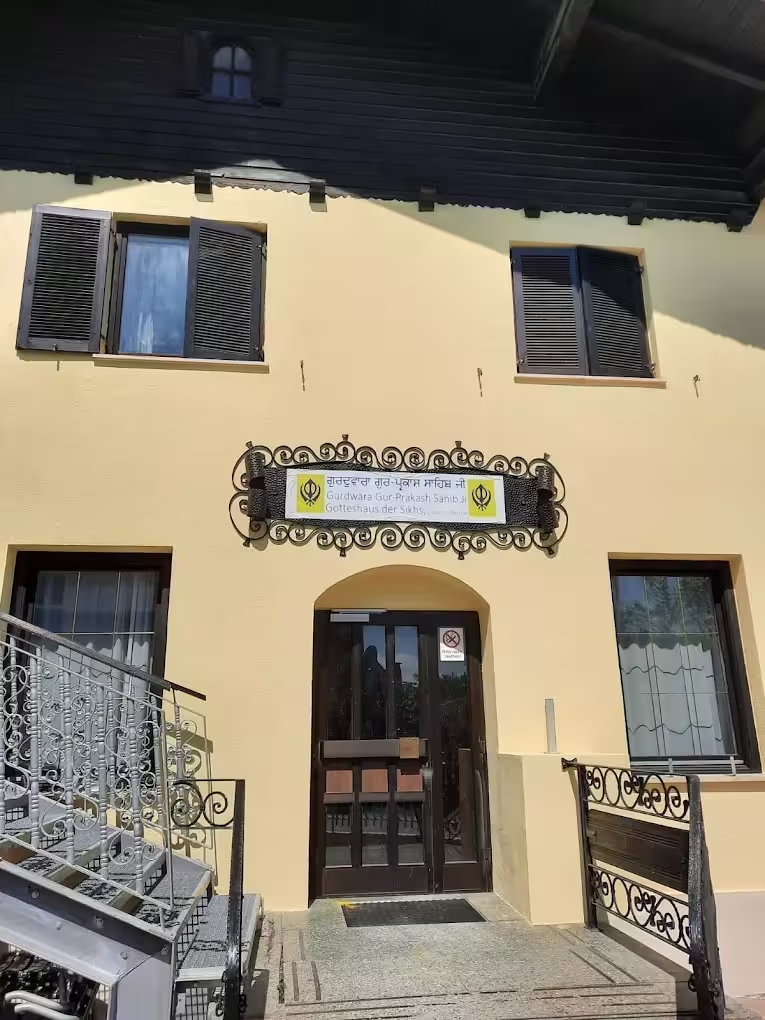
History: Gurdwara Gur-Prakash Sahib Ji, located at Raiffeisenweg 3, 8101 Gratkorn (a municipality just north of Graz in Styria, Austria), serves as the primary Sikh place of worship for the Sikh community in the Graz area and Styria region. It is a welcoming Sikh temple open to all, focusing on meditation, prayer, kirtan (devotional hymns), and langar (free community kitchen), with regular programs especially on Sundays where the local Sangat (congregation) gathers.
Serving the Sikh community in southern Austria, this Gurdwara caters to families, students, and professionals in the region. It is a vital centre for the smaller but active community in Styria.
3. Gurdwara Sahib Linz
Location: Linz, Upper Austria.
History: Founded to serve the Sikh population in the industrial and cultural centre of Linz. It provides a space for worship and community gathering in the state.
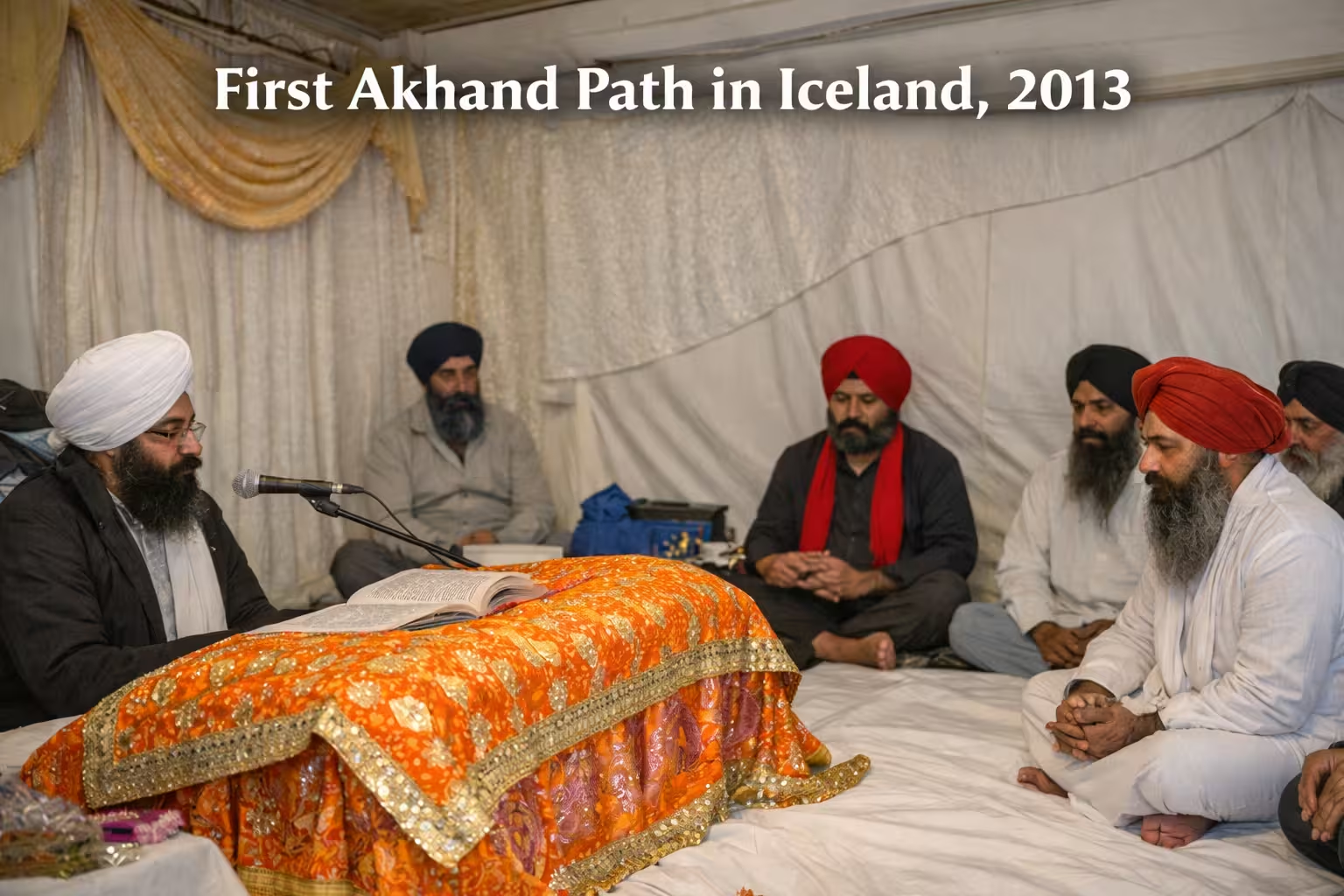
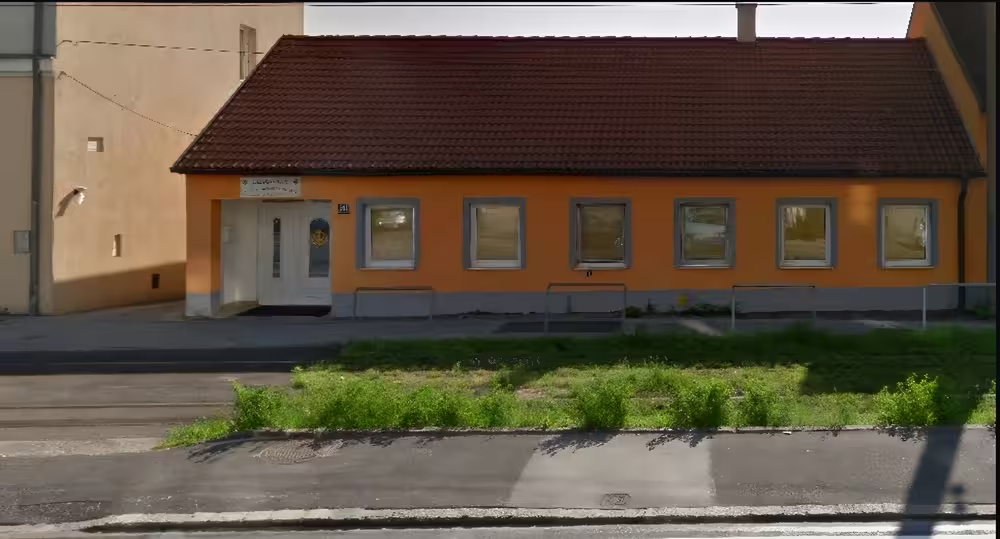
Gurdwara Sri Guru Granth Sahib Niwas, commonly referred to as Gurdwara Sahib Linz, is located at Wiener Straße 313, A-4030 Linz, Austria (in Upper Austria/Oberösterreich). It serves as the main Sikh place of worship for the local Sangat in Linz and surrounding areas, offering regular diwans (services), kirtan (devotional hymns by ragi jathas), Akhand Path (continuous recitation of the Guru Granth Sahib), and langar (free community kitchen open to all). The Gurdwara emphasizes traditional Sikh practices and is a welcoming space for visitors. worldgurudwaras.com
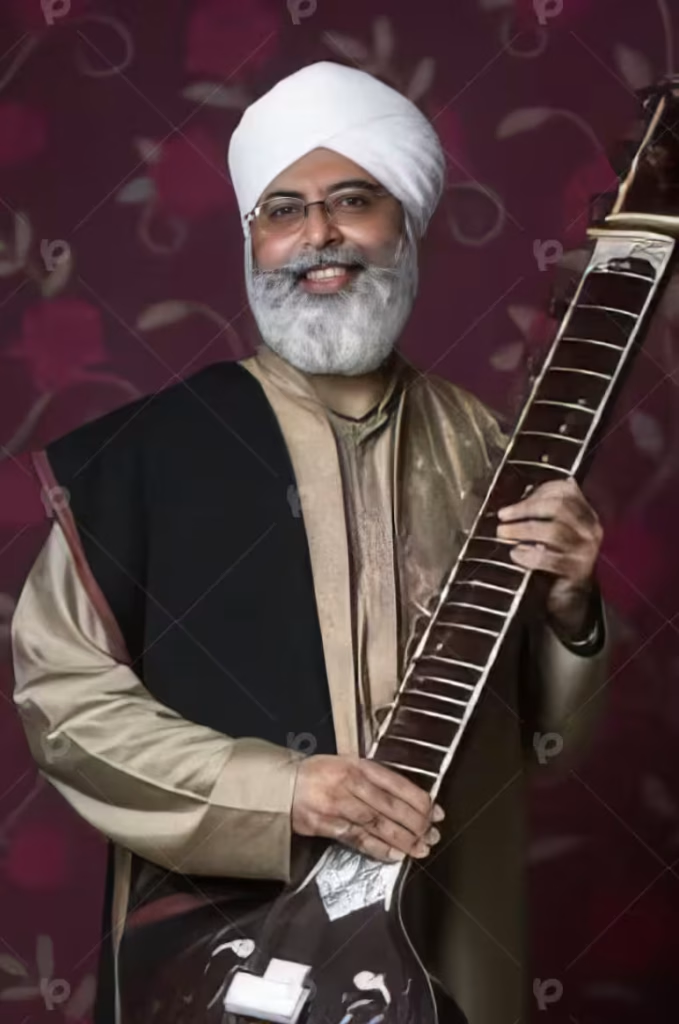
Professor Surinder Singh Matharu
Professor Surinder Singh Matharu is a distinguished British musicologist, scholar of Indian classical music, and Naad (sound) yoga teacher of Sikh heritage, best known for his work in reviving and promoting traditional Sikh music and Gurmat Sangeet (the musical tradition of the Sikh Gurus). Wikipedia
Here’s a concise overview of his life and contributions:
🎓 Early Life & Education
Born in 1969 in Kapurthala, Punjab, India, Surinder Singh Matharu developed a deep interest in music from a young age. Wikipedia
He studied Indian classical music through the Guru-Shishya Parampara (traditional master-disciple system), later earning his degrees in economics, classical Indian music, and an MPhil in Classical Indian Music from Guru Nanak Dev University. Wikipedia
📚 Academic and Musical Career
In 1994, he founded the Raj Academy of Asian Music in London, which became the Raj Academy Conservatoire — a leading international centre for Sikh music studies. Wikipedia
He helped preserve and teach traditional Sikh musical instruments such as the Rabab, Taus, Sarangi, Dilruba, and Jori. Wikipedia
His teachings extend across the UK, Canada, USA, Europe, and India, with thousands of students worldwide. Wikipedia
🎵 Recognition & Academic Role
In 2006, he was appointed Professor of Musicology at Thames Valley University (now University of West London), where he taught Sikh music, Naad yoga, and Indian classical music. Wikipedia
He has produced acclaimed musical works and recordings, including Mere Mun (2001) and Anhad – Beyond Sound (2005), blending devotional content with academic depth. Wikipedia. wikidata.org
🌍 Legacy
Professor Matharu is widely respected for reviving Sikh musical heritage, elevating it within formal musicology, and enabling appreciation of Sikh Shabad Kirtan traditions through structured academic and practical frameworks.
He taught degree courses at the University of West London in Sikh Music, Naad Yoga and Classical Indian Music until 2012. In 2017, he launched the first multi-award winning documentary on Sikh Music called “Sikh Musical Heritage: The Untold Story”
Turban Issues for Sikhs in Austria
Sikhs in Austria, particularly those wearing turbans (dastar or pagri), have faced occasional discrimination, often tied to post-9/11 stereotypes conflating them with other groups. However, since Sikhism’s official recognition in 2020, integration has improved, with legal protections for religious symbols like the turban. Issues are not widespread but do occur in specific contexts like travel or public life. Below, I break down the key aspects of your query based on recent reports and community experiences.
1. Specific Turban-Related Issues
- Airport Profiling: In April 2024, a turbaned Sikh traveler at Vienna International Airport reported being subjected to invasive secondary screening, pat-downs, and questioning solely due to his turban and kara (bracelet). No contraband was found, but he was delayed while others passed quickly. This echoed broader EU concerns about religious profiling at borders.
- Political and Online Abuse: During the September 2024 election campaign, Austria’s first Sikh parliamentary candidate, Gurdial Singh Bajwa, faced racist online taunts mocking his turban as “foreign” or “terrorist-like.” This highlighted lingering biases, though it boosted his profile and led to calls for better hate speech laws.
- Workplace and School Exemptions: Austria’s 2019 headscarf ban for primary school teachers exempts Sikh turbans and Jewish kippahs, recognizing them as non-“ideological” symbols. However, a 2017 EU Court ruling upheld employer bans on visible religious symbols (like headscarves) if uniformly applied, which could indirectly affect turbaned Sikhs in private jobs. No major 2025 incidents reported as of December 12, 2025.

4. 2024 Vienna Airport Religious Discrimination
- Date: April 2024
- Details: A turban-wearing Sikh traveler reported being singled out for aggressive secondary screening at Vienna International Airport’s security checkpoint. Despite no suspicious items, he was subjected to invasive pat-downs and questioning solely due to his visible Sikh attire (turban and kara bracelet), while others passed unchecked.
- Aftermath: The incident was publicized on social media and Sikh forums, prompting calls for better staff training on religious accommodations under EU anti-discrimination laws. No formal charges were filed, but it fueled discussions on airport biases.
- Significance: Highlights ongoing microaggressions faced by visible minorities in Austria, echoing post-9/11 stereotypes.

5. 2024 Racial Mockery of Sikh Political Candidate
- Date: September 2024
- Details: Gurdial Singh Bajwa, a 51-year-old Indian-origin Sikh and IT entrepreneur, became Austria’s first Sikh candidate for the National Council (parliament) under the Green Party. His campaign poster, showing him in a traditional turban, drew racist online abuse, including slurs like “turban terrorist” and memes mocking his appearance as “foreign” or “threatening.”
- Aftermath: Bajwa reported the hate speech to authorities, and the Greens condemned it as xenophobic. It garnered media attention, boosting his visibility but underscoring barriers for minority candidates. In September 2024, broader calls emerged from Austrian Sikhs for stronger anti-discrimination laws.
- Significance: A landmark for Sikh political representation, but it exposed persistent Islamophobia-adjacent biases against turbaned Sikhs. krone.at
2. Local Attitudes: Taunting vs. Curiosity
Austrian locals’ reactions to turbans vary by region and context—Vienna is more cosmopolitan, while rural areas may show more curiosity or insensitivity. Overall, curiosity outweighs outright taunting, especially post-2020, but stereotypes linger.
| Aspect | Common Experiences | Examples/Evidence |
|---|---|---|
| Curiosity | Frequent stares, questions, or polite interest; often turns positive with interaction. | Travelers report “curious glances” abroad, including Austria, where a smile elicits blessings in return. Community events like langar (free meals) in gurdwaras foster dialogue, with locals asking about the turban’s meaning. In 2022, a queer Sikh activist noted pride in wearing it despite scrutiny. |
| Taunting | Rare but includes verbal slurs or exclusion; more common online or in isolated incidents. | Childhood teasing (e.g., for long hair under a patka) in nearby Germany, with similar anecdotes in Austria. General scrutiny for turbaned Sikhs as “visibly different,” potentially leading to biases like assuming they’re “bad drivers” or “foreign.” No widespread reports of physical taunts in 2025. |
| Trends | Improving due to education; far-right rhetoric (e.g., 2025 headscarf ban debates) spills over but rarely targets Sikhs directly. | Positive media coverage of Sikh contributions (e.g., in IT or activism) helps normalize turbans. |
In summary, curiosity is the norm—many Austrians view turbans as intriguing cultural symbols—and taunting is infrequent but hurtful when it occurs. Community outreach, like gurdwara open days, has helped shift perceptions.
3. Second-Generation Sikhs: Turban-Wearing and Long Hair Practices
Second-generation Sikhs (born in Austria to immigrant parents) show a generational shift, with lower adherence to kesh (uncut hair) and dastar (turban) due to assimilation pressures, peer influence, and identity negotiations. However, many still maintain it as a pride symbol, especially in urban areas.
- Adherence Rates: Globally, ~42% of young Sikhs (under 35) forgo turbans or long hair, compared to 79% adherence among those 35+. In Europe (including Austria), surveys suggest 50-60% of second-gen men wear turbans, often opting for patkas (smaller headwraps) for school/work. Reasons include bullying (e.g., teasing for “different” hair) or convenience, but family and gurdwara ties encourage continuity.
- Austria-Specific Insights: With official recognition, second-gen Sikhs report easier integration—e.g., schools accommodate turbans without issue. Anecdotes from Viennese youth highlight hair as a “bridge” to heritage, though some cut it for sports or dating. A 2022 Salzburg-based activist emphasized turbans as “pride and respect,” inspiring queer second-gen Sikhs to reclaim them.
- Cultural Factors: Long hair symbolizes equality and Guru connection, but second-gen often view it flexibly—e.g., growing it later in life. In Austria’s small community, elders mentor youth via youth groups, boosting retention to ~70% in active families. kaurlife.org
Notable Incidents Involving Sikhs in Austria
The Sikh community in Austria, estimated at around 10,000-15,000 people (mostly in Vienna), has experienced a mix of positive milestones and challenges, including violence, discrimination, and political integration. Below is a chronological summary of specific, well-documented incidents based on available reports. These highlight both conflicts and advancements.
1. 2009 Vienna Gurdwara Attack (Caste-Based Violence)
- Date: May 24, 2009
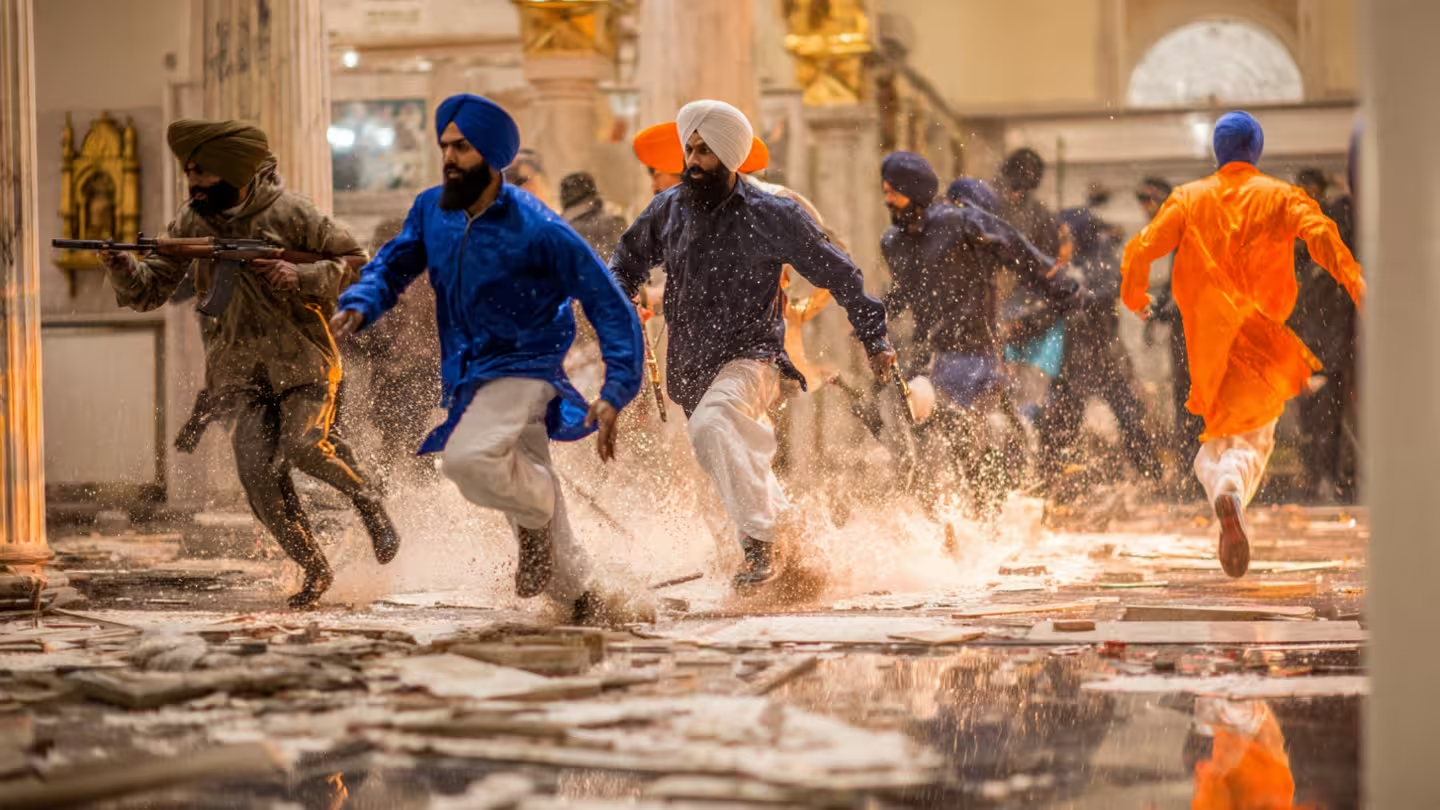
- Details: Six men armed with knives and a gun attacked worshippers at the Guru Ravidass Gurdwara in Vienna’s Favoriten district during a sermon. The assault targeted two visiting preachers from the Dera Sach Khand sect (a Dalit-led group often at odds with mainstream Sikhs over caste issues). Sant Rama Nand Das, aged 57, was fatally shot, and 16 others were injured, including the second preacher, Sant Niranjan Dass. The attackers, members of a rival Sikh group, fled but were overpowered by bystanders.
- Aftermath: The incident sparked widespread riots in India’s Punjab, with attacks on trains, police stations, and temples, resulting in at least three deaths and hundreds injured. In Austria, it highlighted intra-community tensions and caste discrimination among South Asian diaspora. Six Indian-origin men were convicted in 2010 and sentenced to 6-8 years in prison.
- Significance: Often cited as a rare case of lethal sectarian violence within Europe’s Sikh communities, rooted in India’s caste system.
2. 2020 Official Recognition of Sikhism (Legal Milestone)
- Date: December 2020
- Details: Austria’s government granted Sikhism official religious status under the 1874 Law on Recognized Religious Communities, following a decade-long campaign by the Austrian Sikh Society. This came after Sikhism met requirements like having 2,000 adult adherents and a 20-year presence in the country.
- Aftermath: Sikhs gained rights to use “Singh” and “Kaur” as legal surnames, register Sikhism on official documents, access state funding for religious education, and perform civil ceremonies like marriages. There are now six gurdwaras in Austria (three in Vienna).
- Significance: A positive development that enhanced religious freedoms and integration, making Austria one of the few European countries to formally recognize Sikhism.
3. 2022 Exposure and Extradition of Alleged Khalistan Operative
- Date: December 2022
- Details: Vienna’s Sikh community alerted Indian authorities about Bikramjit Singh, a former granthi (priest) at the Golden Temple in Amritsar, accused of promoting pro-Khalistan (Sikh separatist) activities. Operating from Austria, he allegedly radicalized youth in local gurdwaras and spread anti-India propaganda online.
- Aftermath: Austrian police arrested Singh based on an Interpol red notice, leading to his extradition to India on charges of sedition and promoting enmity. Community leaders provided key evidence, including recordings of his sermons.
- Significance: Demonstrated the Austrian Sikh community’s role in countering extremism, amid global tensions over Khalistan activism.

Second-Generation Sikhs: Turban-Wearing and Long Hair Practices
Second-generation Sikhs (born in Austria to immigrant parents) show a generational shift, with lower adherence to kesh (uncut hair) and dastar (turban) due to assimilation pressures, peer influence, and identity negotiations. However, many still maintain it as a pride symbol, especially in urban areas.
- Adherence Rates: Globally, ~42% of young Sikhs (under 35) forgo turbans or long hair, compared to 79% adherence among those 35+. In Europe (including Austria), surveys suggest 50-60% of second-gen men wear turbans, often opting for patkas (smaller headwraps) for school/work. Reasons include bullying (e.g., teasing for “different” hair) or convenience, but family and gurdwara ties encourage continuity. According to a Pew Research Center survey conducted between November 2019 and March 2020, the practice of wearing a turban among Sikh men in India is as follows: • Overall: Approximately 69% of Sikh men report wearing a turban. • By Age: • Ages 35 and older: 79% wear a turban. • Under age 35: 58% wear a turban. pewresearch.org
- Austria-Specific Insights: With official recognition, second-gen Sikhs report easier integration—e.g., schools accommodate turbans without issue. Anecdotes from Viennese youth highlight hair as a “bridge” to heritage, though some cut it for sports or dating. A 2022 Salzburg-based activist emphasized turbans as “pride and respect,” inspiring queer second-gen Sikhs to reclaim them. thevarsity.ca
- Cultural Factors: Long hair symbolizes equality and Guru connection, but second-gen often view it flexibly—e.g., growing it later in life. In Austria’s small community, elders mentor youth via youth groups, boosting retention to ~70% in active families. salzburgglobal.org , reddit.com
The Legal Pathway: Why Sikh Immigration to Austria Bucks the Trend
1. Profile of Primary Immigrants (1970s-Present)
The foundational Sikh community in Austria was established by businessmen and entrepreneurs from Punjab who arrived legally in the 1970s and 1980s. They came with capital and clear business plans, obtaining legitimate residency permits. This established a pattern of economic migration through legal channels, which continues with professionals in IT, engineering, and medicine.2. Austria’s Geographic Position & Asylum Dynamics
Austria is not a primary first-entry EU country for long, irregular journeys from South Asia. The main overland routes for such migration typically enter the EU via the Eastern Mediterranean (Greece) or the Balkans. By the time someone reaches Central Europe, they have often transited several countries. Austria does receive asylum seekers, but the top nationalities in recent years have been from Afghanistan, Syria, and countries in the Middle East and Africa—not from India, which is generally considered a “safe country of origin” by EU asylum standards.3. Strong Legal Immigration Pathways
For Indian nationals, including Sikhs, there are several robust legal avenues to enter and reside in Austria:Red-White-Red Card: A points-based system for highly skilled workers, which many educated Sikh professionals qualify for.
EU Blue Card: For university graduates with a job offer meeting a salary threshold.
Family Reunification: A major route for spouses and children of the well-established existing community.
Student Visas: A common and legal path for young Sikhs.
The existence of these accessible, legal options reduces the incentive to pursue riskier, irregular routes.
4. The Established Community as a Stabilizing Factor
The well-integrated Sikh community acts as a support system. Newcomers often have family or community networks that guide them through the correct legal and bureaucratic processes for visas, residency, and business setup. This community knowledge helps prevent accidental overstays or violations of visa conditions.
Important Nuance: Asylum Seekers from Afghanistan
A complete picture requires acknowledging one group that arrived under different circumstances: Sikh (and Hindu) refugees from Afghanistan.
Fleeing targeted persecution, these individuals sought and were granted international protection under Austrian and EU law. Their status as recognized refugees or asylum seekers is entirely legal. They are a crucial part of the Austrian Sikh sangat, and their presence highlights the community’s diversity and the legal system’s provision for genuine humanitarian cases, which is distinct from illegal immigration.
Why Weren't Sikh Troops Sent to Fight in Austria During the World Wars like other countries?
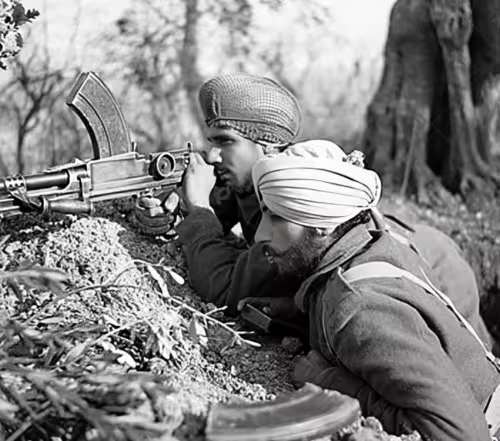
The history of the British Indian Army in the two World Wars is a chronicle of global deployment and immense sacrifice. From the deserts of Mesopotamia to the jungles of Burma, Sikh soldiers and their comrades from across India fought with legendary valor. Yet, when we examine the battle maps of Europe, one area remains conspicuously absent of their direct involvement: Austria. Why were these formidable troops, who served from Flanders to Singapore, not deployed to the Alpine heart of Europe in either World War? The answer lies not in oversight, but in the calculated strategies of the British Empire and the distinct geopolitical fate of Austria itself.
Part I: World War I – The Distant Eastern Front
In the Great War (1914-1918), Austria-Hungary was a primary enemy, yet it formed a distant, secondary front for British imperial forces.
Strategic Priority: The Ottoman Threat
The British Empire’s most urgent concern, especially for India, was the Ottoman Empire. Indian Army divisions were decisively committed to securing the Suez Canal and attacking the Ottomans in Mesopotamia (Iraq), Gallipoli (Turkey), and Palestine. This protected the imperial lifeline to India and its oilfields.The Nature of the “Austrian” Fight
The brutal war against Austria-Hungary was fought primarily along the Italian Front in the Alps and in the Balkans. This was a theater dominated by the Italian Army, with support from British and French forces drawn from the Western Front. The mountainous terrain and the coalition structure made the large-scale deployment of colonial infantry from the Indian plains a less logical choice for British planners.
Verdict: Indian soldiers were where the Empire needed them most—defending its crucial eastern flank. The fight against Austria was left to European allies on a geographically specific front.
Part II: World War II – An Integrated Reich, Not a Separate Front
The context of WWII provides a different, clearer explanation.
The Anschluss and a Vanished Frontier
In 1938, Austria was annexed by Nazi Germany (Anschluss). From that point until 1945, it ceased to exist as a sovereign state and was fully integrated into the “German Reich.” Therefore, there was no separate “Austrian” campaign. Invading Austria meant invading Germany itself.Global Commitments of the Indian Army
The expanded Indian Army (over 2.5 million volunteers) was stretched across the globe in critical, independent campaigns:North Africa & Italy: Fighting Germany’s Afrika Korps and then pushing north through Italy.
Asia-Pacific: Fighting the existential threat of Japan in Malaya, Singapore, and the epic Burma Campaign.
The Liberation of Central Europe
The ground invasion of Germany (and thus Austria) was the domain of the major Allied powers’ core national armies: the Soviet Red Army from the east, and the U.S., British, and Canadian armies from the west. Vienna fell to the Soviets in April 1945. The Indian Army’s monumental task of halting and reversing the Japanese advance in Asia was deemed more critical to both Allied strategy and India’s own defense.
Verdict: Austria was not a destination because, militarily, it had disappeared into Germany. The Indian Army was fully committed to more strategically vital theaters that directly threatened the Empire’s heart.