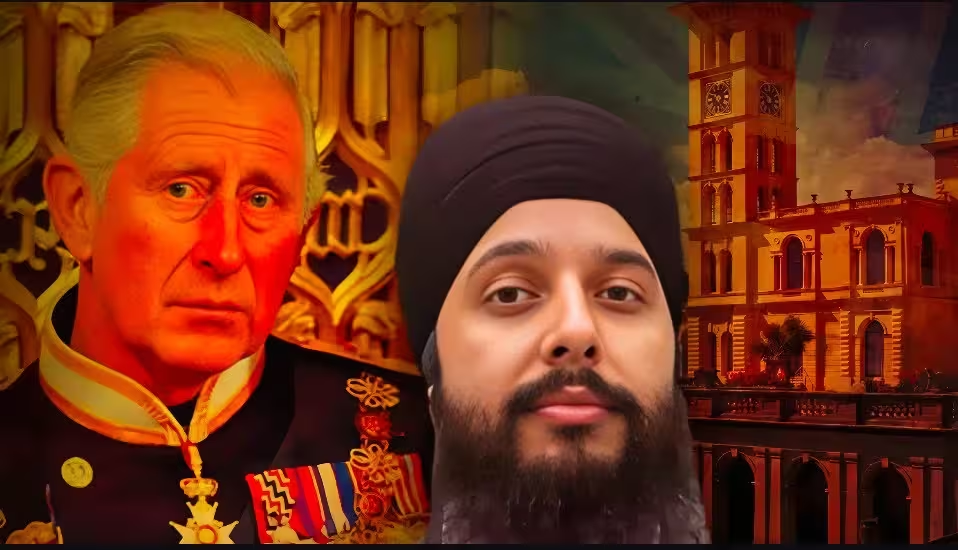
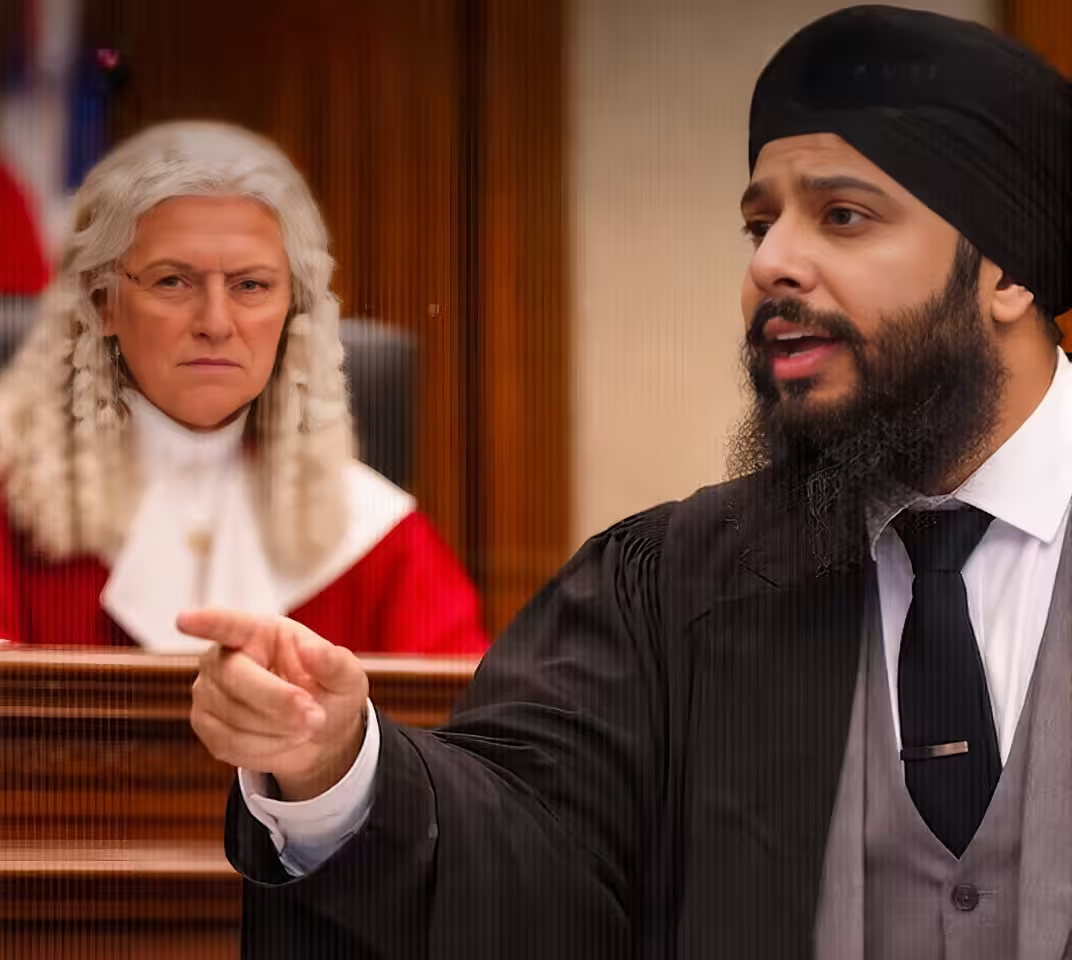
Judicial Journey & Landmark Ruling
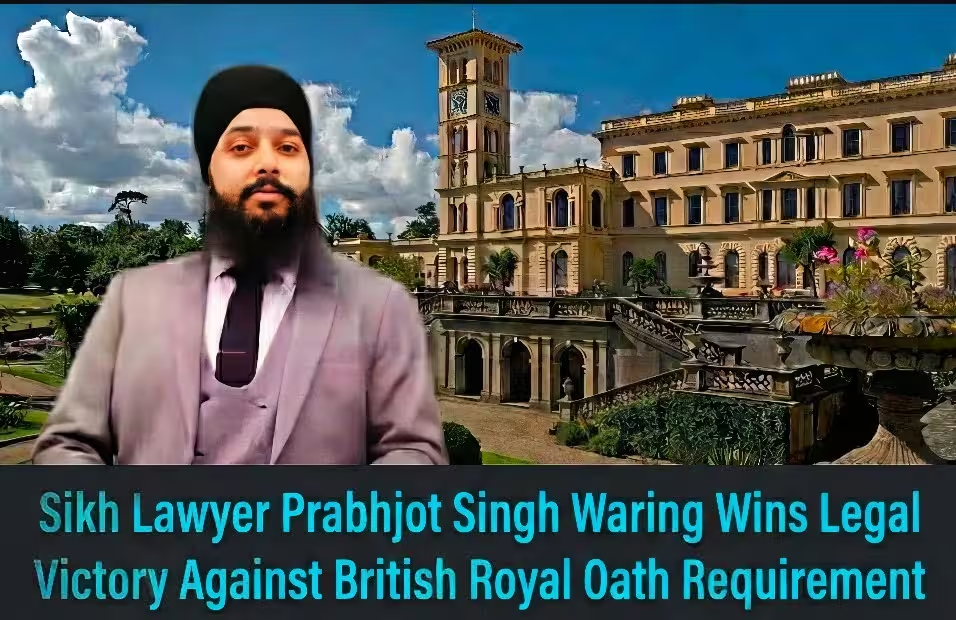
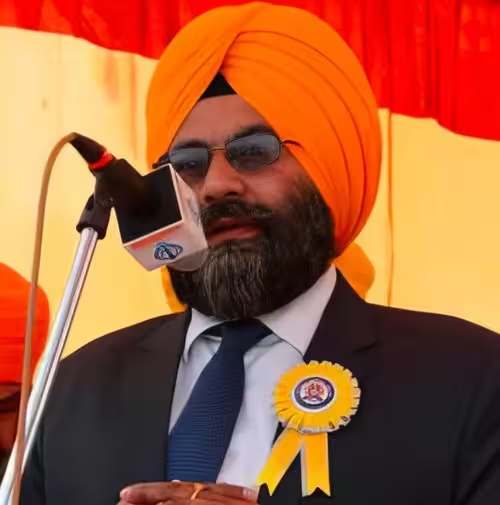
Singh first filed his legal challenge in June 2022 against the requirement in Alberta. A lower court initially dismissed the case, but he appealed. The case eventually reached the Alberta Court of Appeal. archive.vn
On 16 December 2025, a three-judge panel of the Court of Appeal unanimously ruled that the mandatory Oath of Allegiance to the monarch was unconstitutional because it infringed on the right to freedom of conscience and religion. The court held that forcing Singh — or anyone else — to swear allegiance to the monarch as a precondition for practicing law was too great a burden on those with sincere religious convictions. The Times of India
The court also stated that Alberta had options, including:
Making the oath optional,
Removing the oath altogether, or
Amending it to remove mandatory allegiance to the Crown. archive.vn
This ruling essentially ended the compulsory requirement in Alberta for lawyers to swear allegiance to the monarch to be admitted to the bar — a significant shift in tradition and policy in Canada. The Times of India
Canada Court vs Lawyer Prabhjot Singh
1. Singh’s Personal Statement
Singh himself clearly articulated why he could not take the oath:
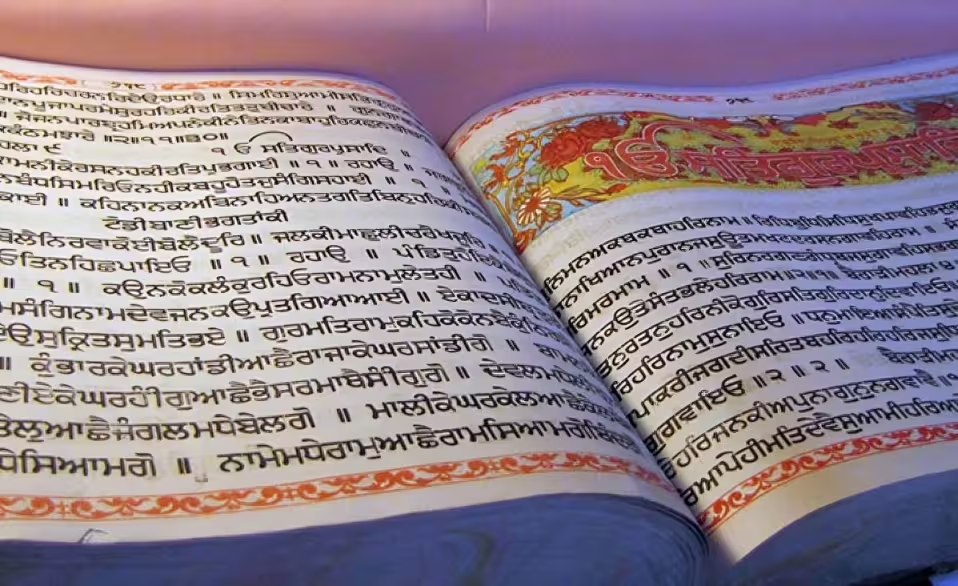
“I am a Sikh of Guru Gobind Singh. I cannot consider anyone greater than my Guru.”
This statement was central to his legal argument, showing that his religious conviction prevented him from pledging allegiance to any human sovereign because he had already made an absolute oath of devotion to the Divine (Akal Purakh). India Today
2. Court’s Interpretation of the Conflict
3. Court’s Constitutional Finding
4. Wider Context from Charter Law Arguments
Earlier legal materials (from the BC Civil Liberties Association intervention) framed the case as not only about individual rights but also about collective religious practice and multiculturalism, arguing that forcing such an oath could unfairly impede participation in society for religious communities. BC Civil Liberties Association
What the Case Means
Religious freedom affirmed: The case affirmed that professional requirements cannot force individuals to violate their religious beliefs. CityNews Calgary
Legal precedent: The decision opens the door for other religious minorities and individuals with conscience objections to contest similar requirements. The Times of India
Modern pluralism: It reflects Canada’s commitment to pluralistic values and the flexibility of its legal system in accommodating diversity. CityNews Calgary
Public and Legal Responses
Civil liberties groups welcomed the ruling, viewing it as a victory for individual rights and freedom of religion. New India Abroad
Supporters pointed out that the case not only benefits religious minorities but could also help Indigenous peoples and others who have moral or ethical objections to the oath. canadianlawyermag.com
Critics argued that the Crown and the monarchical system are foundational to Canada’s constitutional structure, and some saw the decision as weakening traditional symbols of state. Yahoo News Canada
Why This Case Matters to Sikh History
From a Sikh historical perspective, Prabhjot Singh’s stand fits into a long tradition of non-violent resistance grounded in conscience.
Sikh history is replete with moments where individuals chose dharam (righteous duty) over authority:
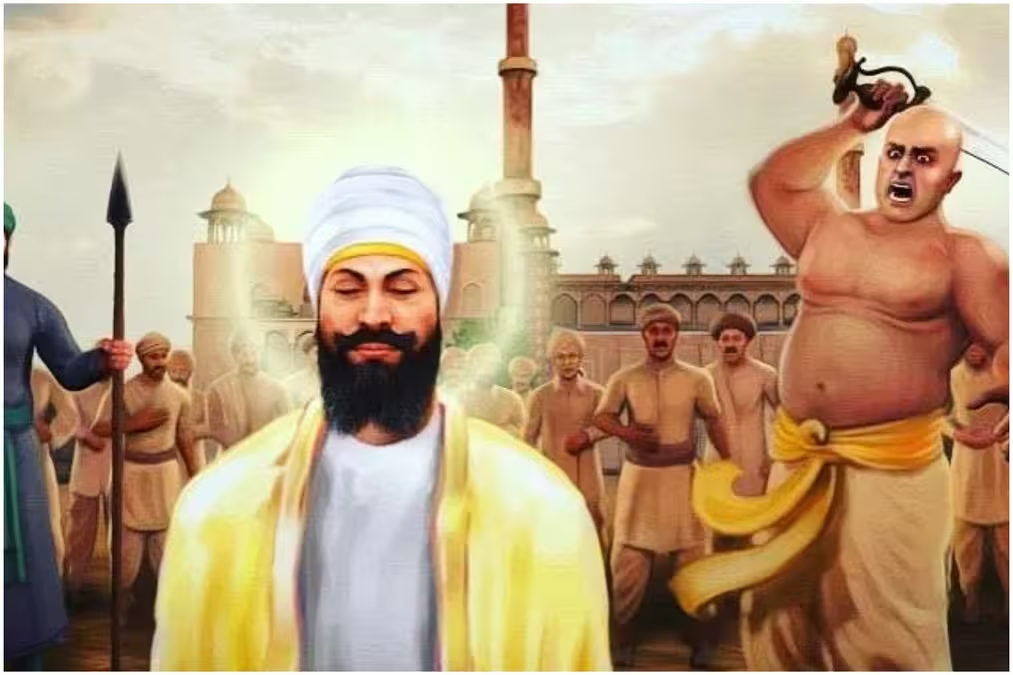
Guru Tegh Bahadur’s martyrdom for religious freedom
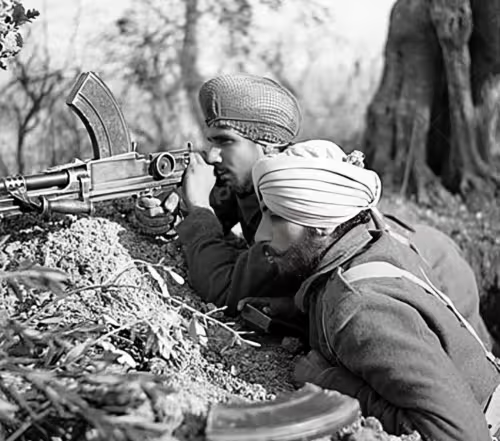
Sikh resistance to forced religious oaths during Mughal and colonial rule
Diasporic Sikh struggles for religious accommodation in Western institutions
Singh’s case represents a modern, constitutional continuation of this tradition — not through martyrdom, but through legal reasoning and moral clarity.
Global Reactions and Wider Implications
Prabhjot Singh’s victory is not merely a legal technicality. It is a philosophical moment.
It asks uncomfortable but necessary questions:
Can a state demand symbolic loyalty that contradicts faith?
Is tradition more important than inclusion?
Does diversity mean tolerance — or genuine accommodation?
For Sikhs worldwide, the case resonated deeply. It echoed the Sikh historical tradition of standing firm against authority when conscience is at stake — from Guru Tegh Bahadur to modern diasporic struggles.
For minorities everywhere, it sent a quiet but powerful message:
Your faith does not make you less worthy of citizenship.
The ruling was welcomed by:
Civil liberties organizations, who saw it as a victory for freedom of conscience
Sikh communities worldwide, who viewed it as recognition of Sikh religious principles
Legal scholars, who noted its implications for other professions and minority rights
The decision may also influence:
Indigenous objections to Crown-based oaths
Other religious minorities facing conscience-based conflicts
Future debates on the role of monarchy in multicultural democracies