Sikh Traders in the Strait of Hormuz
Welcome to Global Sikhi Wiki, your comprehensive resource for exploring Sikh history, culture, and global communities.
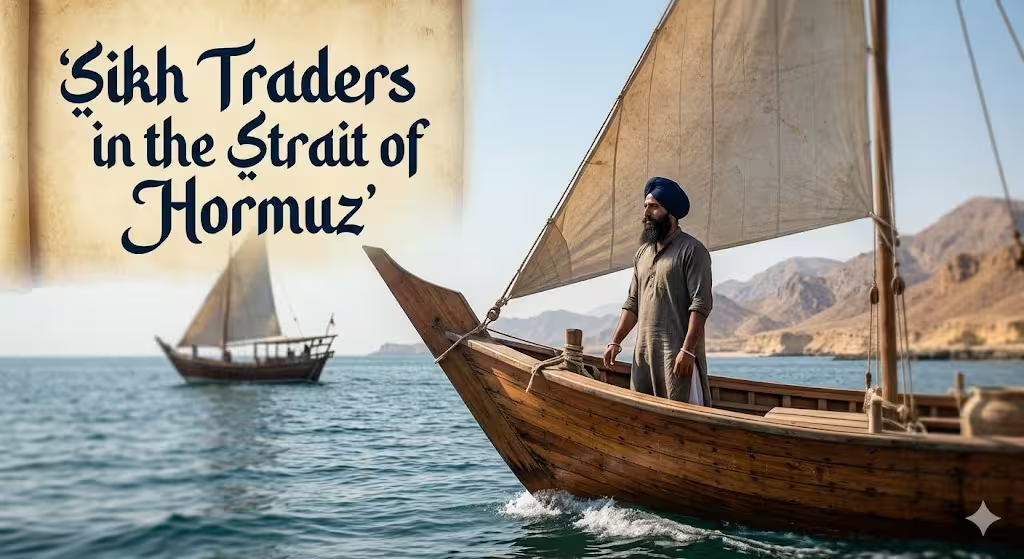
The Strait of Hormuz has long served as a vibrant crossroads for merchants from across Asia, Europe, and Africa. While Gujarati Hindu and Jain (Bania/Shravak) traders, along with Muslim merchants from Sindh and Kutch, dominated Indian Ocean trade through the medieval Kingdom of Hormuz, Sikh traders entered this strategic waterway in more recent centuries. Their story reflects the broader migration of Punjabi Sikhs as enterprising merchants, transporters, and community builders in the Persian Gulf region.
This article explores the historical presence of Sikh traders linked to Hormuz and the surrounding Gulf ports, their economic contributions, and the modern status of the small Sikh community in Iran—especially relevant amid the 2026 regional tensions. wikipedia.org
Medieval and Early Modern Trade Context: Indian Merchants in Hormuz
During the height of the Kingdom of Hormuz (roughly 11th–17th centuries), the island port was a cosmopolitan hub where goods like spices, pearls, horses, textiles, and precious stones flowed between India, Persia, Arabia, and beyond. Marco Polo and other travelers described it as a “Babel” of merchants, with significant Indian participation—primarily from Gujarat (Jains and Hindus), but also broader networks from northwest India, including Sindh and Punjab regions.
Indian communities (often called “Banians” by Europeans) established themselves in Hormuz and later dispersed to nearby ports like Bandar Abbas (formerly Gamrun) after the 1622 Anglo-Persian conquest that ended Portuguese control and damaged the old Hormuz entrepôt. These traders handled credit, moneylending, and the import-export of cotton, indigo, horses, and luxury items. However, distinct Sikh merchant communities (identifiable by faith and Punjabi origins) emerged later, as Sikhism consolidated in the Punjab during the 15th–18th centuries under the Gurus and the Khalsa.
Early Indian traders in the Gulf were mostly pre-Sikh or from Hindu/Jain castes like Khatris, who later saw some families convert to Sikhism while retaining commercial traditions. Sikh merchants built on these older networks rather than founding them in the medieval Hormuz era. bbc.com
19th–20th Century: Sikh Merchants and Transporters in the Persian Gulf
Sikh presence in the Hormuz region strengthened in the 19th and especially early 20th centuries, tied to British colonial influence, trade expansion, and infrastructure projects:
- Punjabi Sikh traders joined broader Indian merchant diasporas in ports around the Strait, including Bandar Abbas (the successor hub to Hormuz Island). Many originated from Punjab and adjacent areas, engaging in general trade, moneylending, and later specialized businesses.
- In the 1920s–1930s, Sikh migrants from Punjab played key roles in transport networks linking British India to eastern Iran. They operated truck routes across challenging terrain, facilitating goods movement that indirectly supported Gulf trade corridors near Hormuz.
- Sikhs also worked on the Trans-Iranian Railway and related projects, settling in border towns like Zahedan (near the Pakistan-Iran border, a gateway to Gulf routes) and moving toward coastal areas like Bandar Abbas.
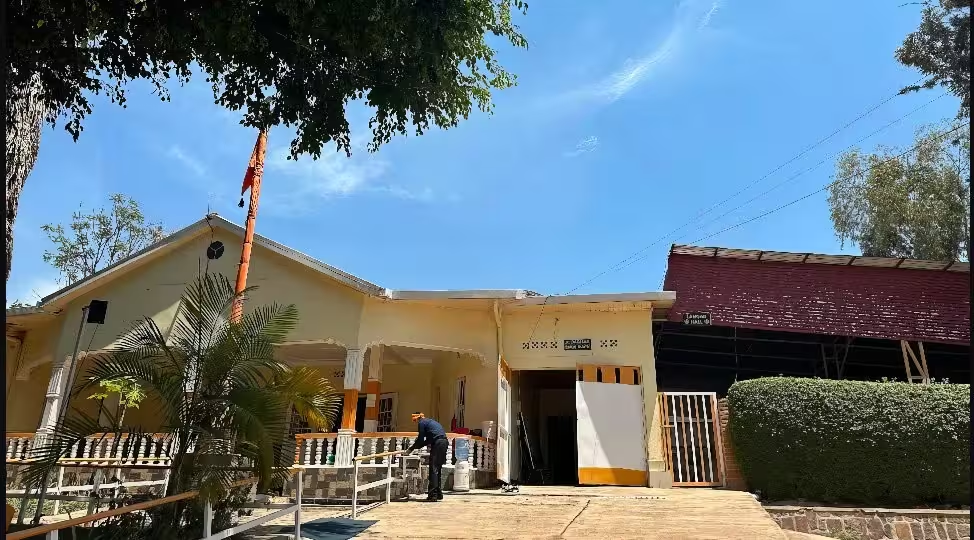
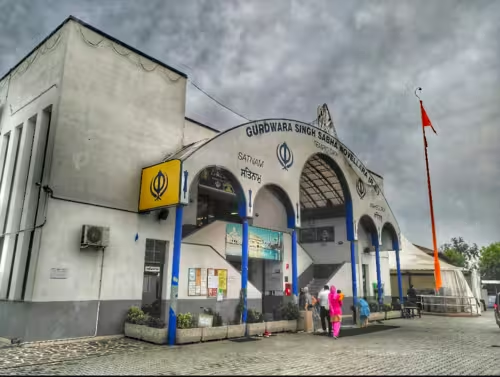
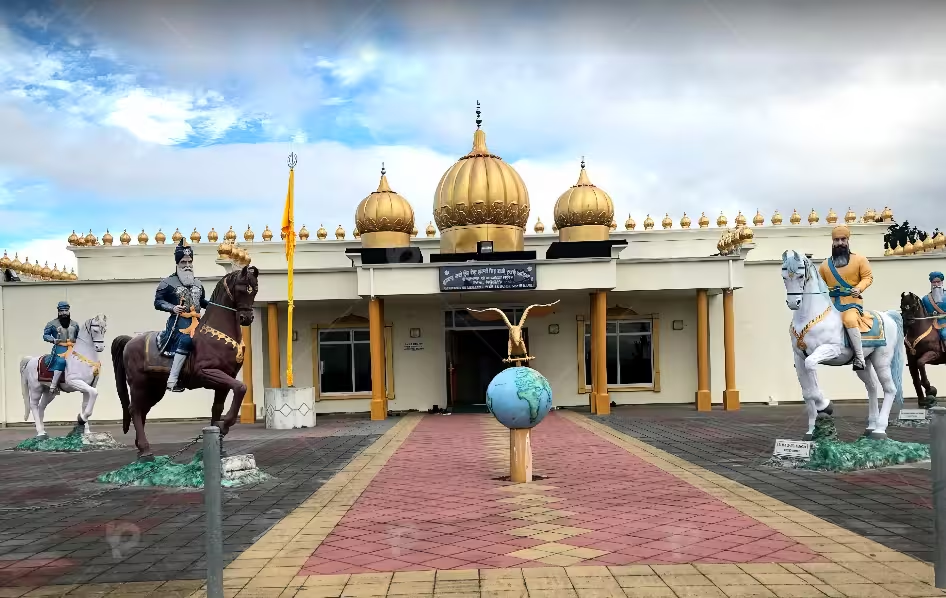
By the mid-20th century, the Sikh community in Iran peaked at several thousand (estimates suggest up to 5,000 before 1979). They were primarily traders and businessmen, later succeeding in sectors like auto parts. Many integrated into Iranian society while maintaining Sikh practices, building gurdwaras (e.g., in Zahedan around 1921 and Tehran in 1941). Historical accounts note frescoes or depictions of Akali-Nihang Sikhs in older structures near Bandar Abbas, hinting at cultural visibility in the Hormozgan province.
Sikhs formed part of the diverse Indian diaspora in the Gulf, alongside Hindus, Muslims, and Parsis, contributing to the flow of goods through the Strait even as oil began dominating global attention post-1908. theguardian.com