Sikhism and Iran, Israel and US war 2026
Welcome to Global Sikhi Wiki, your comprehensive resource for exploring Sikh history, culture, and communities. Today, we will discuss from the lens of Sikhism, the ongoing 2026 US-Israel-Iran war, a profound human tragedy that demands compassion, justice, and a rejection of tyranny—without blind allegiance to any nation, flag, or power bloc.
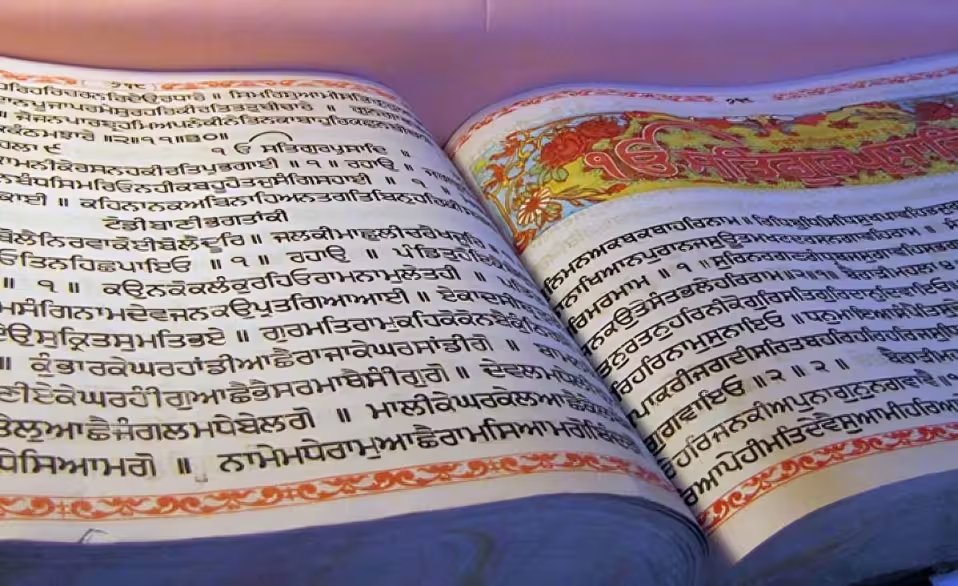
Sikhism does not offer geopolitical predictions or partisan endorsements. Instead, it provides timeless principles from the Guru Granth Sahib, the lives of the Gurus, and the Khalsa tradition to evaluate conflict. These principles judge actions by dharma (righteousness), protection of the weak, and the sanctity of all human life.
Core Sikh Teachings Relevant to This War
Sikhism was born in a time of oppression (Mughal rule) and emphasizes one God (Ik Onkar) who sees no distinctions of race, religion, or nationality: “No one is my enemy, no one is a stranger; I am a friend to all” (Guru Arjan Dev Ji, Guru Granth Sahib). Yet it is not pacifist. The Gurus taught Miri-Piri—the balance of spiritual and temporal power. When peaceful means fail, righteous resistance is a duty.
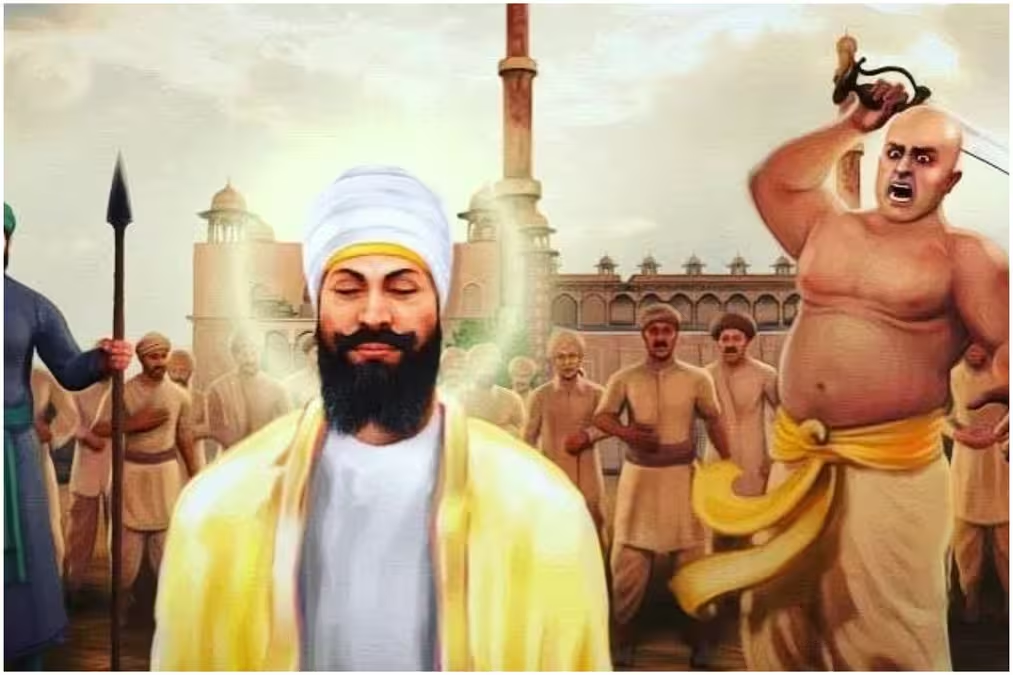
Guru Gobind Singh Ji’s famous words in the Zafarnama capture this: “When all other means have failed, it is righteous to take up the sword.” This is Dharam Yudh—a just war fought defensively, without hatred, personal gain, or targeting innocents. The Khalsa (the Pure) exists to protect the oppressed (mazloom), not to conquer or dominate. Guru Tegh Bahadur Ji sacrificed his life for the religious freedom of Hindus (a different faith), proving Sikhs stand against tyranny regardless of who the victim is.
War, in Sikh eyes, is never glorious. It brings suffering that affects the innocent most. The Guru Granth Sahib repeatedly laments violence and calls for inner peace through Naam (remembrance of God) and Seva (selfless service).
Applying Sikh Principles to the 2026 Conflict
The war began on 28 February 2026 with US-Israeli strikes on Iran, targeting leadership (including the assassination of Supreme Leader Ali Khamenei), nuclear sites, missile facilities, and infrastructure. Iran retaliated with missile and drone attacks on Israel, US bases, and Gulf states, while closing the Strait of Hormuz. As of April 2026 (Day 36+), thousands are dead—including civilians, children, and soldiers on all sides—with millions displaced, global energy shocks, and strikes hitting schools, bridges, petrochemical plants, and residential areas. aljazeera.com
Sikhism would view this through these lenses:
1. Civilian Suffering is Unacceptable:
Reports of strikes on a girls’ school in Iran (killing ~170), residential areas in Israel, Lebanese civilians, and Gulf infrastructure show disproportionate harm to the innocent. Guru Nanak Dev Ji condemned rulers who spill blood for power: “The kings are butchers; they inflict terrible pain” (Guru Granth Sahib). Every life lost—Persian, Jewish, Arab, American—is equally sacred. Sikhism mourns them all and demands accountability for war crimes, whoever commits them.
2. Aggression vs. Self-Defense:
If one side initiates large-scale strikes to “induce regime change” or preempt threats, Sikh thought questions whether all peaceful avenues (diplomacy, sanctions, negotiations) were truly exhausted. Iran’s retaliation, while framed as self-defense by Tehran, has also caused civilian deaths. Sikhism supports the right of any people to defend their homeland and faith (as the Gurus did against Mughal invasions), but never endorses endless cycles of revenge or proxy wars that drag in innocents.
3. Tyranny Has No Religion:
Historical Sikh resistance was not anti-Muslim—it was anti-oppression. The Gurus fought Mughal emperors who persecuted all faiths, yet allied with some Muslims and protected others. Today, Sikhism does not automatically side with “the West,” “Israel,” “Iran,” or any bloc. It asks: Who is the oppressor (zulm) in each specific act? Iran’s support for groups like Hezbollah and Houthis, Israel’s actions in Gaza/Lebanon, and US strategic interests—all must be judged by whether they protect the weak or pursue dominance.
4. Solidarity with the Oppressed:
In Punjab, some Sikh voices have expressed solidarity with Iran, drawing parallels between Shia martyrdom (Khamenei’s assassination) and Sikh history—Guru Arjan Dev Ji’s torture, Guru Tegh Bahadur’s stand for the oppressed. This reflects the Sikh instinct to stand with the underdog against perceived imperialism. Yet Sikhism cautions against romanticizing any regime. True solidarity is humanitarian: aid the displaced, pray for de-escalation, and speak truth to power on all sides. thequint.com