Sikhs in Venezuela: A Journey of Faith and Identity

Welcome to Global Sikhi Wiki, your comprehensive resource for exploring Sikh history, culture, and global communities. Today, we delve into the vibrant story of Sikhs in Venezuela.

–a small but dedicated community navigating life in a nation marked by dramatic highs and lows. While the Sikh presence here is modest compared to larger diasporas in North America or Europe, their commitment to seva (selfless service) shines through, especially during times of hardship. We’ll also provide a concise overview of Venezuela’s history, its economic journey from prosperity to poverty, and its geopolitical context with neighboring countries.

Though Venezuela is not widely recognised as a centre of Sikh settlement, its small and largely understated Sikh presence reflects the broader tales of migration, multicultural encounters, and survival in one of South America’s most complex societies.

A Brief History of Venezuela

Venezuela, located on the northern coast of South America, has a rich and tumultuous past shaped by indigenous cultures, Spanish colonization, and modern resource-driven politics. The region was home to various indigenous tribes before Christopher Columbus arrived in 1498, leading to Spanish conquest in the 16th century. Independence came in 1821 under Simón Bolívar, who liberated much of South America from colonial rule, earning Venezuela the nickname “Bolívar’s Cradle.”

The 20th century transformed Venezuela through oil discovery in the 1920s. By the 1950s, it was South America’s richest nation and the world’s fourth-wealthiest per capita, surpassing many European countries. This “Saudi Venezuela” era brought modernization, infrastructure booms, and a growing middle class. However, underlying issues like inequality and corruption persisted. From 1958 onward, democratic governments alternated, but oil dependency made the economy vulnerable.

The late 1990s marked a shift with Hugo Chávez’s election in 1998 on a socialist “Bolivarian Revolution” platform. Chávez nationalized industries, expanded social programs, and used oil revenues to reduce poverty initially. His successor, Nicolás Maduro (since 2013), continued these policies amid falling oil prices, leading to the current crisis.

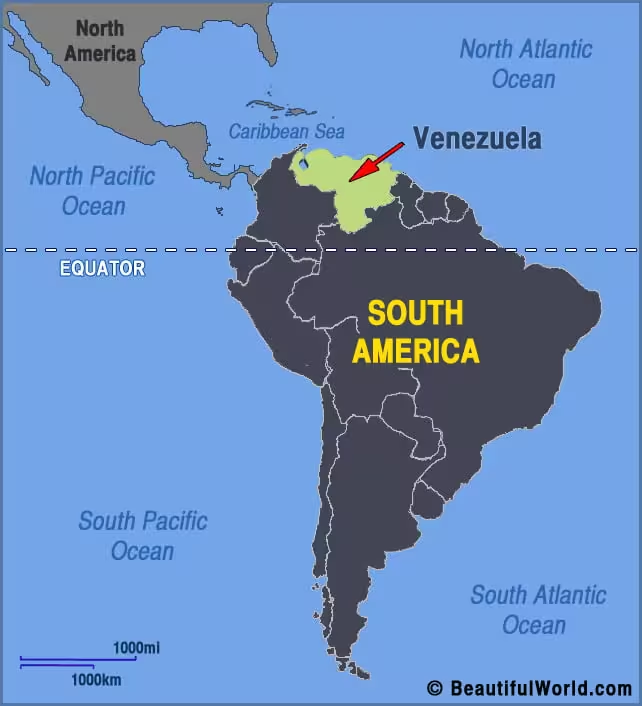
Venezuela-South-America-map
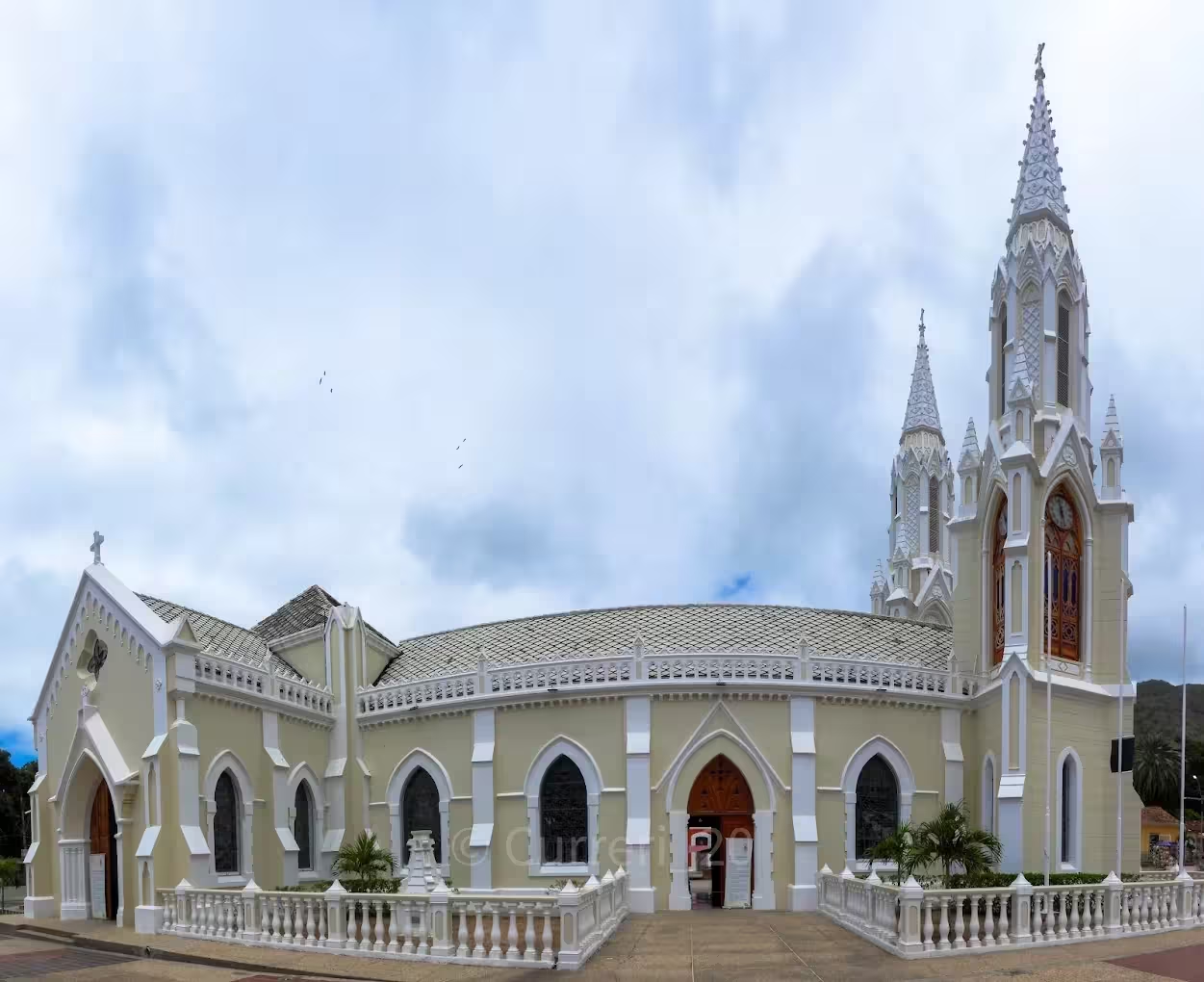
The Minor Basilica of our Lady of Valley,
The Minor Basilica of Our Lady of the Valley is a stunning neo-Gothic sanctuary that was constructed in the 16th century to honor the Virgin of the Valley, who is revered as the patron saint of sailors.

From Riches to Rags: Venezuela's Economic Decline

Venezuela’s story is a cautionary tale of resource wealth gone awry. In the mid-20th century, oil exports fueled unprecedented growth—GDP per capita rivaled that of the United States in the 1950s, with luxury imports, skyscrapers in Caracas, and a vibrant urban life. The 1970s oil boom amplified this, but over-reliance on petroleum (accounting for 95% of exports) sowed seeds of trouble.

The decline began in the 1980s with global oil price drops, debt accumulation, and corruption. By the 1990s, poverty rose despite reserves. Under Chávez, initial gains from high oil prices (2000s) reduced extreme poverty from 25% to about 5% through subsidized programs. However, mismanagement—firing skilled oil workers after a 2002-2003 strike, overborrowing, and price controls—eroded production. PDVSA, the state oil company, saw output plummet from 3 million barrels daily in the 1990s to under 1 million by the 2020s.

Maduro’s tenure exacerbated the fall: hyperinflation hit 800% in 2016 and millions percent by 2018, causing shortages of food, medicine, and basics. GDP shrank 74% from 2013-2023, the fifth-largest peacetime collapse in modern history. Today, over 75% live in extreme poverty, with millions fleeing abroad. Factors like U.S. sanctions (post-2017), corruption, and poor policies turned a petrostate powerhouse into Latin America’s poorest economy, reversing gains to pre-1920s levels.

The Sikh Community in Venezuela

The Sikh diaspora in Venezuela is small and relatively recent, forming part of the broader Indian community of about 700 people, concentrated in Caracas and Valencia. Unlike historic migrations to places like Canada or the UK, Sikhs here arrived mostly in the late 20th and early 21st centuries as professionals in petroleum, petrochemicals, trading, and business. Estimates suggest fewer than 100 Sikhs, blending Indian-origin families with a handful of local converts inspired by Sikh teachings.

Historical records, such as those in “Sikhs in Latin America” by Swarn Singh Kahlon, note sporadic Sikh presence since the mid-1900s, often via indirect routes from North America or the Caribbean to escape immigration restrictions elsewhere. The community lacks a dedicated Gurdwara (Sikh temple), with gatherings typically in homes or rented spaces for prayers, kirtan, and festivals like Vaisakhi.

Despite their size, Venezuelan Sikhs embody Guru Nanak’s principles of equality and service. During the 2010s economic crisis, initiatives like Langar Caracas—founded in 2018 by Chand Kirpal Kaur—distributed free vegetarian meals in parks, aiding the hungry amid shortages. Sikh Dharma International and groups like United Sikhs have supported relief efforts, raising funds for food and child aid. Stories of individuals like Guruchanan Kaur, a Venezuelan Sikh convert, highlight personal journeys of faith in a predominantly Catholic country.

Challenges persist: Economic instability has prompted some to emigrate, but those remaining contribute to society through business and humanitarian work. As Venezuela seeks recovery—potentially with renewed oil investments—the Sikh community could play a role in fostering resilience and unity.

Serving langar with love in Venezuela
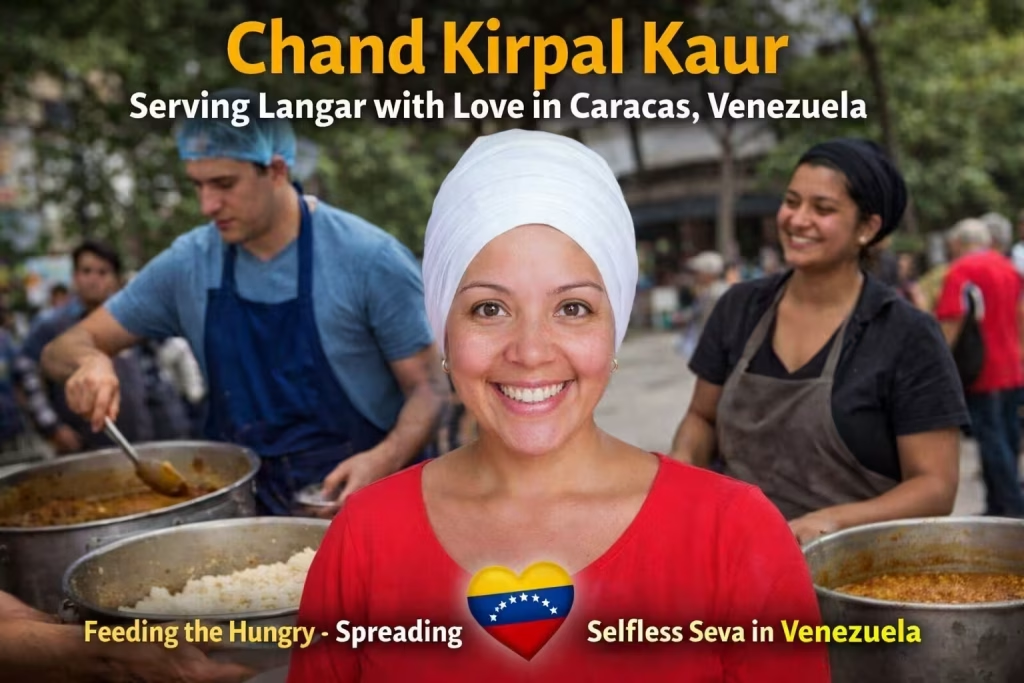
Chand Kirpal Kaur is the founder of Langar Caracas (Venezuela), a non-profit initiative established in 2018 to provide free vegetarian meals (langar) during the country's social crisis. The project continues to serve food monthly at sites including local hospitals, operating on the Sikh principle of seva (selfless service).
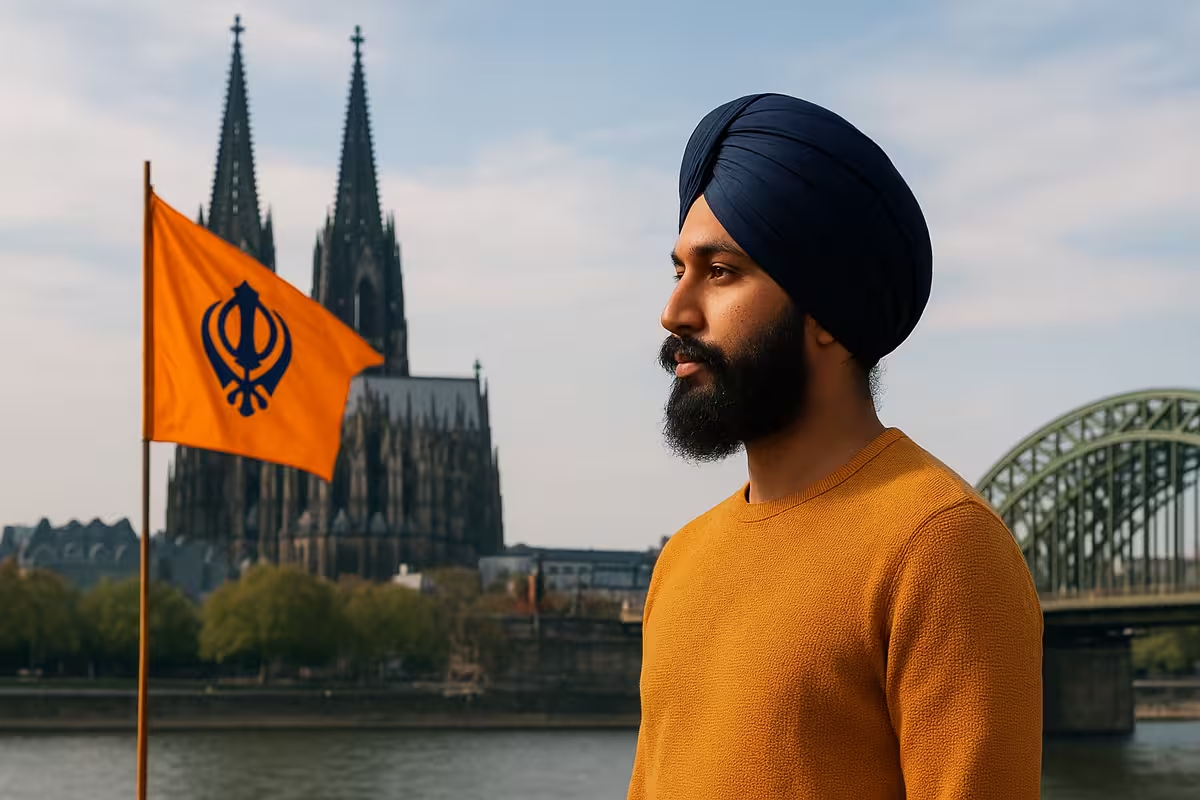
Chand Kirpal Kaur – Serving Langar with Love in Caracas, Venezuela

In the midst of Venezuela’s ongoing social and economic challenges, Chand Kirpal Kaur has emerged as a beacon of compassion through her initiative Langar Caracas — a monthly free-meal service inspired by Sikh values of seva (selfless service) and langar (community kitchen).

Origin and Mission

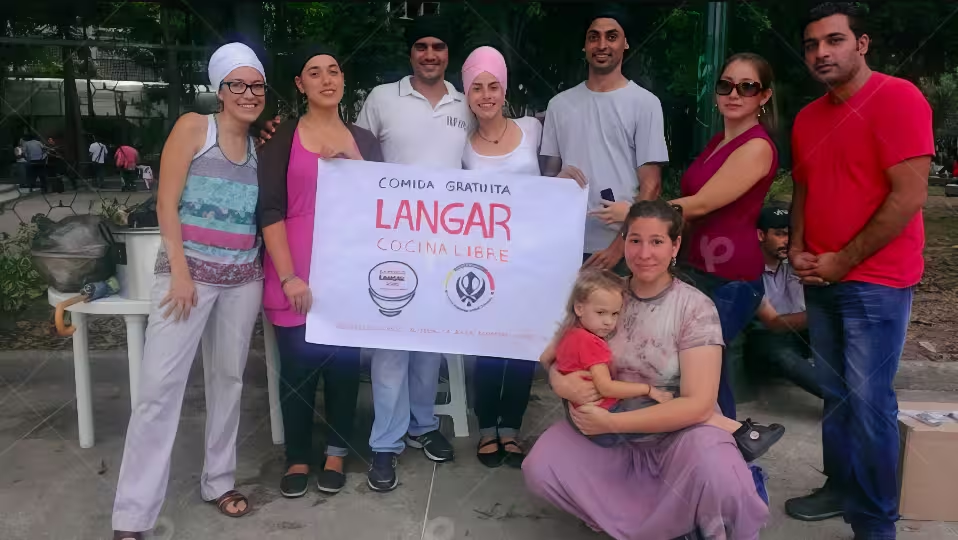
Langar Caracas began in 2018 during a time of deep crisis in Venezuela. Chand Kirpal Kaur and her volunteers started by distributing free vegetarian meals in Candelaria Park in Caracas to people struggling with food insecurity. After seeing the heartfelt appreciation and need in the community, the seva continued and expanded.

Today, the group — typically 4 to 12 volunteers strong — cooks in their own kitchens and distributes meals once a month (on the last Saturday) to those in need. It remains a 100% volunteer-funded initiative, supported by donations from sevadars and well-wishers. sikhnet.com
Sikhs in Venezuela : Langar Caracas was born in 2018 to serve free vegetarian meals

Feeding Bodies and Souls

While the core purpose is to provide nourishing food, Chand Kirpal Kaur emphasizes the spiritual dimension of her service. The team chants mantras, prays while cooking, and sees the langar not just as feeding stomachs, but as nourishing hearts and spirits through compassion and human connection.
Their meals are more than sustenance — they are a reminder of the Sikh principle that no one should go hungry, regardless of faith or background.

Beyond Food — Spreading Joy

Langar Caracas has also extended its reach beyond feeding. For example, in December, Chand Kirpal Kaur and her team collected 150 toys to distribute at JM de los Ríos Hospital, bringing smiles to children — a powerful act of love in a country where many families struggle to provide even basic essentials

A Sikh Spirit in Venezuela

While Venezuela doesn’t have a large Sikh population, Chand Kirpal Kaur’s langar seva embodies the universal Sikh ideal of compassion in action. Her work in Caracas shows how Sikh values can touch lives even in places where traditional Sikh institutions are few — proving that seva doesn’t need a gurdwara building to make a difference.

Scroll to Top