Sikhs in India: Courage in Belief, Strength in Community

Welcome to the pillar blog of GlobalSikhiWiki, your comprehensive resource on Sikhism worldwide. In this in-depth exploration, we delve into the vibrant world of Sikhs in India, highlighting their modern journey from the 20th century onward. We’ll distinguish between different types of Sikhs, examine their settlement patterns in Indian cities, and provide data on population ratios. While Sikhism’s roots trace back to the 15th century with Guru Nanak, our focus here is on contemporary developments (1900–2026), including migration trends, demographic shifts, and community resilience amid challenges like low fertility rates and urbanization. Let’s begin with an engaging story that captures the spirit of Sikh perseverance in modern India.

An Inspiring Tale: The Unbreakable Spirit of Kaur Family in Post-Partition India

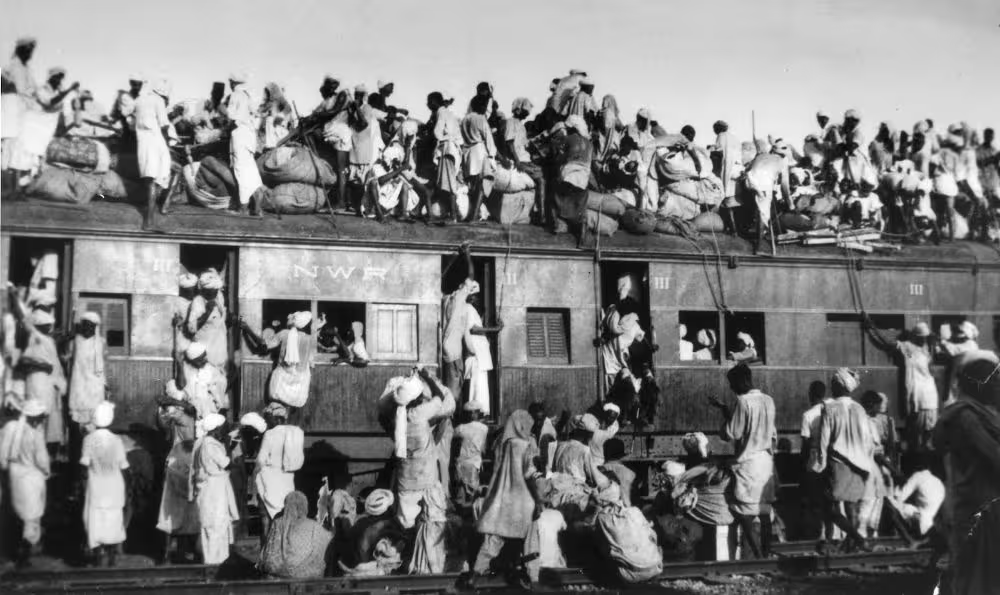
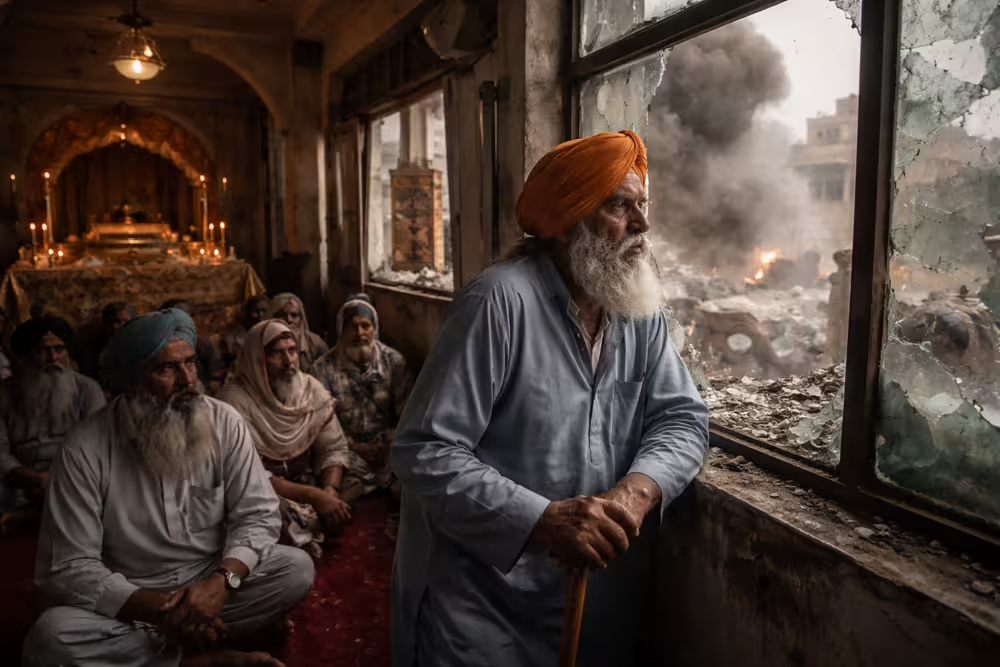
In the chaotic aftermath of India’s 1947 Partition, when millions were displaced and communal violence ravaged Punjab, the Kaur family from Lahore found themselves fleeing westward to the newly formed India. Balbir Kaur, a young Amritdhari Sikh woman, clutched her infant son as they trekked through blood-soaked fields, evading mobs. “We lost everything—our home, our land—but not our faith,” Balbir later recounted in family lore. Arriving in Amritsar, they sought refuge at the Golden Temple, where the langar (community kitchen) fed them alongside Hindus, Muslims, and others, embodying Sikh principles of equality and service.

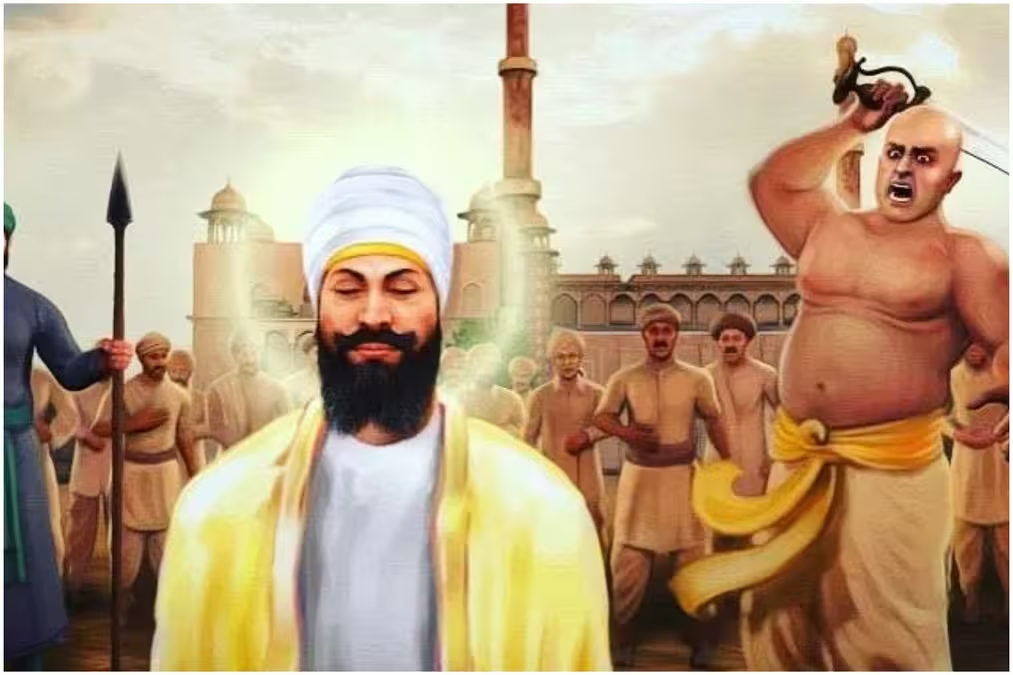
Fast-forward to the 1980s: Balbir’s son, Harpreet, faced fresh turmoil during the anti-Sikh riots following Indira Gandhi’s assassination in 1984. Harpreet, now a Keshdhari Sikh running a small transport business in Delhi, protected his neighbors regardless of faith, echoing Guru Tegh Bahadur’s sacrifice for religious freedom. Despite losing his truck to arson, Harpreet rebuilt, expanding into logistics amid India’s economic liberalization in the 1990s. By the 2010s, his grandchildren—Sehajdhari Sikhs pursuing tech careers in Mumbai—balanced tradition with modernity, volunteering at gurdwaras while advocating for environmental causes inspired by Sikh teachings on stewardship.

This story, drawn from countless real accounts of Sikh families, illustrates their adaptability. From Partition’s horrors (where Sikhs numbered about 5.7 million in 1941, growing to 6.9 million by 1951 despite mass displacement) to today’s urban migrations, Sikhs have turned adversity into opportunity, contributing disproportionately to India’s military, agriculture, and economy. wikipedia.org , theguardian.com

Distinguishing Types of Sikhs: From Devout to Devoted Adopters

Sikhism emphasizes a personal journey toward enlightenment, leading to natural distinctions based on commitment levels. These aren’t rigid sects but stages of practice, as outlined in the Rehat Maryada (Sikh code of conduct). In modern India, where Sikhs form 1.72% of the population (about 20.8 million in 2011, projected to 30 million by 2050), these categories reflect diverse lifestyles amid urbanization and globalization.

Amritdhari Sikhs:

The most committed, these are initiated into the Khalsa through the Amrit Sanchar ceremony, pledging to uphold the Five Ks (Kesh: uncut hair; Kangha: comb; Kara: steel bracelet; Kachera: undergarment; Kirpan: ceremonial sword). They abstain from intoxicants, follow a vegetarian diet (often), and embody warrior-saint ideals. In contemporary India, Amritdharis lead community efforts, like disaster relief during the 2020 COVID-19 pandemic, where Sikh organizations distributed millions of meals nationwide. Estimates suggest they comprise a significant portion of practicing Sikhs, especially in Punjab.

Keshdhari Sikhs

These maintain uncut hair (Kesh) as a symbol of respect for God’s creation but haven’t undergone initiation. Common among younger Sikhs navigating modern careers, they participate in gurdwara activities and festivals like Vaisakhi. Post-1984, many Keshdharis in cities like Delhi strengthened their identity amid identity crises, forming youth groups for cultural preservation.

Sehajdhari Sikhs:
“Slow adopters” who believe in Sikh Gurus’ teachings but may not keep Kesh or follow all external symbols. They gradually incorporate practices like daily prayers (Nitnem) and seva (service). In urban India, Sehajdharis often blend into professional life, as seen in Bollywood figures or business leaders. A 2019 legal debate in Punjab reaffirmed their inclusion in Sikh institutions, highlighting inclusivity in modern Sikhism.
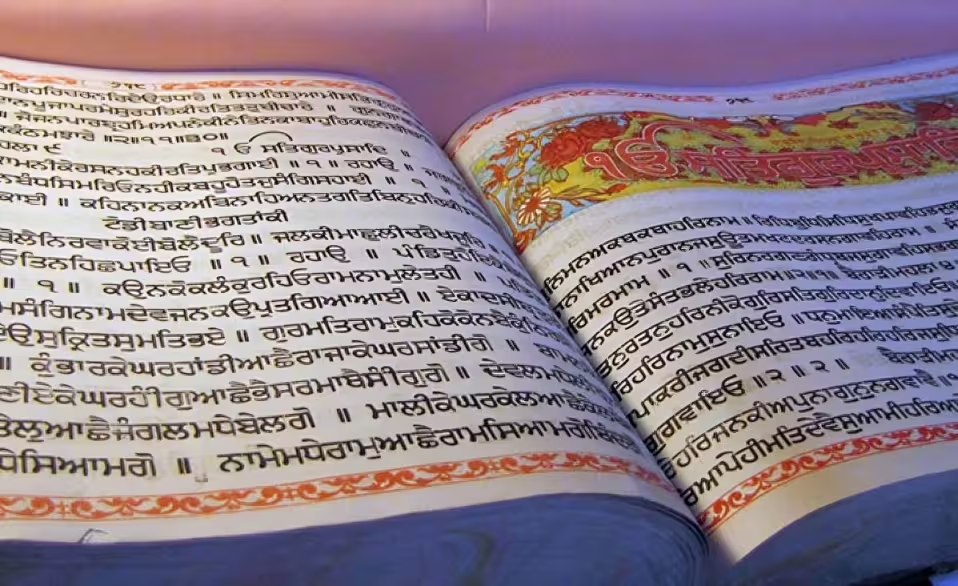
These distinctions foster unity rather than division; all Sikhs revere the Guru Granth Sahib and principles like equality (Sangat) and honest work (Kirat). In 2024, amid declining fertility (1.6, lowest among Indian faiths), community leaders urge all types to embrace family growth for cultural continuity. quora.com, tribuneindia.com , wikipedia.org

Where Sikhs Settle: Urban Preferences and Population Ratios in Indian Cities

Since 1900, Sikh migration has shifted from rural Punjab to urban centers for education, jobs, and safety. Post-Partition (1947), millions resettled in northern cities, accelerating urbanization. By the 1990s economic boom, Sikhs favored metros like Delhi and Mumbai for business opportunities. Recent trends (2020–2026) show preferences for tech hubs (Bengaluru) and industrial cities (Gurgaon), driven by low Punjab fertility and economic stagnation. Projections indicate steady growth to 23–24 million by 2026, but declining shares due to migration abroad and internal shifts.

Sikhs often settle in areas with gurdwaras and Punjabi communities, balancing tradition with modernity. Amritdharis and Keshdharis prefer Punjab-adjacent cities for cultural ties, while Sehajdharis gravitate to cosmopolitan hubs. Here’s a breakdown of ratios in major cities (based on 2011 Census and 2023–2026 estimates; city-specific data proxies state figures where unavailable):

City Sikh
Population (2011)
Ratio (%) Estimated Population
(2026)
Amritsar (Punjab)
~1,000,000
~60.00%
~1,200,000
Chandigarh
~138,329
~13.11%
~150,000
Ludhiana (Punjab)
~800,000
~25.00%
~900,000
Jalandhar (Punjab)
~500,000
~20.00%
~550,000
Delhi
~570,581
~3.40%
~650,000
Mumbai (Maharashtra )
~100,000
~1.00%
~120,000
Bengaluru (Karnataka)
~20,000
~00.2%
~30,000
Kolkata (West Bengal)
~10,000
~00.2%
~12,000
Hyderabad (Telangana)
~10,000
~00.1%
~15,000
Ahmedabad (Gujarat)
~10,000
~00.2%
~12,000

These figures reflect 2011 Census baselines, with 2023–2026 estimates accounting for 8–10% growth from migration and natural increase. Punjab remains the core (57.69%, ~16 million), but urban outflows to Delhi (3.4%) and Haryana cities like Gurgaon highlight preferences for economic hubs. Challenges include shrinking ratios (from 1.87% in 2001 to 1.72% in 2011, projected lower by 2026 due to 1.6 fertility rate), prompting 2024 calls for larger families. asiasamachar.com , indiafacts.org

Looking Ahead: Sikhs in a Changing India (2020–2026 and Beyond)

From 1900’s colonial service migrations to 2020’s digital economy, Sikhs have evolved while preserving core values. Recent events, like farmer protests (2020–2021) led by Sikh unions, showcase their advocacy for justice. With projections of 23–24 million by 2026, focus on education and entrepreneurship will define their future. GlobalSikhiWiki encourages exploring these themes—share your stories in the comments!

Sources for this blog were drawn from reliable references, cited inline for transparency. For deeper dives, visit our wiki pages on Sikh demographics and history. census2011.co.in , worldpopulationreview.com

Sikh Contributions to India: A Legacy of Valor, Innovation, and Service

 Sikhs, comprising about 1.7% of India’s population, have punched far above their weight in shaping the nation’s history, defense, economy, and culture, especially from the 20th century onward. From defending borders to driving agricultural revolutions, their impact spans military prowess, economic resilience, political leadership, cultural enrichment, and sporting excellence. This exploration draws on historical and contemporary insights up to 2026, highlighting how Sikh principles of equality, service (seva), and justice have influenced India’s trajectory.

Military Contributions: The Sword Arm of the Nation

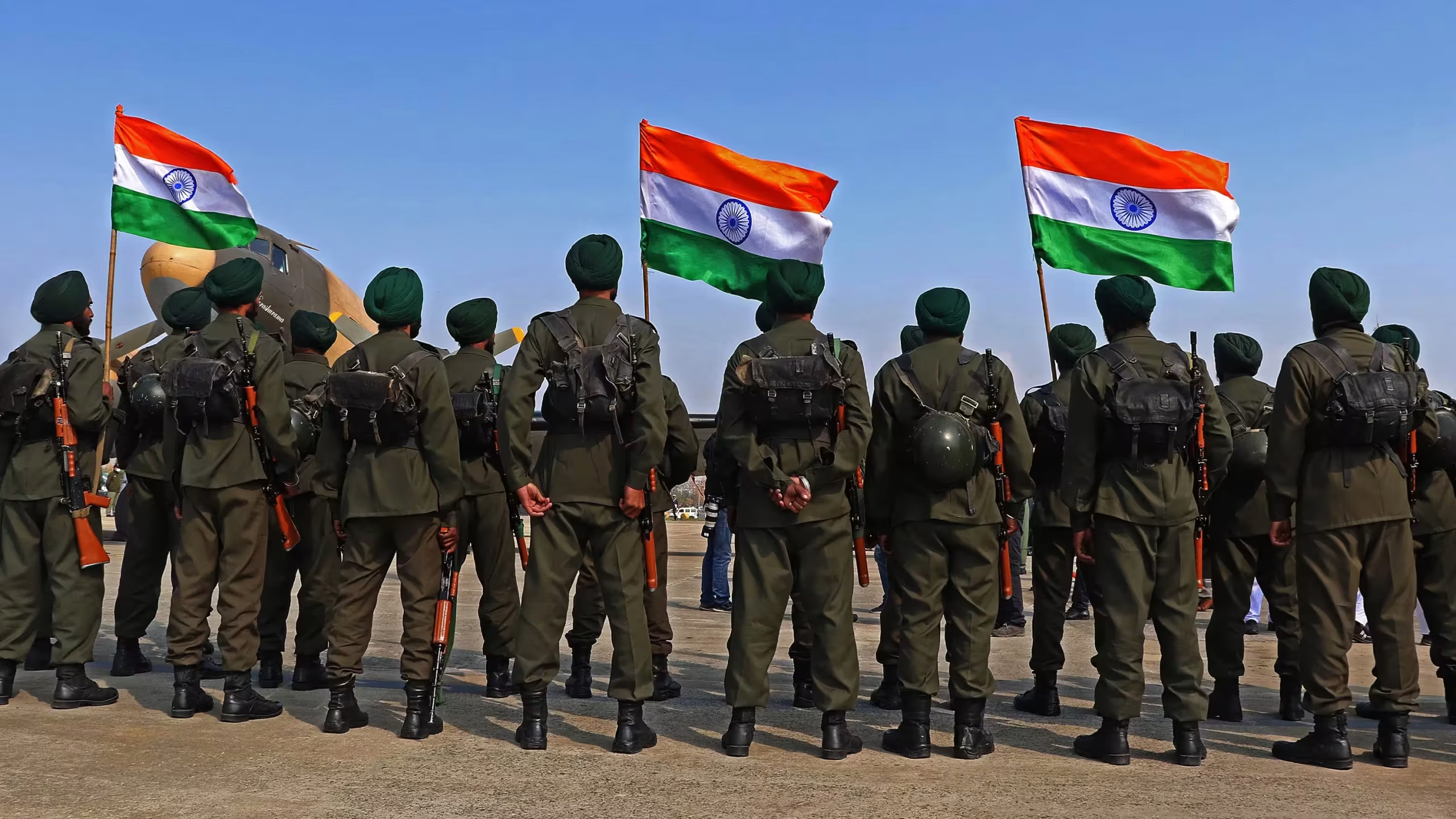
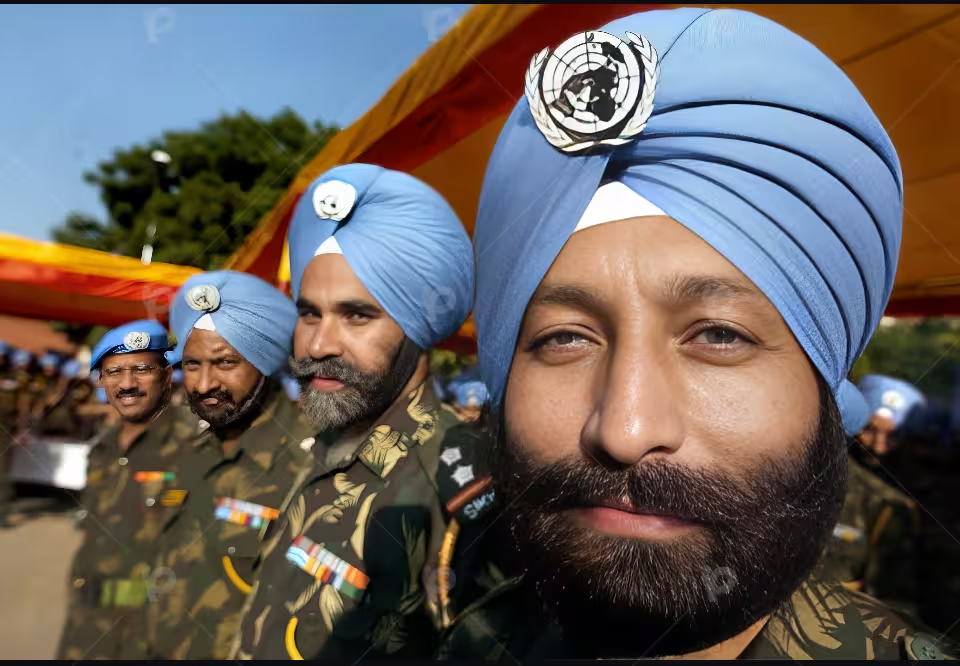
Sikhs have long been synonymous with India’s defense, rooted in the Khalsa tradition of warrior-saints established by Guru Gobind Singh in 1699, but amplified in modern times. During the British colonial era, Sikhs formed a key part of the “martial races,” with regiments like the Sikh Light Infantry earning global acclaim. In World War I and II, over 83,000 Sikh soldiers fought for the Allies, with many sacrificing their lives—earning 14 Victoria Crosses, the highest British military honor. Post-independence, Sikhs continued this legacy in the Indian Army, Navy, and Air Force. They played pivotal roles in wars like 1947-48 (Kashmir), 1962 (Sino-Indian), 1965 and 1971 (Indo-Pak), and operations such as IPKF in Sri Lanka and Kargil in 1999. Notably, Sikhs have headed all three services: Arjan Singh as IAF Chief (1964-1969), JJ Singh as Army Chief (2005-2007), and others. In recent years, Sikh units have excelled in UN peacekeeping missions, from Congo to Lebanon, contributing to global stability while upholding India’s soft power. As of 2026, Sikh regiments remain elite, with high gallantry award ratios—reflecting their disproportionate 8-10% representation in the armed forces despite being a minority.

Their role in securing India’s northwest borders dates back to Maharaja Ranjit Singh’s empire (1799-1849), which halted invasions from Afghanistan, setting a precedent for modern border defense. During the freedom struggle, Sikhs like Bhagat Singh and Udham Singh embodied revolutionary zeal, with movements like Ghadar Party (1913) inspiring anti-colonial resistance. wikipedia.org , facebook.com/SikhRiders

Agricultural Innovations: Fueling India's Green Revolution

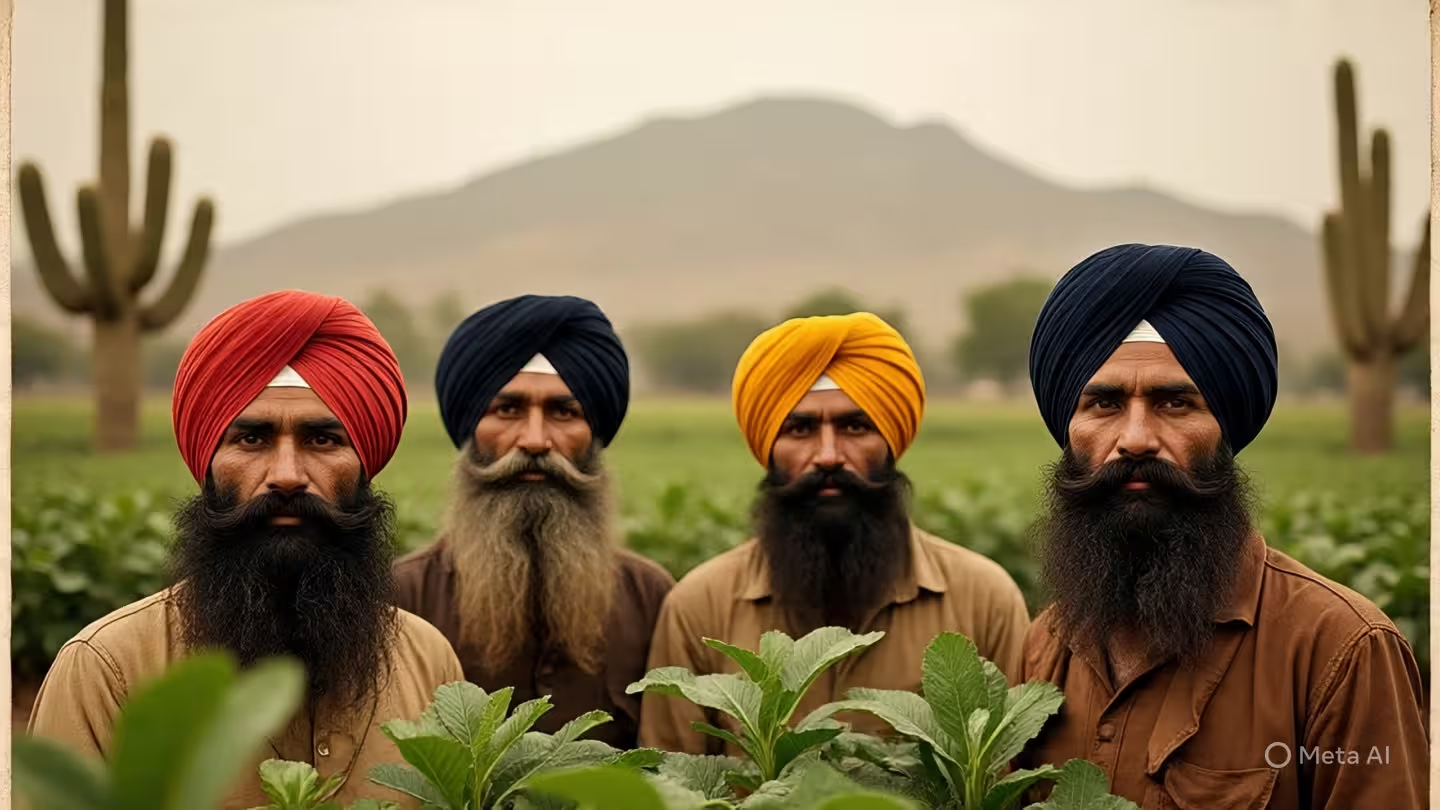
Punjab, the Sikh heartland, has been India’s breadbasket, thanks to Sikh farmers’ pioneering efforts. In the 1960s-70s, the Green Revolution—led by high-yield varieties, irrigation, and mechanization—saw Punjab’s wheat production skyrocket from 1.9 million tons in 1960 to over 5 million by 1970, averting famines nationwide. Sikh agriculturists like Dr. MS Swaminathan (though not Sikh, collaborated with Punjabi Sikh farmers) and community-driven cooperatives transformed arid lands via the Bhakra Nangal Dam project (1950s-60s). By 2026, Punjab contributes 11-12% of India’s food grains despite covering just 1.5% of its land, with Sikh-led initiatives in organic farming and water conservation addressing climate challenges. Recent farmer protests (2020-2021) highlighted Sikh leadership in advocating for sustainable policies, influencing national reforms.

Economic Impact: Entrepreneurship and Philanthropy

Sikhs have driven economic growth through transport, manufacturing, and trade. Post-Partition (1947), displaced Sikhs rebuilt Punjab’s economy, establishing industries in Ludhiana (textiles, bicycles) and Amritsar. By the 1990s liberalization, Sikh businesses like Hero Cycles and Ranbaxy expanded globally. In 2026, Sikh entrepreneurs contribute significantly to India’s GDP, with sectors like logistics (e.g., Sikh-dominated trucking) handling 60% of national freight. Philanthropy via gurdwaras—providing free meals (langar) to millions daily—exemplifies seva, aiding disaster relief like during COVID-19 (2020-2022), where Sikh organizations distributed over 100 million meals. wikipedia.org

Political Leadership and Advocacy

Sikhs have influenced governance since independence. Leaders like Master Tara Singh shaped Punjab’s statehood (1966), while figures such as Giani Zail Singh (President, 1982-1987) and Manmohan Singh (Prime Minister, 2004-2014) steered national policy—overseeing economic reforms that lifted millions from poverty. In politics, parties like Shiromani Akali Dal have championed federalism and minority rights. As of 2026, Sikh MPs and ministers continue advocating for issues like farmer welfare and heritage preservation, with recent initiatives like the Kartarpur Corridor (2019) fostering Indo-Pak peace. x.com

Cultural and Sporting Excellence

Culturally, Sikhs have enriched India through Bhangra music, Punjabi cinema, and literature. Icons like Gurdas Maan and Diljit Dosanjh have globalized Punjabi culture, while festivals like Vaisakhi promote communal harmony. In sports, Sikhs dominate hockey (e.g., Balbir Singh Sr., three Olympic golds 1948-1956) and shooting (Abhinav Bindra, India’s first individual Olympic gold in 2008). Wrestlers like The Great Khali and cricketers like Harbhajan Singh add to this legacy.

In essence, Sikh contributions—from halting invasions in the 18th-19th centuries to modern innovations—have fortified India’s resilience. As India evolves in 2026, their ethos of selfless service continues to inspire unity and progress. x.com

Diplomatic and Global Leadership: Ajay Banga's Role in Gaza Peace Efforts

In a significant appointment announced around early January 2026, Indian-origin Sikh Ajay Banga, President of the World Bank, joined a high-level Gaza Peace Board initiated by international leaders. As one of seven members, Banga’s expertise in finance and development is poised to aid reconstruction and peacebuilding in the region. His involvement highlights Sikh principles of justice and equality on the global stage, amplifying South Asian voices in diplomacy while inspiring Punjab’s Sikh community.

Ajay Banga, President of the World Bank
Ajay Banga, President of the World Bank Group, has been appointed to the "Board of Peace" for Gaza. The board, chaired by US President Donald Trump, is tasked with overseeing post-conflict Gaza governance.

Scientific Innovation: Gurtej Sandhu's Patent Milestone

Gurtej Singh Sandhu, an Indian-origin Sikh inventor based in the US but with roots in Punjab, was celebrated in Indian media in January 2026 for surpassing Thomas Edison as the 7th most prolific inventor worldwide, with over 1,382 US patents. His groundbreaking work in semiconductor technology has revolutionized chip manufacturing, benefiting India’s growing tech sector. This achievement, spotlighted in recent posts and articles, serves as a beacon for young Sikhs in STEM, showcasing how Sikh ingenuity drives global progress.

Gurtej Sandhu -Indian Scientist based in USA
Indian-origin inventor Dr. Gurtej Singh Sandhu has made global history — he now ranks among the world’s top 7 inventors, holding over 1,380 U.S. patents, surpassing the legendary Thomas Edison’s patent count.

Advocacy for Minority Rights: Baku International Conference

On January 16, 2026, Sikh representatives from India and abroad participated in the “Racism and Violence Against Sikhs and Other National Minorities in India: The Reality on the Ground” conference in Baku, Azerbaijan. Speakers like Jas Singh of the Sikh Network emphasized Sikhs’ “significant contributions” to India despite being a 2% minority, including sacrifices in the independence struggle and ongoing societal impacts. Other participants, such as Sidhu Dabinderjit Singh from the Sikh Federation, discussed transnational challenges while calling for accountability. This event, organized by the Baku Initiative Group, amplifies Sikh voices globally, fostering dialogue on justice and heritage preservation amid reports of repression. apa.az
Community representative: Sikhs make significant contributions despite small numbers
“Sikhs have always been a minority in India. I believe their number has never exceeded 2 percent of the population. Today, India’s population stands at 1.4 billion. The number of Sikhs living in Punjab is no more than around 30 million. Despite this, our visible identity and, more importantly, our principles have led us to make contributions that are far greater and disproportionate to our numbers,”

Educational and Social Recognition: Vikram Singh Sahni's Honorary Doctorate

At Guru Nanak Dev University’s golden jubilee convocation in Amritsar on January 15, 2026 (approximate based on recent posts), MP Vikram Singh Sahni received an Honorary Doctorate from the President of India. Honored for his contributions to Punjab, including flood relief, drug de-addiction programs, and youth skilling initiatives, Sahni’s work embodies Sikh values of community upliftment. This accolade recognizes his role in empowering thousands through education and rehabilitation, strengthening social fabric in the Sikh heartland.

Dr. Vikram Singh Sahni, MP,India
डॉ. विक्रमजीत सिंह साहनी पंजाब से संसद सदस्य (MP) हैं, जो आम आदमी पार्टी (AAP) का प्रतिनिधित्व करते हैं। वह जुलाई 2022 में राज्यसभा के लिए चुने गए थे और वर्तमान में पद पर हैं। वह एक व्यवसायी, परोपकारी (philanthropist) और सामाजिक कार्यकर्ता भी हैं

Sikh Military History: From Spiritual Defenders to Modern Warriors

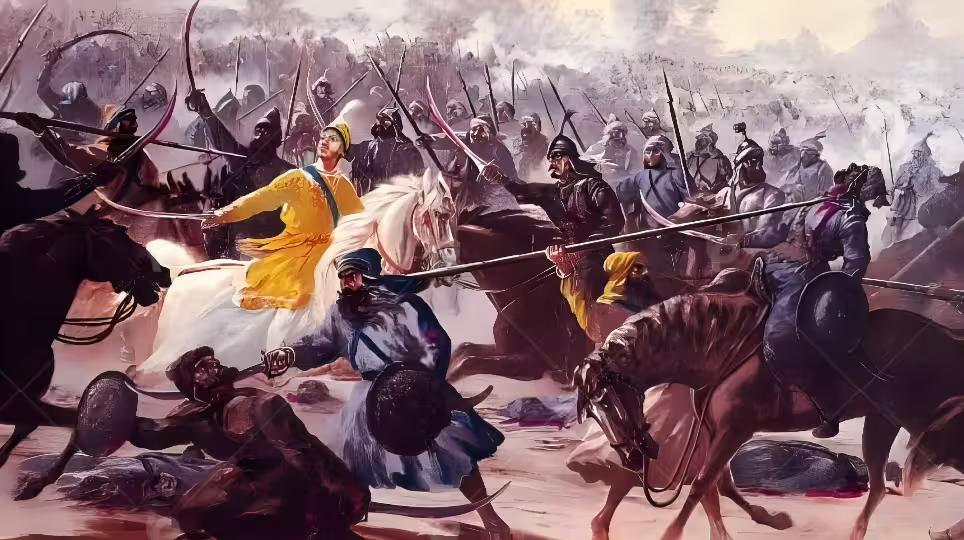
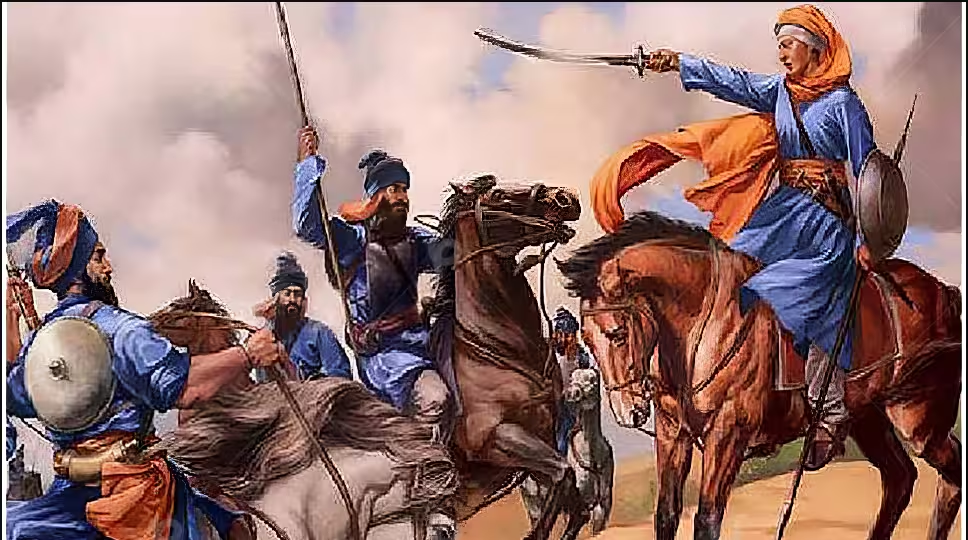
Sikh military history is a compelling saga of resilience, evolving from a faith rooted in peace and equality to a formidable warrior tradition forged in the fires of persecution and self-defense. Spanning over four centuries from the early 1600s to 2026, it reflects the Sikh ethos of “Sant-Sipahi” (saint-soldier), where spiritual devotion meets martial valor. Founded by Guru Nanak in the 15th century, Sikhism emphasized non-violence, but repeated invasions and oppression by Mughal rulers necessitated militarization. This history includes epic battles against empires, contributions to global wars, and ongoing service in India’s armed forces. While early roots lie in survival, modern chapters highlight disproportionate impacts despite Sikhs being a small minority (about 1.7% of India’s population). bbc.com , sikhmissionarysociety.org

Most Successful Sikhs in India in Recent Times (2000–2026)

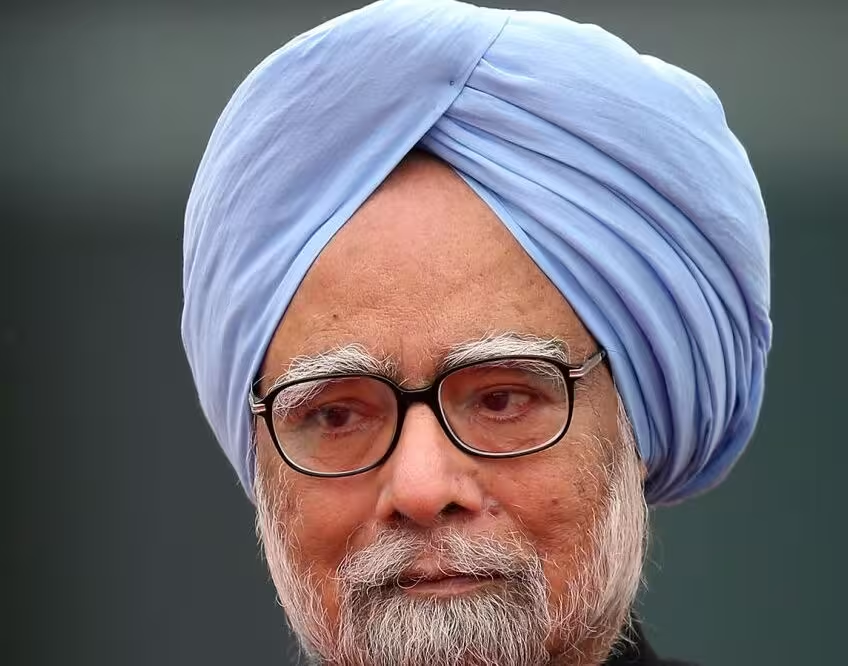
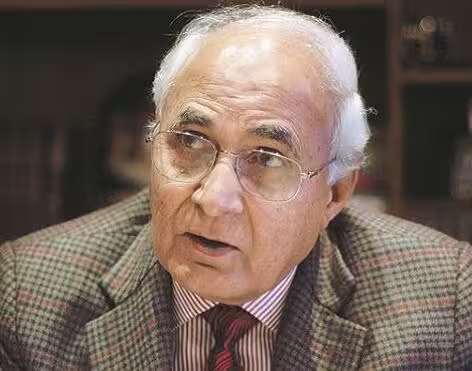
Dr manmohan Singh,Ex Prime Minister of India
Economist and former Prime Minister (2004–2014), he spearheaded India's economic reforms, nuclear deal with the US, and poverty alleviation programs, lifting millions. boosted GDP growth to 8–9%.
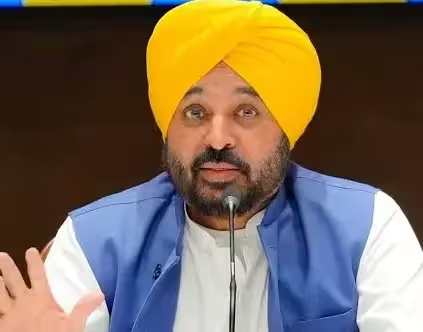
Bhagwant mann- Chief Minister of Punjab,India
Current Chief Minister of Punjab (2022–present), comedian-turned-politician leading Aam Aadmi Party's landslide win. Focused on anti-corruption, education, and farmer welfare; featured in The Sikh 100 for governance impact.
Kushal Pal Singh-Chairman of DLF, India
Chairman of DLF, India's largest real estate firm. Transformed Gurgaon into a corporate hub post-2000; net worth over $7 billion in 2026, making him one of India's richest.
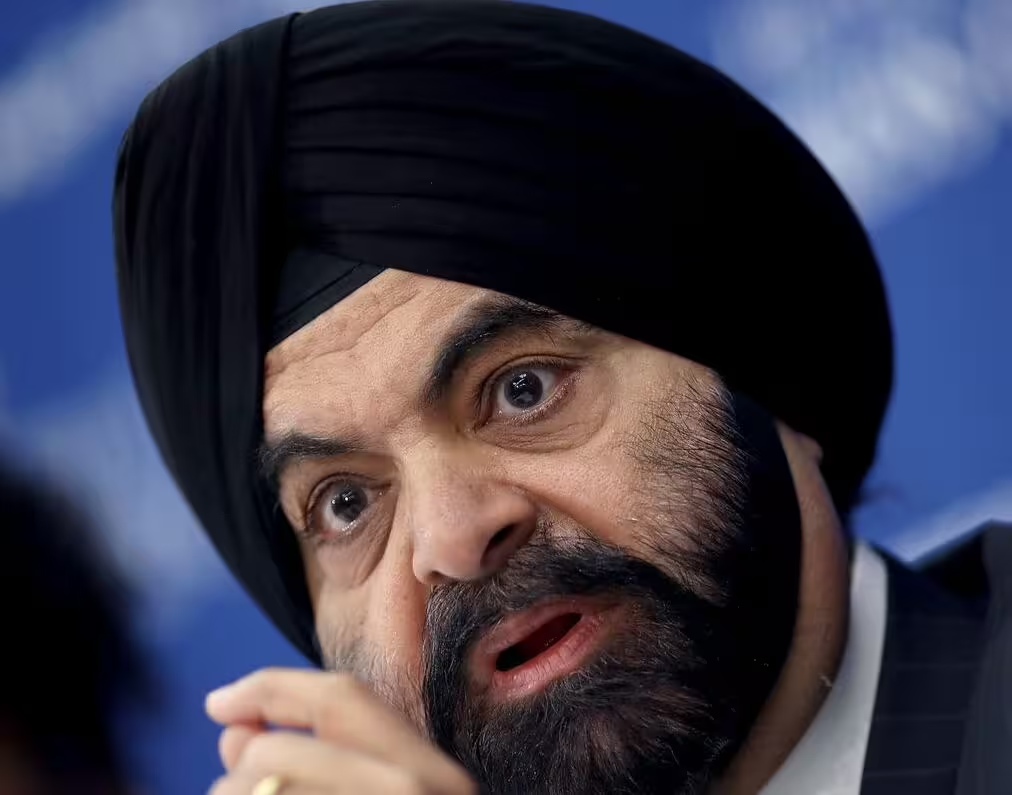
Ajay Banga-World Bank President (2023–present)
Indian-origin executive; led Mastercard (2010–2020) before becoming World Bank President (2023–present). Influential in India's fintech push; featured in The Sikh 100.
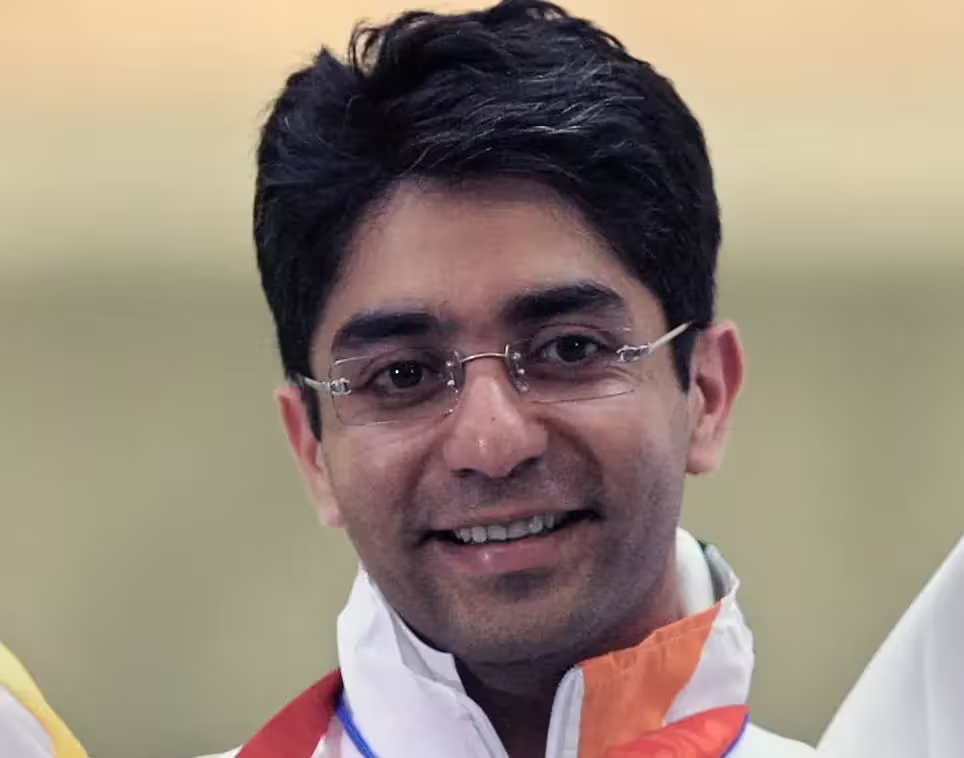
Abhinav Bindra-gold-medalist-2008
India's first individual Olympic gold medalist (shooting, 2008 Beijing). Founded sports academies; awarded Padma Bhushan. Active in IOC roles through 2026.

Jasprit Bumrah- india-ICC-mens-T20
Star cricketer; world's top fast bowler, key to India's 2024 T20 World Cup win. Over 400 international wickets by 2026.

Scroll to Top