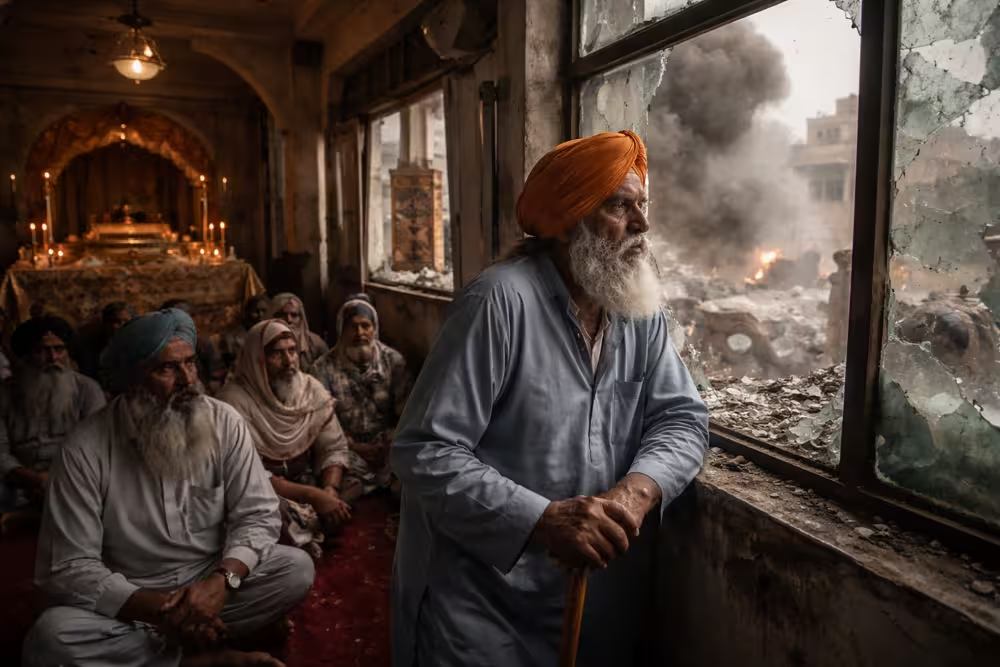
Sikhs in Delhi- Overview
Delhi occupies a foundational position in Sikh history, not as a peripheral settlement but as a sacred and political site shaped during the Guru period and early Khalsa era. Long before the emergence of modern Sikh neighbourhoods, the city functioned as a space of encounter between Sikh spiritual authority and Mughal imperial power. Events that unfolded in Delhi—particularly acts of martyrdom, resistance, and remembrance—contributed decisively to the formation of Sikh ethical, religious, and political consciousness. Any examination of Sikhs in Delhi must therefore begin with this early historical context.
Delhi hosts a diverse Sikh population, estimated at around 570,000 people (3.4% of the city’s total population of about 16.8 million, per the 2011 Census). This makes Sikhs the third-largest religious group in Delhi after Hindus and Muslims. The community’s composition reflects waves of migration: primarily post-Partition refugees from Punjab (1947), followed by economic migrants from neighboring states, Afghan refugees (especially post-2001 and 2021 Taliban takeovers), and smaller groups of historical or converted Sikhs.
The majority (over 80-90%) are Punjabi-origin Sikhs, integrated into the broader Punjabi ethnic fabric that forms 35-40% of Delhi’s population. However, distinct sub-communities exist based on caste, regional origins, and conversion histories. These include Dalit (Scheduled Caste) Sikhs, who comprise about one-third of all Sikhs nationwide and face ongoing marginalization despite Sikhism’s anti-caste ethos. Concentrations are highest in West Delhi (e.g., Tilak Nagar, Rajouri Garden, Punjabi Bagh), where Sikhs form up to 49% in some areas like Nilothi.
Below is a breakdown of the main varieties of Sikhs in Delhi, based on historical, demographic, and migration patterns. Estimates are approximate due to limited granular census data; where available, they draw from surveys like Joshua Project and media reports.
Key Insights from Research
The majority of Sikhs in Delhi trace their ancestry to Punjab, particularly from regions that now fall in West Punjab (Pakistan) and East Punjab (India).
Pre-1947: Small Sikh populations existed in Shahjahanabad (now known as Old Delhi) and surrounding areas, largely connected to religious institutions and military service.
Post-Partition (1947): A massive influx of Sikh refugees from Lahore, Rawalpindi, Multan, and other regions reshaped Delhi’s demographic profile.
These Sikhs primarily settled in West and Central Delhi, forming colonies that later became key Sikh population centres.
Punjabi Sikhs have largely shaped Delhi’s dominant Sikh cultural expression, including language use, festivals, and institutional leadership.
- Demographic Shifts: Post-Partition, Sikhs/Punjabis surged from <10% to ~33% of Delhi’s population by 1951. Today, urbanization has diluted Punjabi dominance, with many Sikhs adopting Hindi and intermarrying.
- Caste Dynamics: Despite Guru Nanak’s rejection of caste, endogamy persists—Jats/Khatris hold power in gurdwaras, while Dalit Sikhs (Mazhabi/Chamar) seek affirmative action. SC Sikhs get reservations but face intra-community bias.
- Challenges & Integration: Afghan Sikhs grapple with trauma and visa issues; Dalit groups with labor exploitation. Overall, Delhi’s Sikhs thrive in business, military, and politics (e.g., influencing 19% of voters).
- Sources & Gaps: Data from Census 2011, Joshua Project, and reports (e.g., The Print, Guardian). No 2021 Census; varieties undercounted due to self-identification as “Punjabi Sikh.” For real-time updates, community forums like Reddit/r/Sikh discuss migrations.
This mix highlights Sikhism’s inclusive ethos while reflecting India’s complex social fabric.
1. Punjab Sikhs (The Largest Group)
This is the majority, but it’s internally diverse:
Malwa Sikhs: From regions like Ludhiana, Patiala, Sangrur, Bathinda. They form a significant portion, especially in areas like Tilak Nagar, Rajouri Garden, and Patel Nagar.
Majha Sikhs: From the heartland of Amritsar and Gurdaspur. They have a strong presence and are often associated with traditional orthodox practices.
Doaba Sikhs: From the Jalandhar, Hoshiarpur, Kapurthala belt. Known for a high rate of education and overseas migration, with a strong presence in Delhi.
Post-Partition Refugees: Many Sikh families settled in Delhi (especially in colonies like Lajpat Nagar, Rajendra Nagar, Kingsway Camp) after 1947 from West Punjab (now in Pakistan), like Lahore, Rawalpindi, and Nankana Sahib. They brought a distinct cultural flavor (language, cuisine) and often excel in trades.
Post-1984 Migration: A significant, often under-discussed wave came after the anti-Sikh violence of 1984, with many families from Punjab seeking safety and new opportunities in Delhi.
2. Non-Punjabi Ethnolinguistic Sikh Communities
These groups have retained distinct languages and cultural markers while being devout Sikhs.
Sikhs from Bihar and Uttar Pradesh: Often termed “Bihari Sikhs” or “UP Sikhs.” Many are descendants of converts from the Saini, Koeri, Kurmi, and other agricultural communities during the missionary work of Sikh Sants in the 19th/20th centuries (e.g., Sant Satgur Singh of Bira, Sant Gurmukh Singh). They speak Bhojpuri, Maithili, or Awadhi at home but follow Sikh tenets. Concentrated in areas like Bhogal, Laxmi Nagar, and parts of Shahdara.
Rajasthani Sikhs: Primarily from the Sikligar (traditionally metalworkers) and Lohar (blacksmiths) communities, and some from the Jat converts in Ganganagar-Hanumangarh (bordering Punjab). The Sikligars, who trace their lineage to Guru Gobind Singh’s time, have a unique subculture. They often live in close-knit communities in parts of outer Delhi and are known for their craftsmanship.
Haryana Sikhs: While Haryanvi Sikhs are often Jats and similar to Punjab, there are distinct communities like the Banjaras (nomadic traders converted to Sikhism) who speak Haryanvi or Lambadi.
3. Caste-Based Diversity within the Panth
The Sikh Panth is not caste-free, and these identities are very much present in Delhi’s social geography.
Jat Sikhs: The dominant land-owning agricultural caste from Punjab, numerically significant and influential.
Khatri & Arora Sikhs: Traditionally mercantile and trading communities. Many successful business families in Delhi belong to these groups. They were among the earliest followers of the Gurus.
Ramgarhia Sikhs: Traditionally artisans, carpenters, and craftsmen (Tarkhan). They have a very strong and organized presence in Delhi, with their own bhavans (community halls) and gatka (martial arts) groups. Concentrated in areas like Kalkaji, Moti Nagar, and Patel Nagar.
Ahluwalia Sikhs: (Also known as Kalals, traditionally brewers). A respected community with a significant history.
Mazhabi & Ramdasia Sikhs: (Scheduled Caste converts). This is where the term “Rangreta” (now considered derogatory) is applied. They are valiant Sikhs with a proud martial history (many served in the British Indian Army’s Sikh Regiment). In Delhi, they have distinct neighborhoods and gurdwaras, often facing socio-economic challenges. The term “Ravidassia” is also used by many within this community, especially those with primary allegiance to the Ravidassia Deras (like the famous Guru Ravidass Temple in Seer Govardhanpur, Varanasi). There are dedicated Ravidassia Deras and Gurdwaras in Delhi, particularly in areas like Tughlakabad, Bhagwanpur, and Uttam Nagar.
4. Diasporic & International Sikhs
Afghan Sikhs (and Hindus): A small but distinct and historic community.
Afghan Sikhs began arriving in Delhi in notable numbers from the 1980s onwards, fleeing political instability, civil war, and religious persecution in Afghanistan.
Many had ancestral roots in cities such as Kabul, Jalalabad, and Kandahar.
Delhi became a natural refuge due to its historic gurdwaras, Sikh institutions, and relative socio-political safety.
They fled Afghanistan in waves during the Soviet war, civil war, and Taliban rule. They speak Dari (Persian) or Pashto, have distinct surnames (e.g., “Singh” often replaced by “Shar”), and unique customs. They are concentrated in Tilak Nagar, Lajpat Nagar, and Mehrauli. They run specialized businesses (dry fruits, textiles, electronics) and have their own gurdwaras (e.g., Gurdwara Guru Arjan Dev Ji in Tilak Nagar).
Sikhs from Pakistan: Apart from post-1947 refugees, a newer trickle of Sikhs from Khyber Pakhtunkhwa and especially from Nankana Sahib come on pilgrimage and sometimes settle, adding to the diversity.
Rangreta Sikhs (Mazhabi / Dalit Sikh Communities)
Delhi’s Sikh population also includes Rangreta Sikhs, historically associated with Mazhabi Sikh and other Dalit Sikh communities.
Their migration to Delhi occurred in phases—through military service, labour migration, and post-Partition resettlement.
Many Rangreta Sikhs historically served in Sikh regiments and auxiliary services, which facilitated their urban settlement.
In Delhi, they are distributed across both formal colonies and peripheral settlements.
Their presence highlights the internal social diversity within Sikh society, often overlooked in urban narratives.
5. Convert Sikhs (Non-Indian & New Age)
Western (White) Converts: A small but visible presence, often associated with the “Sikh Dharma of the Western Hemisphere” (3HO) movement, which has a center in Delhi. They are known for their strict adherence to the Khalsa code and often work in yoga, wellness, or NGOs.
Indian Converts from Non-Traditional Backgrounds: Individuals from various Hindu, Christian, or other backgrounds who have personally adopted Sikhism. They are few but exist, often found in university circles or spiritual movements.
The Majha Sikhs of Delhi: Keepers of Tradition in a Modern Metropolis
In Delhi, Majha Sikhs are not just a community; they are a cornerstone of the city’s Sikh populace. Settling in colonies like Rajouri Garden, Patel Nagar, Lajpat Nagar, and Tilak Nagar, they rebuilt their lives with remarkable entrepreneurial energy. Their influence is seen in:
Business & Trade: A strong presence in textiles, auto parts, transport, and real estate.
Religious & Political Life: A deep engagement with gurdwara committees and Sikh institutions, often upholding a traditional interpretation of Sikhi.
Social Fabric: Known for their strong community bonds, assertive pride in their heritage, and a distinctive cultural style often perceived as straightforward and courageous.
The Language: Majhi Punjabi, The Delhi Twist
The Majhi dialect is considered the standard and purest form of Punjabi—it’s the language of the Guru Granth Sahib and the lingua franca of Punjabi music and cinema.
In Delhi, Majhi has evolved into its own charming hybrid. Immersed in a Hindi-Urdu speaking environment, it has absorbed loanwords and a softer, quicker cadence. This has given birth to what you might call “Delhi Majhi.”
A classic example is the affectionate term for an elder brother. While in Punjab you might hear “pappa” or “veer ji,” in Delhi’s Sikh homes, it often morphs into “bhappa.” This term has become so iconic that it’s embedded in local humor and proverbs. Ever heard the phrase?
“Ek bhappa, sau siyappa.”
(One elder brother, a hundred troubles.)
It’s a tongue-in-cheek nod to the protective, sometimes meddlesome, but always loving role of the eldest brother—a quintessential Delhi-Sikh usage born from the Majha root.
The Rhythm of Majha: The Birthplace of Bhangra
You cannot talk about Majha without celebrating its most famous export: Bhangra. This electrifying dance form, now a global phenomenon, traces its roots directly to the agricultural fields of the Majha region. It began as a celebratory folk dance for the harvest festival of Baisakhi, performed to the thunderous beat of the dhol.
The vigorous kicks, leaps, and joyful energy of traditional Bhangra embody the zest and resilience of the Majha spirit. In Delhi, from wedding sangeets to cultural festivals, it is the Bhangra of Majha that sets the floor on fire, connecting a new generation in the capital to the earthy, celebratory pulse of their ancestral land.
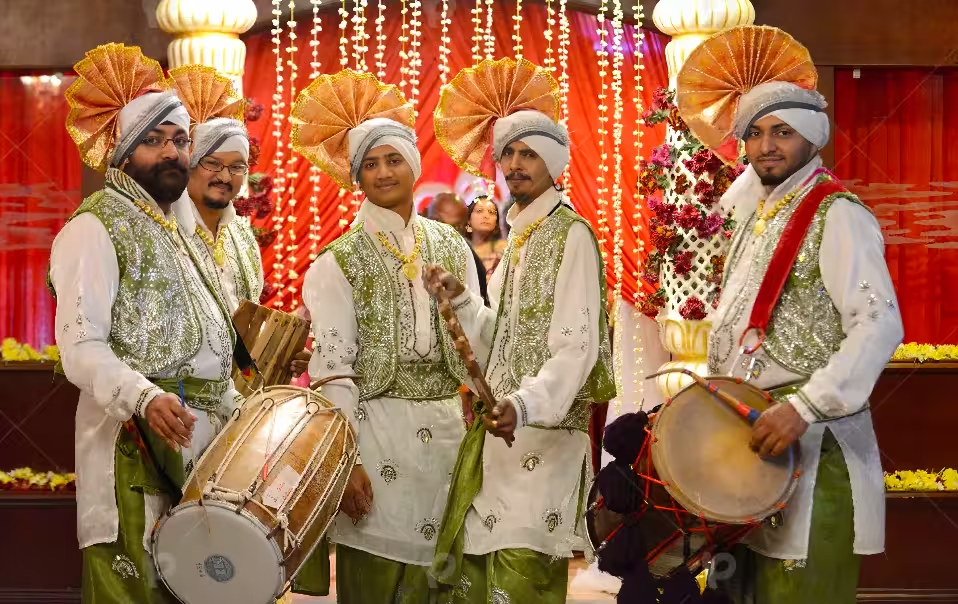
A Living Legacy - Majha Sikhs
For the Majha Sikhs in Delhi, identity is a living blend. It’s in the “Sat Sri Akal” uttered in a distinct accent, the preference for a robust makki di roti and sarson da saag, the solemn visit to Gurdwara Rakab Ganj Sahib (associated with Guru Tegh Bahadur Ji), and the instinctive move to the dhol’s rhythm.
They are a community that witnessed history’s upheavals, carried their faith in their hearts, and built a new home without forgetting the old. They remind us that Delhi’s soul is, in no small part, shaped by the courage, culture, and cadence of Majha.
Have you experienced the distinct culture of Majha Sikhs in Delhi? Share your stories or observations in messenger of Facebook.
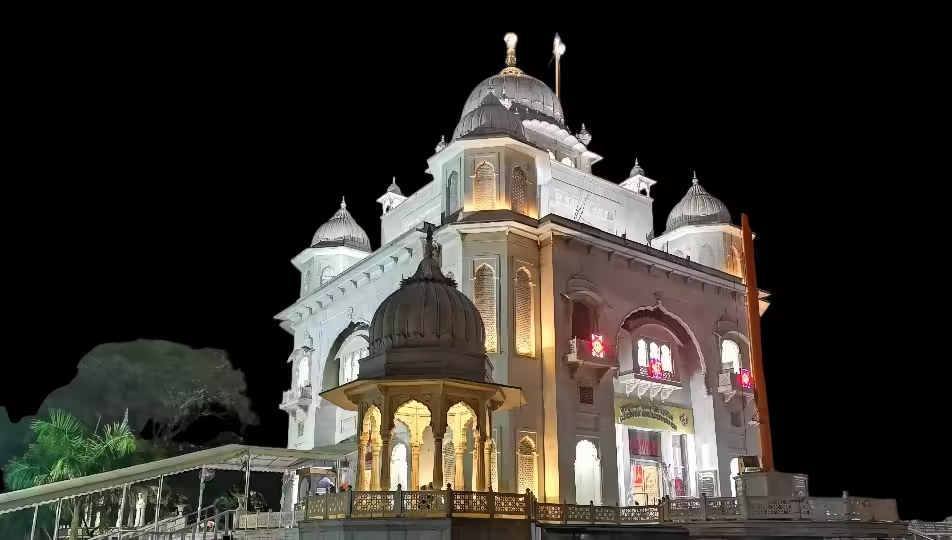
The Malwa Sikhs of Delhi: The Pragmatic Powerhouses of the Capital
If Delhi’s Sikh community is a vibrant tapestry, then the Malwa Sikhs form one of its largest and most dynamic threads. Hailing from a region synonymous with resilience, agriculture, and political acumen, Malwa Sikhs have carved out a space in the nation’s capital that is both influential and unmistakably their own.
The Malwa region lies south of the River Sutlej, encompassing a vast swathe of modern Punjab. Its key districts include:
Ludhiana (the industrial hub)
Patiala (the city of royal legacy)
Bathinda, Sangrur, Moga, Mansa, Faridkot, and Malerkotla.
Unlike the riverine Majha, Malwa is historically an arid land (regions with very low water availability). Its people are known for their hardworking, entrepreneurial, and politically savvy nature. This is the land that produced iconic figures like Sant Jarnail Singh Bhindranwale (from Rode, Moga) and has been the bedrock of Punjab’s agrarian economy and state politics. The distinct identity of Malwas is often summarized in the Punjabi saying: “Malwaé da jatt, pugg vich chhuri” (The Jatt from Malwa, with a knife tucked in his turban)—a metaphor for their combination of outward simplicity and sharp, strategic insight.
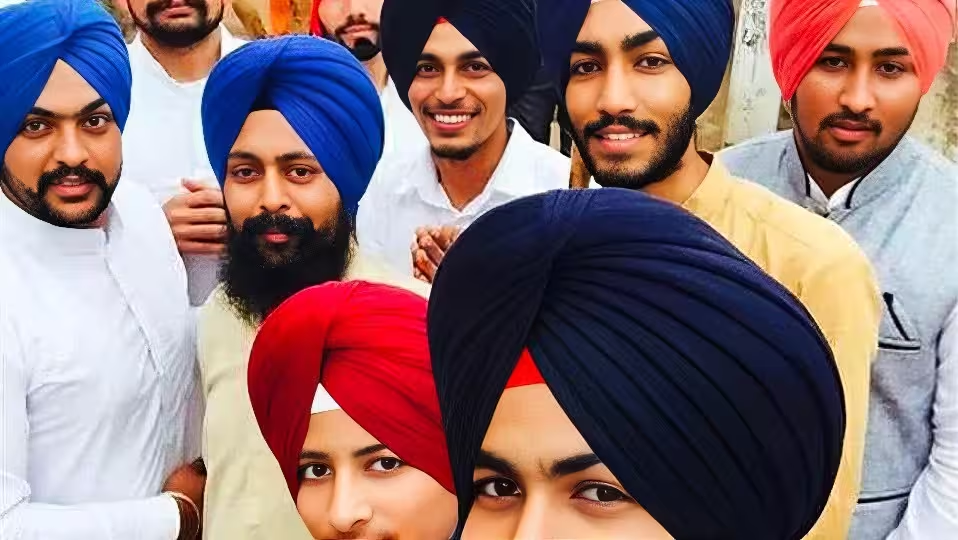
The Doaba Sikhs of Delhi: The Global Villagers of the Capital
If Delhi’s Sikh tapestry has a thread with truly international shine, it belongs to the Doaba Sikhs. Hailing from the fertile, densely populated strip between the Beas and Sutlej rivers, Doabis carry a unique identity shaped by land scarcity, enterprise, and a powerful outward gaze. In Delhi, they are often the community with one foot firmly in the capital and the other spanning continents.
The Doaba Belt: The Land of Enterprise and Emigration
The Doaba (“Do” two, “Aab” waters) region is Punjab’s smallest but most densely populated zone. Its heart lies in districts like:
Jalandhar (the commercial and sporting hub)
Hoshiarpur
Kapurthala
Nawanshahr (now Shaheed Bhagat Singh Nagar)
Historically, with limited landholding sizes, Doabis turned their ingenuity toward skilled trades, education, and, most famously, overseas emigration. The region is often called the “NRI heartland” of Punjab. Towns like Phagwara, Mukerian, and Garhshankar have a significant percentage of families with direct links to the UK, Canada, the USA, and Europe. This global connection defines the Doabi psyche—rooted yet worldly, traditional yet adaptable.
Doaba Sikhs in Delhi: The Educated Bridge Builders
Unlike the mass post-Partition settlements of Majha Sikhs, a significant wave of Doaba Sikhs came to Delhi in the decades after the 1980s, particularly following the turmoil of 1984. They were often driven by a search for educational opportunity, professional careers, or as a strategic urban base while managing overseas interests.
In Delhi, they form smaller, more dispersed, and often professional communities. You’ll find them in:
University Enclaves & South Delhi: Drawn by academic institutions and corporate jobs.
Posh Colonies like Greater Kailash and Vasant Vihar: Often as successful professionals or families with NRI backing.
Specific Business Niches: They have a notable presence in the sports goods industry (a legacy of Jalandhar), medical professions, and the visa/immigration consultancy sector.
Their presence is less about dominating a particular mohalla and more about integrating into Delhi’s professional fabric while maintaining a tight-knit community network.
The Language: Doabi Punjabi, The Village Dialect with a Passport
The Doabi dialect carries a distinct, melodic countryside flavor that is instantly recognizable. It’s softer than Majhi and has unique phonetic traits that have traveled the world.
The Classic “Pend” for “Pind”: The most famous marker is the conversion of the retroflex ‘ḍ’ sound to a softer ‘nḍ’. So, a village (pind) becomes “pend,” and a door (darvāza) becomes “darnāza.”
Elongated Vowels: Words are often stretched with a singing lilt—”ho gaya” becomes “ho gayaa-aa.”
Unique Vocabulary: They have their own set of rustic idioms and terms that evoke rural life.
In Delhi, this dialect is a proud badge of identity within Doabi circles. However, in mixed Punjabi gatherings, it often adapts, picking up urban Hindi and standard Punjabi inflections, creating a unique “Delhi-Doabi” hybrid. It’s a dialect that has seamlessly moved from the pends of Jalandhar to the drawing rooms of Toronto and the parks of South Delhi.
The Cultural Vibe: Not Just Bhangra, But Boliyan and a Global Outlook
Doaba’s cultural contribution is profound but often understated.
Boliyan: While Bhangra is Pan-Punjabi, the witty, poetic, and often improvised call-and-response folk songs called Boliyan find a special home in Doaba. They are the soul of giddha and social gatherings, showcasing quick wit and lyrical creativity.
The NRI Influence: The Doabi cultural scene in Delhi is subtly shaped by global trends. You might hear a blend of traditional folk beats with electronic music at a Doabi wedding, or see a greater preference for fusion fashion. Their social events often double as networking hubs with a truly transnational feel.
The Delhi Doabi: Rooted Yet Cosmopolitan
The Doaba Sikh in Delhi is often the educated cosmopolitan. They are the engineers, doctors, IT professionals, and entrepreneurs who value education, leverage global networks, and maintain a deep, almost nostalgic, connection to their ancestral village (pend). They are less defined by dominating a specific Delhi geography and more by their presence in its professional and aspirational spaces.
They represent a different model of success in the capital—one built less on political clout or land ownership, and more on professional merit, global connectivity, and adaptive enterprise. In a rapidly globalizing Delhi, the Doabi story feels increasingly like the story of the modern, mobile Indian.
Does the sound of “pend” bring back memories? Have you noticed the unique, softer lilt of Doabi Punjabi in Delhi’s cafes or corporate halls? Share your experiences in my messenger on Facebook.
The Rangreta Sikhs of Delhi: The Unsung Pillars of Faith and Fortitude
In the vibrant and diverse tapestry of Delhi’s Sikh community, the story of the Rangreta Sikhs is one of profound spiritual devotion, unyielding resilience, and a complex social journey. Often referred to by the broader, though sometimes contested, terms Mazhabi (faithful) or Dalit Sikhs, this community embodies the radical, egalitarian promise of Sikhism, while navigating the realities of caste within Indian society.
Historically, “Rangreta” is a term derived from “Rangretā Guru kā Betā” (The colored one is a son of the Guru), a title bestowed by Guru Gobind Singh Ji himself. It refers to communities that were historically considered “untouchable” (now Scheduled Castes), who embraced Sikhism en masse, attracted by its revolutionary message of equality.
Mazhabi Sikhs: Literally meaning “those of faith,” this term historically denoted Sikhs from scavenger (Chuhra) backgrounds who became staunch, devout followers.
Ramdasia Sikhs: Originally from the weaver (Julaha) community, many of whom follow the teachings of Guru Ravidass Ji, a saint-poet in the Guru Granth Sahib.
The Term “Rangreta”: While originally honorific, its usage today is complex. Within the community, it can be a proud marker of identity and martial history. Used by others, it can sometimes carry a derogatory connotation, leading many to prefer “Mazhabi,” “Ramdasia,” or the broader “Dalit Sikh.”
Their history is one of extraordinary valor. They formed the backbone of the Sikh Khalsa Army’s legendary infantry and were highly recruited into the British Indian Army’s Sikh regiments, celebrated for their bravery.
Rangreta Sikhs in Delhi: Foundations of Service and Struggle
The presence of Rangreta Sikhs in Delhi is historic and foundational, yet their settlements often map onto the city’s socio-economic margins.
Post-Partition Settlements: Many settled in designated refugee colonies post-1947, often in less developed areas.
Clustered Neighborhoods: They have strong, close-knit communities in pockets across Delhi, such as Bhogal, Tigri, Sangam Vihar, Deoli, Mongolpuri, and parts of Uttam Nagar and Tilak Nagar.
The Labour of the City: Traditionally associated with occupations of service and skilled labour, many are employed as sanitation workers, construction laborers, mechanics, drivers, and skilled cobblers. A growing middle class is emerging in government jobs, the armed forces, and small businesses.
The Shadow of 1984: This community was disproportionately affected by the anti-Sikh violence of 1984, suffering immense loss and trauma, which further shaped their political and social consciousness in the capital.
The Language: A Punjabi of Piety and Protest
There is no distinct “Rangreta dialect,” but their use of Punjabi is infused with a deeply spiritual lexicon and a consciousness of their unique social location.
Language of Devotion: Their speech is often rich with gurbani (scriptural) references and terms of faith, reflecting a lived, devotional Sikhi.
Idioms of Resilience: Their folklore and everyday language carry idioms of struggle, justice (nya), and dignity (izzat), born from a history of overcoming oppression.
Influence of Ravidassia Sabhas: In areas with strong Ravidassia Deras (places of worship), the language incorporates the distinct philosophical vocabulary of the Amritbani Guru Ravidass Ji.
In Delhi, this Punjabi interacts with the city’s Hindi and other Punjabi dialects, but retains its unique devotional core—a language that has historically been both a shield and a sword.
Cultural & Religious Expression: Deras, Nagara Drums, and Assertion
Rangreta Sikh culture is a powerful blend of orthodox Sikh practice and distinct community traditions centered on dignity and identity.
The Dera and the Gurdwara: Alongside mainstream Gurdwaras, Ravidassia Deras (such as those affiliated with the Dera Sachkhand Ballan) serve as crucial spiritual, social, and political hubs. They are spaces for community assertion and the veneration of Guru Ravidass Ji’s egalitarian teachings.
The Beat of the Nagara: The beating of the large war drum (nagara) is not just musical; it’s a historical symbol of sovereignty and community gathering, often heard at their religious and cultural events.
Festivals and Commemoration: Guru Ravidass Jayanti is celebrated with massive, vibrant processions through Delhi, a powerful public assertion of identity and faith. They also deeply observe the martyrdom days of their own saints and heroes.
The Delhi Rangreta: Between Faith and Fracture
The Rangreta Sikh in Delhi lives at the intersection of unshakeable faith and ongoing social challenge. They are the devout pilgrims at all major Gurdwaras, yet may face subtle or overt caste discrimination (casteism) within broader Sikh social spaces.
They are the unsung pillars—building the city’s infrastructure, serving in its defense, and upholding the core Sikh principle of “sarbat da bhala” (welfare for all), often while fighting for their own full equality within the Panth.
Their story in Delhi is not just one of survival, but of active preservation and assertion—preserving the Guru’s gift of liberation while asserting their rightful place as equals in the social, religious, and political life of the capital. They remind us that the true strength of a community is often forged in the fires of adversity and tempered by an unwavering faith.
This article aims to highlight a vital part of Delhi’s Sikh community with respect. It is a complex history, and we welcome thoughtful perspectives in the messenger of Facebook.