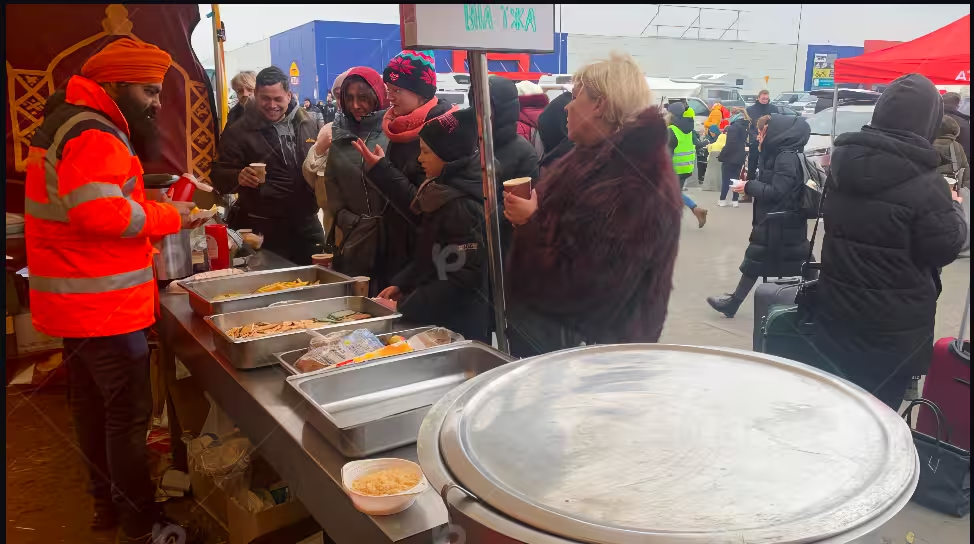
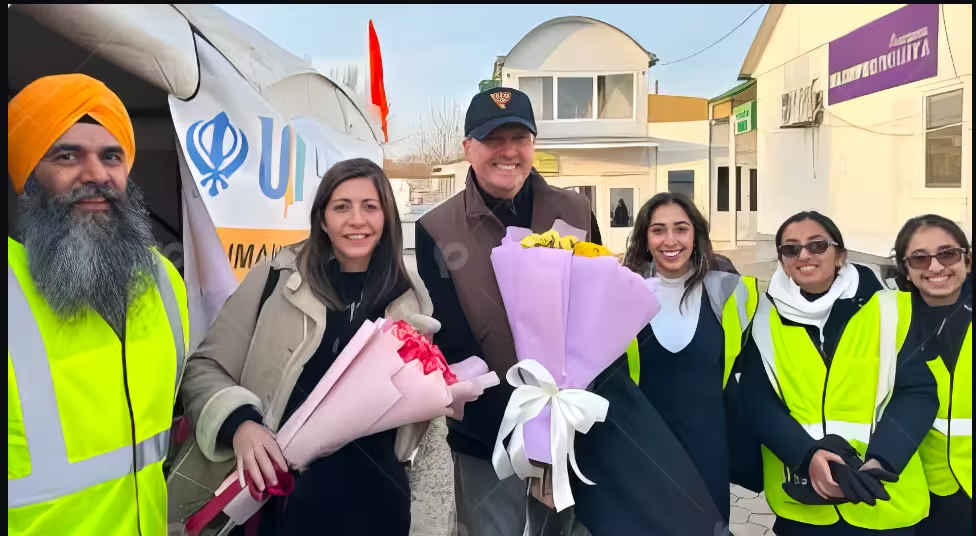
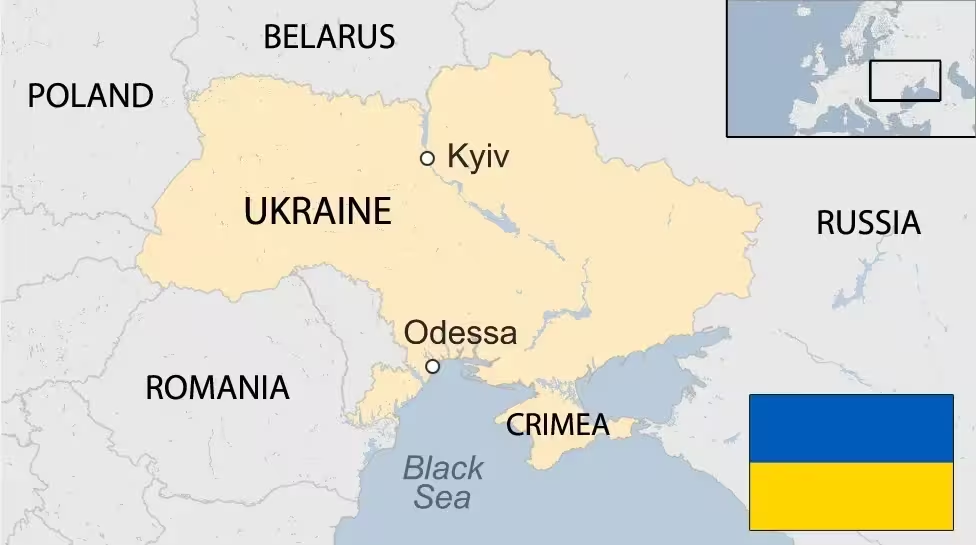
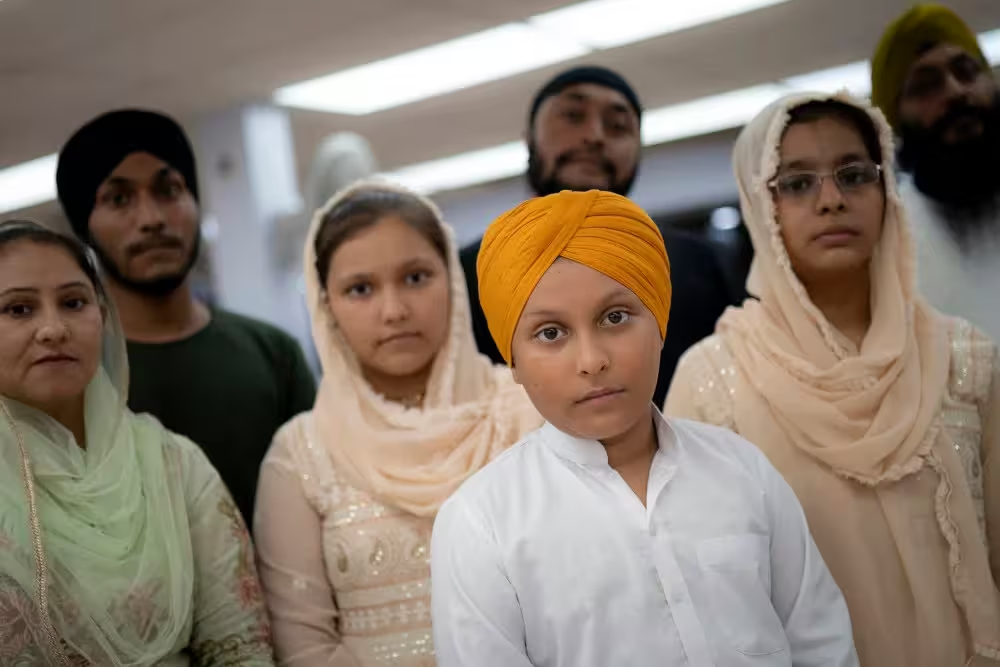
UNITED SIKHS has been a prominent humanitarian responder in Ukraine since the 2022 invasion, providing immediate relief like food, medical aid, and shelter near borders and within war-torn cities like Kyiv and Kharkiv
Sikhs in Ukraine-Sikh Humanitarian Food Aid During the Russia-Ukraine War
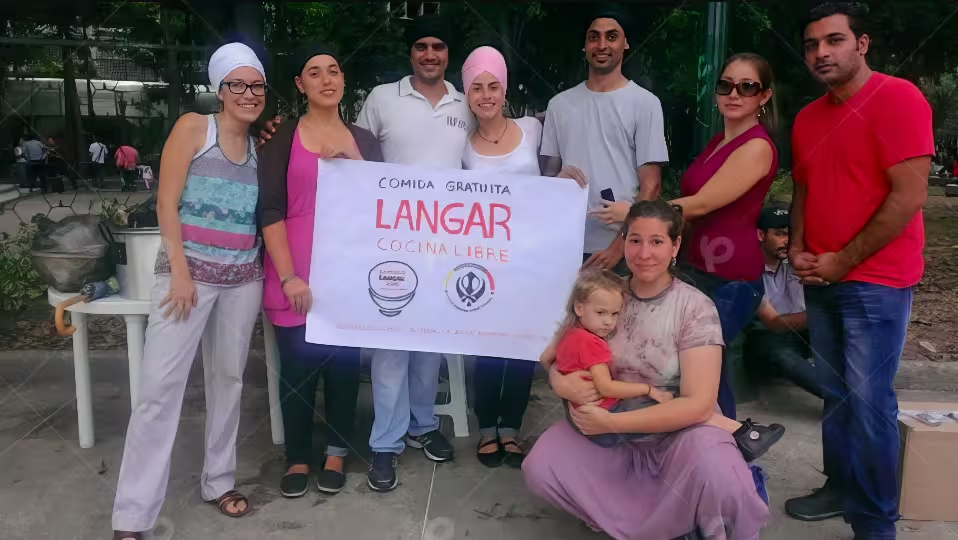
The Sikh principle of langar—the tradition of providing free, communal meals to all, regardless of background—has been a cornerstone of global disaster response. Since Russia’s full-scale invasion of Ukraine on February 24, 2022, Sikh organizations like Khalsa Aid and UNITED SIKHS have mobilized swiftly to deliver hot meals, snacks, and food parcels to millions of displaced people, refugees, and frontline communities. Drawing on volunteer networks from around the world, these efforts embody Guru Nanak Dev Ji’s ethos of selfless service (seva), serving as a lifeline amid widespread hunger and displacement affecting over 14 million Ukrainians. Below is an overview of their key food aid initiatives. sikhnet.com
Khalsa Aid: Mobile Kitchens and Rapid Response
Founded in the UK, Khalsa Aid launched its Ukraine operations within hours of the invasion, focusing on border regions and war-affected cities. Their food aid emphasized hot, nutritious meals prepared in mobile kitchens, often in collaboration with local NGOs and volunteers.
Initial Deployment (February–April 2022)
: Teams set up in Moldova (Transnistria region) and Poland (Przemyśl and Medyka borders), feeding over 2,000 people in the first 24 hours alone. A mobile kitchen in Przemyśl distributed over 120,000 hot meals in the early months, with daily servings reaching 400–600 refugees.
Expansion and Distribution (April–December 2022)
: At the Ptak Warsaw Expo refugee center in Poland, they provided thousands of daily hot meals. A warehouse in Przemyśl stocked and distributed food supplies, partnering with Metro Cash and Carry to deliver 4,000 food parcels. Collaborations with Caritas installed additional mobile kitchens at the Medyka border for ongoing hot food service.
Ongoing Support (2023–Present)
: In Kharkiv, Ukraine—a heavily bombarded eastern city—Khalsa Aid supplied ingredients for a local hot food kitchen, providing up to 25,000 portions between May and June 2023. Efforts transitioned to partnerships with Ukrainian and Polish organizations for sustained aid, including emergency shelter support in Oleksiyivka for vulnerable residents.
By late 2022, Khalsa Aid had distributed over 2,000 aid parcels in Moldova and supported thousands more through cross-border logistics, ensuring no one was turned away.
khalsaaid.org
UNITED SIKHS: Border Langar Camps and Warzone Deliveries
UNITED SIKHS, a New York-based nonprofit, established a global volunteer base camp at the Polish-Ukrainian border, serving as a hub for langar operations. Their focus was on high-volume, daily hot meal distribution, supplemented by snacks and groceries.
Border Relief (2022–Ongoing)
: A dedicated food truck at the Shehyni crossing (Poland-Ukraine border) serves 5,000–6,500 hot meals and snacks daily to fleeing refugees. A heated tent provides not just food but also temporary rest with blankets and toys, aiding over 5,000 people per day. Similar langar stations operated at borders in Hungary (Zahony), Slovakia (Vysne Nemecke), Poland (Krakowlec), and Romania (Suceava).
Inside Ukraine (2022–2024)
: Crisis response teams enter warzones multiple times daily, delivering hot meals and groceries in cities like Kharkiv. Their hot meal program has reached hundreds of thousands in Shehyni and Kharkiv regions, often bundled with hygiene kits, medicines, and warm clothing. As of May 2024, volunteers continued steadfast aid amid destruction, with langar kitchens popping up in refugee camps and evacuation routes.
UNITED SIKHS’ efforts extended to medical support alongside food, treating thousands while emphasizing long-term rehabilitation. unitedsikhs.org
Broader Sikh Community Contributions
Beyond these organizations, individual gurdwaras and Sikh volunteers amplified the response. The Guru Nanak Darbar Gurdwara in Odessa, Ukraine, hosted langar for locals before evacuating in 2022. In early March 2022, Sikhs in Poland, Romania, and Moldova set up impromptu aid stations offering free meals, transportation, and basic medical care to evacuees. Global diaspora donations fueled these operations, with videos of turbaned volunteers serving steaming dal and roti going viral as symbols of solidarity.
Impact and Legacy of Sikhs
Collectively, Sikh food aid has nourished millions, preventing famine in a conflict that disrupted food supplies for 20% of the world’s wheat exports. Challenges like shelling and logistics haven’t deterred volunteers, who often risk their lives for seva. As the war enters its third year (as of 2025), these efforts persist, evolving into community kitchens and partnerships. For donations or involvement, visit Khalsa Aid’s Ukraine page or UNITED SIKHS’ Relief Fund.
This response highlights the profound, apolitical humanity of Sikhs—proving that in times of crisis, a shared meal can bridge divides. Sat Sri Akal.
Sikhs in Ukraine: A Journey of Resilience and Service
The story of Sikhs in Ukraine is one of quiet endurance, humanitarian spirit, and cultural bridges built amid historical upheavals. As a minority community in a nation marked by conflict and transformation, Sikhs have contributed through service (sewa) and solidarity, particularly during recent crises. This blog explores the intertwined histories of Ukraine and its Sikh diaspora, drawing on folklore, migration patterns, and contemporary efforts. While the Sikh presence in Ukraine remains small—estimated at a few hundred, primarily students and transient migrants—it reflects broader themes of global Sikh mobility and compassion.
Ukraine: From Russian Dominion to Sovereign Nation
Ukraine’s path to independence is a tapestry of resilience against imperial control, revolutions, and geopolitical shifts. For centuries, much of modern Ukraine was absorbed into the Russian Empire. Following the partitions of Poland between 1772 and 1795, vast territories—including eastern Ukraine—fell under Russian rule, with the Crimean Khanate annexed in 1783 under Catherine the Great. This era saw Russification policies suppressing Ukrainian language and culture, alongside peasant unrest and the 1905 revolution’s echoes in worker strikes.
The 1917 Russian Revolution briefly birthed the Ukrainian People’s Republic, an independent entity amid civil war chaos, but it was short-lived. By 1922, Ukraine became a founding republic of the Soviet Union (USSR), enduring forced collectivization, the devastating Holodomor famine (1932–1933), and World War II devastation. Under Soviet control for nearly 70 years, Ukraine industrialized but at the cost of cultural erasure and millions of lives.
Independence arrived on August 24, 1991, following the USSR’s collapse and a failed Moscow coup. A resounding 92% referendum vote affirmed sovereignty, amid Gorbachev’s perestroika reforms and rising nationalism. This marked the end of Russian imperial shadow, though tensions persisted, culminating in the 2014 annexation of Crimea and the full-scale 2022 invasion. Today, Ukraine stands as a beacon of democratic resolve, its people embodying the very miri-piri (temporal-spiritual) balance Sikh Gurus championed. wikipedia.org
Sikh Migration to Ukraine: Pathways and Presence
Sikh ties to Ukraine evoke ancient folklore, with Ukrainian Cossack warriors—famed for their martial prowess—allegedly allying with Guru Gobind Singh Ji in the 17th–18th centuries, sharing sword-fighting traditions and anti-oppression ethos. While historical evidence is anecdotal, it underscores a mythic bond.
Modern migration is modest and recent. No significant Sikh presence existed during Russian imperial or Soviet times; the community emerged post-1991 as Ukraine opened to the world. From the late 1990s, Punjabi Sikhs from India—fleeing post-1984 anti-Sikh violence, economic stagnation, and police oppression—began using Ukraine as a transit hub to Western Europe. Afghan Sikhs, escaping Taliban threats, also arrived in the 2000s, settling in cities like Odessa and Kyiv.
By 2020, Indian immigrants (including Sikhs) numbered around 20,000, mostly students pursuing affordable medical and technical education. The community peaked at a few hundred before the 2022 war scattered many to Poland and beyond. Today, remnants focus on survival and seva amid ongoing conflict.
Sikhs in the British Army: World Wars and Ukrainian Footprints?
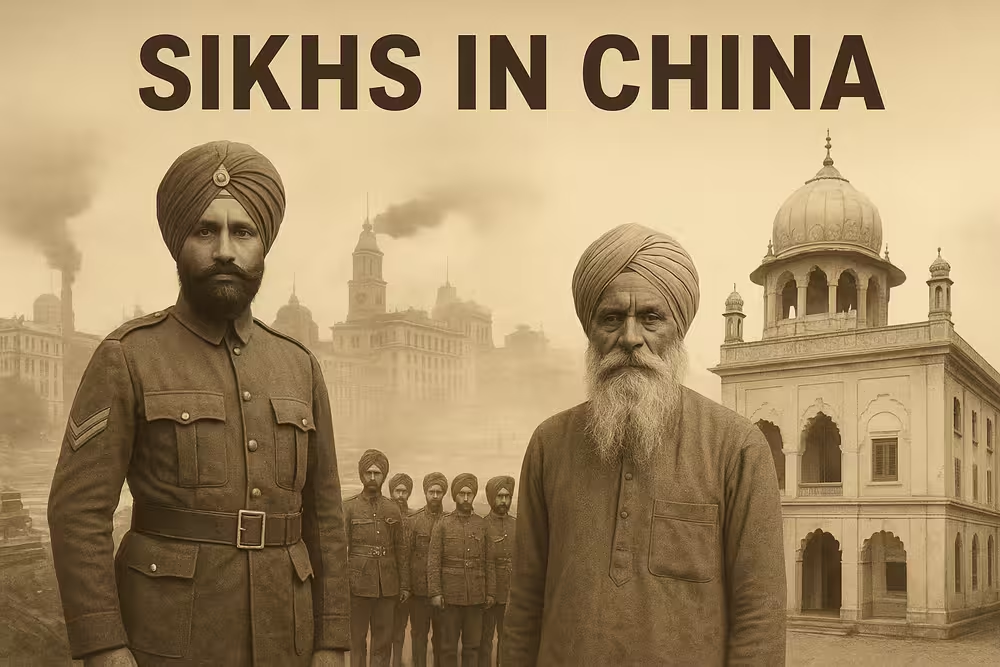
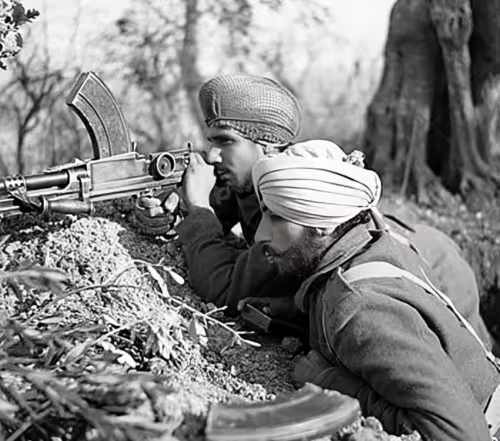
Sikhs’ martial legacy shines in global conflicts, but their World War I and II roles in Ukraine are tangential at best. Over 100,000 Sikhs served in the British Indian Army during WWI (1914–1918), comprising 20% of its strength despite being 1% of India’s population. They fought valiantly on Western Fronts—from Ypres to the Somme—earning Victoria Crosses for “contempt for death.” In WWII (1939–1945), another 2.5 million Indians, including tens of thousands of Sikhs, battled Axis forces across Europe, Africa, and Asia, with 83,000 WWI and countless WWII casualties for the Allied cause.
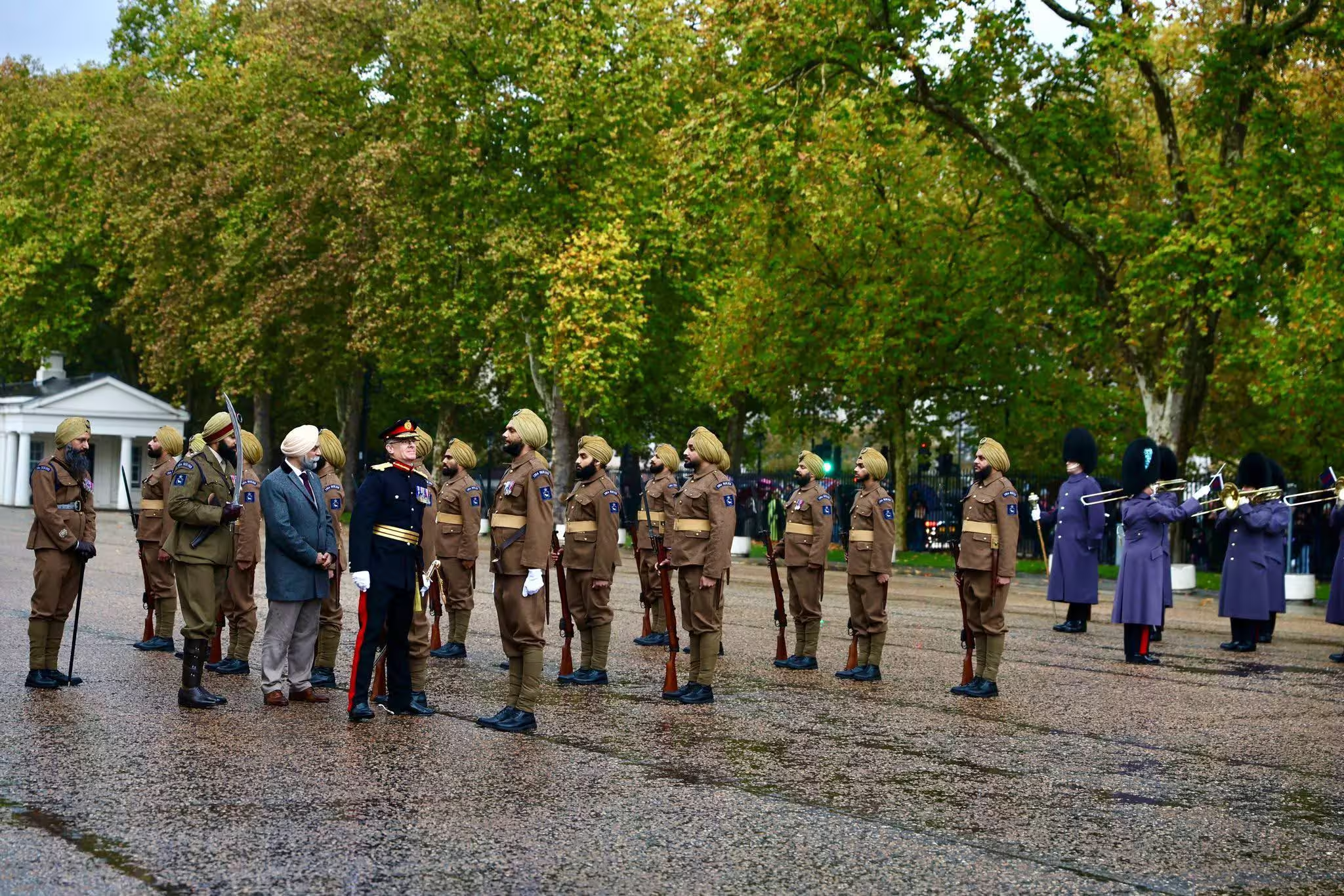
Ukraine, however, was the Soviet Eastern Front, not a British theater. No records indicate Sikh units stationed there or post-war settlements in Soviet Ukraine—barriers like the Iron Curtain prevented it. Any Sikh “settlement” claims likely stem from POW exchanges or fleeting encounters, not diaspora formation. Their legacy endures in memorials, like the UK’s 1914 Sikhs ceremonial troop honoring WWI heroes.
Illegal Migration of Sikhs from India? A Road Less Traveled
Evidence of widespread illegal Sikh migration to Ukraine is scant, unlike the surges to Canada (over 100,000 Punjabis since 2017) or the US (via Darién Gap routes). Searches yield no major cases; most Indians enter legally as students on visas, with numbers stable at ~20,000 pre-war.
Why the disparity? Ukraine lacks the economic pull of English-speaking, high-wage nations like the UK, US, or Canada, where established Sikh networks offer jobs in trucking, real estate, and tech. Strict EU-adjacent visa policies, language barriers (Ukrainian/Russian over English), and the 2022 invasion’s instability deter flows. Punjab’s youth eye Ukraine for cheap education as a stepping stone to Europe, but war displacements have reversed this—many now seek asylum elsewhere. Illegal routes via Russia exist for some Indians, but they’re risky and rare for Sikhs, who prioritize legal paths amid global scrutiny on migration.
Businesses and Professions: Seva Over Commerce
With a transient community, Sikh professions in Ukraine lean toward education and service rather than entrenched businesses. Pre-war, many were medical or engineering students in Kyiv and Kharkiv universities, drawn by low tuition (~$3,000/year). A handful operated small ventures in trade—importing Indian goods or spices—or IT freelancing, mirroring global Sikh adaptability.
Post-2022, focus shifted to humanitarian roles. Organizations like UNITED SIKHS and Khalsa Aid deploy volunteers for langar (free meals), medical aid, and refugee support, embodying Guru Nanak’s philosophy. Local Sikhs run pop-up langar kitchens, distributing 1,000+ meals daily at borders. No large-scale businesses like Canadian trucking firms exist here; survival and seva define their “profession.”
Famous Sikhs of Ukraine: Unsung Heroes of Service
Ukraine’s Sikh luminaries are few but impactful, often rising through crisis. Harcharan Singh Khalsa (formerly Cepren Bykalena), a Ukrainian native, converted to Sikhism after studying its history, becoming a Sardar and advocate for interfaith harmony. His story bridges cultures, echoing Cossack-Guru folklore.
Journalist Ravinder Singh Robin gained acclaim for coordinating Sikh relief in war zones, linking diaspora donors to frontline needs. Volunteer Amreek Singh, a Punjabi expat, led langar distributions for Ukrainian refugees, featured in global media. These figures embody quiet valor, far from spotlights.
Gurdwara in Ukraine: Sanctuaries Amid Strife
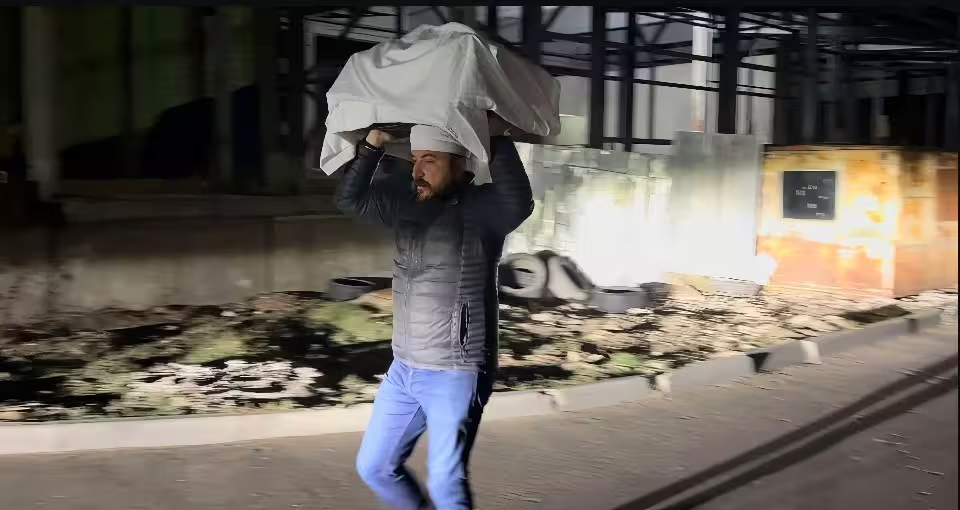
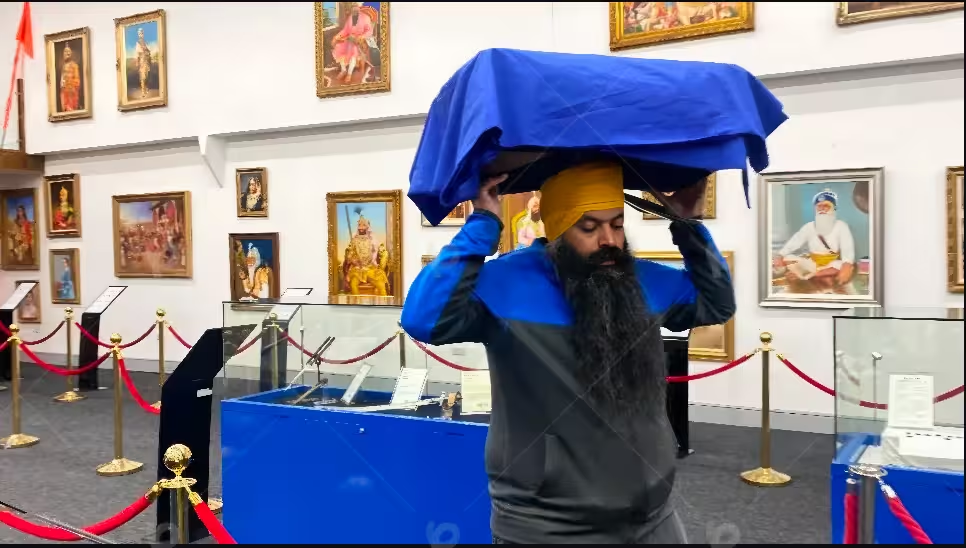
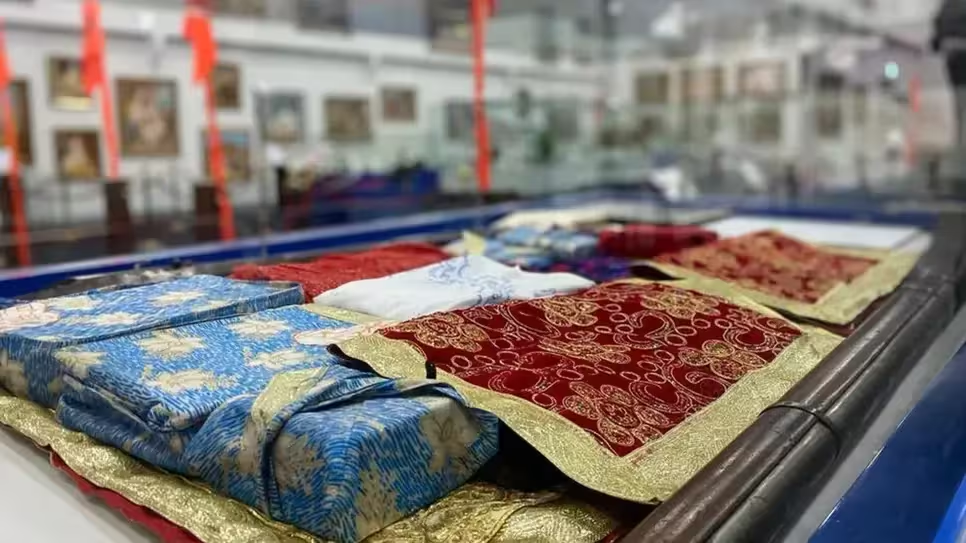
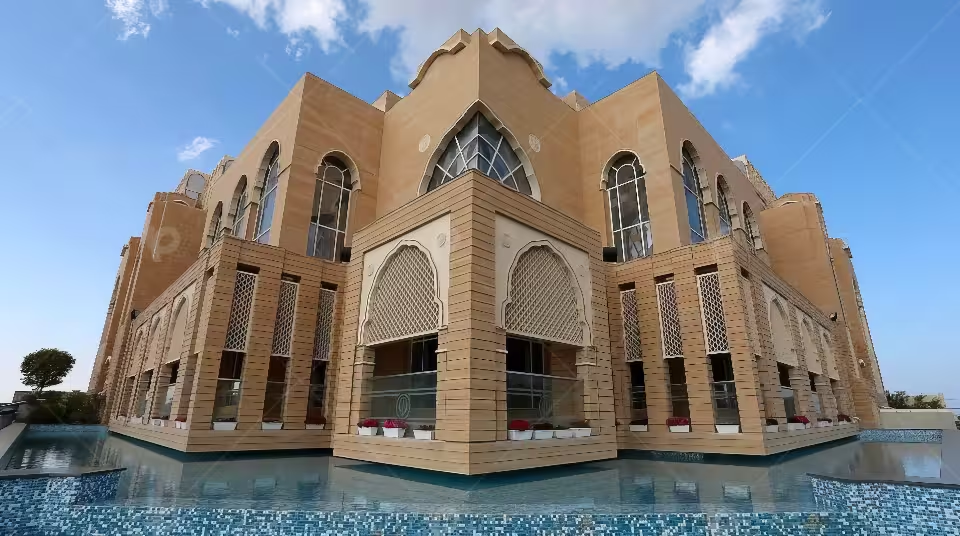
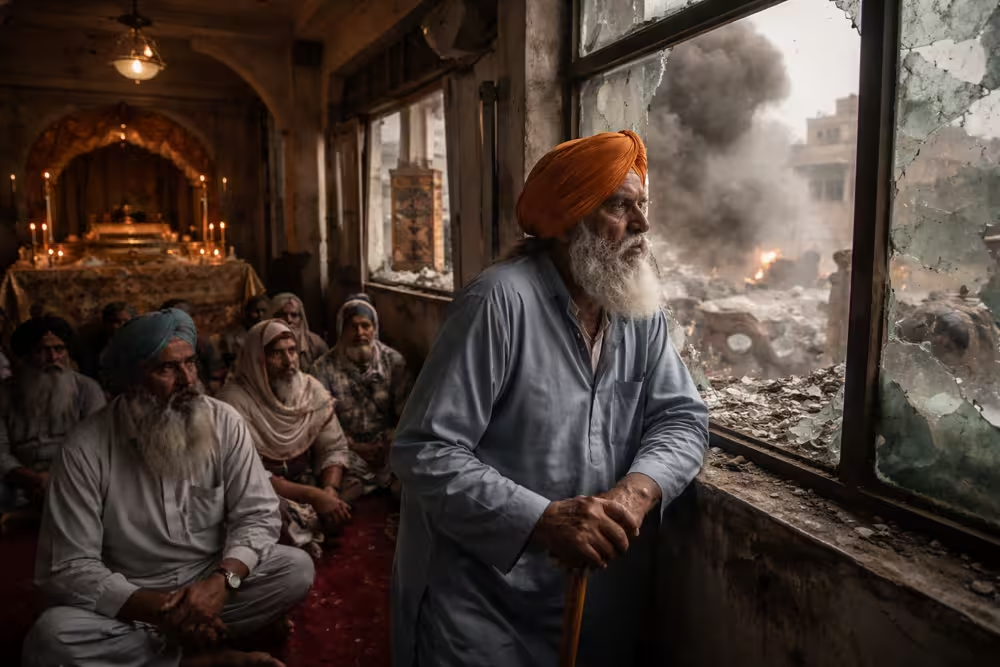
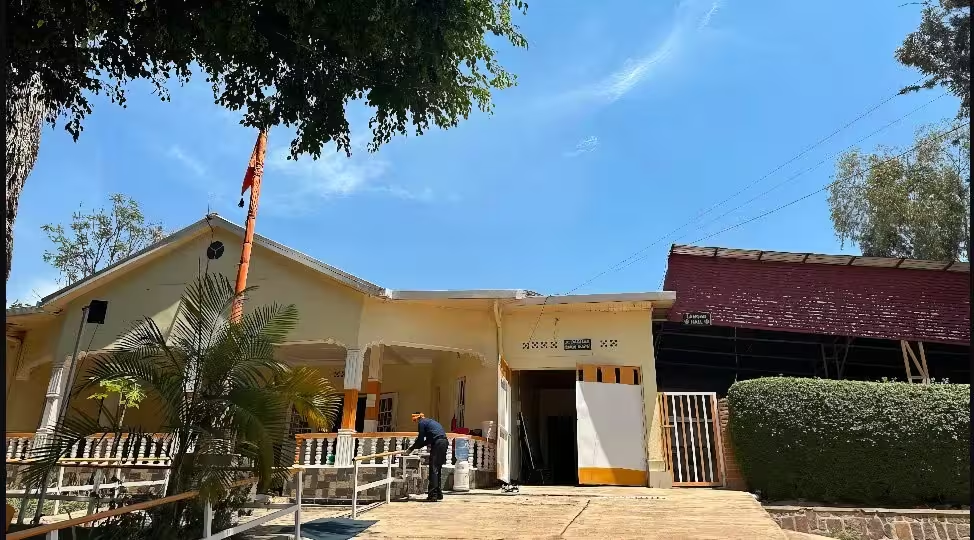
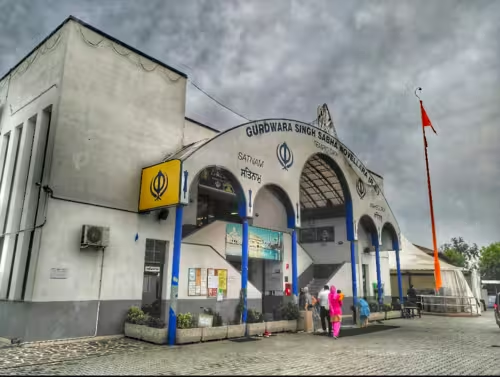
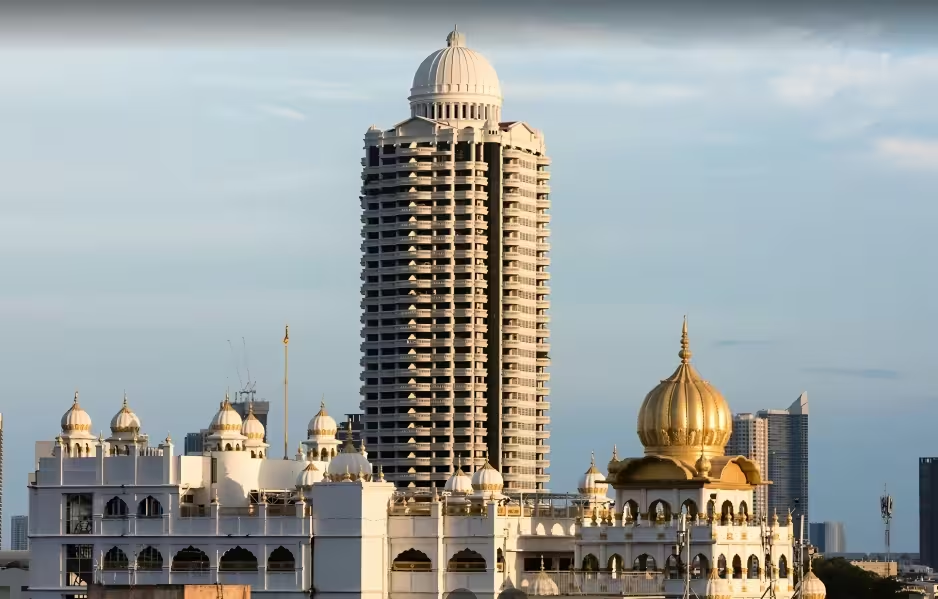
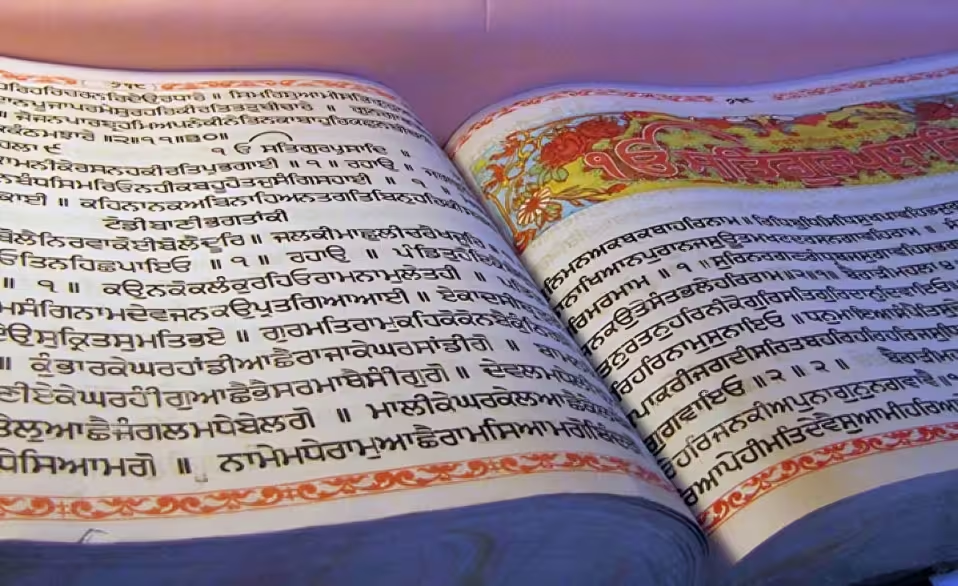
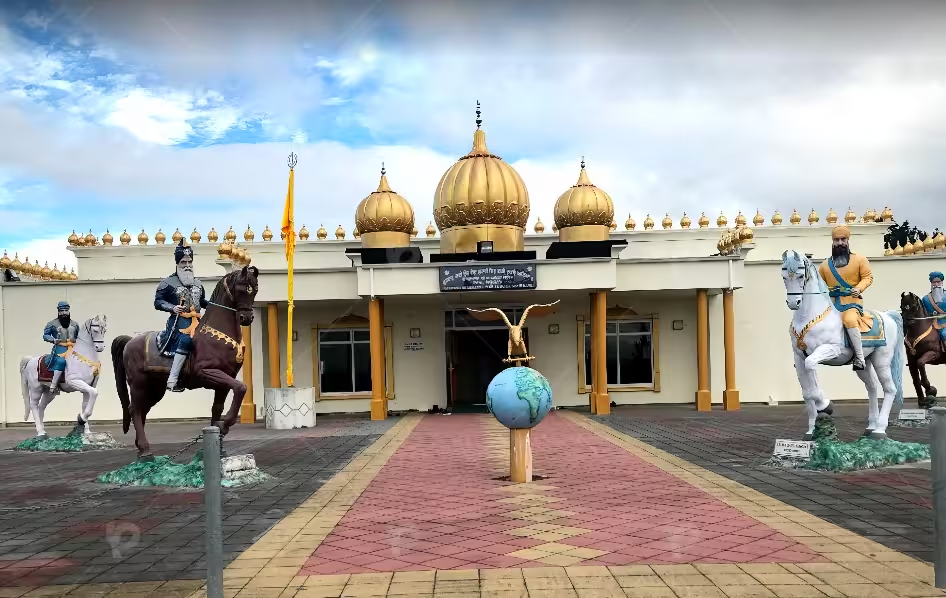
Ukraine’s sole formal Gurdwara, Nanak Darbar (also known as Gurdwara Sahib Odessa), opened in 2014 by Afghan and Indian Sikhs as a community hub. It served ~100 worshippers, hosting langar and cultural events until the 2022 invasion forced evacuation. A daring rescue of sacred Sikh scriptures and prayerbooks took place on March 25, 2022. As Odessa residents began defense preparations against imminent attack by Russian forces following the siege of nearby Mariupol, the recovery of religious scriptures and artifacts from the gurdwara building became a priority for Sikhs. In an incredible act of sewa, Simran Singh Stuelpnagel, the Global Affairs Advisor of Sikh Dharma International, retrieved Sainchain (scriptures) and Gutke (prayer books) from Gurdwara Sahib Odessa located in the Ukrainian War zone, and brought them safely across the border, carrying them respectfully above his head for miles on foot. The scriptures, heroically evacuated amid shelling, were later transported from Romania to Moldova and eventually to the UK’s National Sikh Museum for safekeeping.

Informal prayer spaces persist in Kyiv and Lviv, but war has dispersed the flock. Like Guru Nanak’s first Dharamsal in 1522, these sites symbolize refuge—now extended to all refugees. unitedsikhs.org
Ukrainian Attitudes Toward Sikhs: From Borders to Brotherhood
Relations blend warmth with wartime tensions. Sikhs’ relief efforts—langar for millions displaced—have earned praise, with mayors like Oksana of Shehyni lauding their “unwavering” aid. UNITED SIKHS’ border camps fed thousands, fostering goodwill: “Sikhs are heroes,” one refugee posted.
Yet, 2022 border incidents revealed racism: Non-white refugees, including Sikh students, faced beatings and denials while Europeans passed freely. Broader surveys show positive inter-ethnic ties locally, but national strains persist. Overall, Sikhs are viewed as compassionate allies, their turbans symbols of solidarity in Ukraine’s fight for freedom—mirroring Sikh support for the nation on platforms like X.
In closing, Sikhs in Ukraine remind us: Waheguru’s light shines through service, even in shadows. As GlobalSikhWiki chronicles, their story is ours—global, resilient, unbreakable. Sat Sri Akal.
Sources compiled from historical archives, diaspora reports, and real-time updates. For deeper dives, explore UNITED SIKHS’ Ukraine fund. khalsaaid.org, unitedsikhs.org, sikhpa.com, springer.com, brill.com